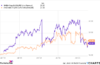

esla’s new car sales in Europe fell 27.9 percent in May from a year earlier even as fully-electric vehicle sales in the region jumped 27.2 percent, with the US EV maker’s revised Model Y yet to show signs of reviving the brand’s fortunes.
Overall car sales in Europe rose 1.9 percent, with the strongest growth coming from plug-in hybrids and cars powered by alternative fuels, data from the European Automobile Manufacturers Association (ACEA) showed.
Tesla’s European sales have now fallen for five straight months as customers switch to cheaper Chinese EVs and, in some cases, protest against Tesla CEO Elon Musk’s politics.
Tesla’s European market share dropped to just 1.2 percent in May from 1.8 percent a year ago.
The revised Model Y is meant to revamp the company’s ageing model range as traditional automakers and Chinese rivals launch EVs at a rapid pace amid trade tensions.
May new car sales in the European Union, Britain and the European Free Trade Association rose to 1.11 million vehicles, following a 0.3 percent dip in April, ACEA data showed.

Every Monday
Registrations at Chinese state-owned SAIC Motor and Germany’s BMW rose 22.5 percent and 5.6 percent respectively, while they fell 23 percent at Japan’s Mazda.
In the EU alone, total car sales have fallen 0.6 percent so far this year.
That comes despite growing demand for EVs, with registrations of battery-electric (BEV), plug-in hybrid (PHEV) and hybrid-electric (HEV) cars rising 26.1 percent, 15 percent and 19.8 percent respectively.
EU sales of BEVs, HEVs and PHEVs combined accounted for 58.9 percent of passenger car registrations in May, up from 48.9 percent in May 2024.
Among the largest EU markets, new car sales in Spain and Germany rose 18.6 percent and 1.2 percent respectively, while in France and Italy they dropped by 12.3 percent and 0.1 percent.
In Britain, registrations were up 1.6 percent.