SINGAPORE – Hotel investors have turned more cautious in the first half of 2025, deploying less capital into the hospitality sector in Asia-Pacific amid ongoing macroeconomic uncertainty.
Asia-Pacific hotel transaction value stood at US$4.7 billion (S$6 billion) in the first half-year, 23 per cent lower than the US$5.7 billion recorded in the same period in the previous year, according to JLL.
Japan continued to lead regional hotel investment with US$1.5 billion in transactions, followed by China, which had US$744 million in deals. Investors spent US$664 million acquiring hotels in Australia, while in Singapore, they deployed US$546 million in the same period. South Korea rounded up the top markets, with US$504 million invested in the segment.
JLL said: “Investors have gravitated to safe-haven markets, while decision-making timelines lengthened. At the same time, the bid-ask spread between seller expectations and buyer valuations has also widened with sellers holding firm on price expectations and buyers applying greater scrutiny, leading to extended due diligence periods on both sides of transactions.”
High-net-worth individuals from within the region emerged as increasingly active buyers in the first half, seeking portfolio diversification through hotel investments, with capital invested into hotels growing 54 per cent from the same period in 2024.
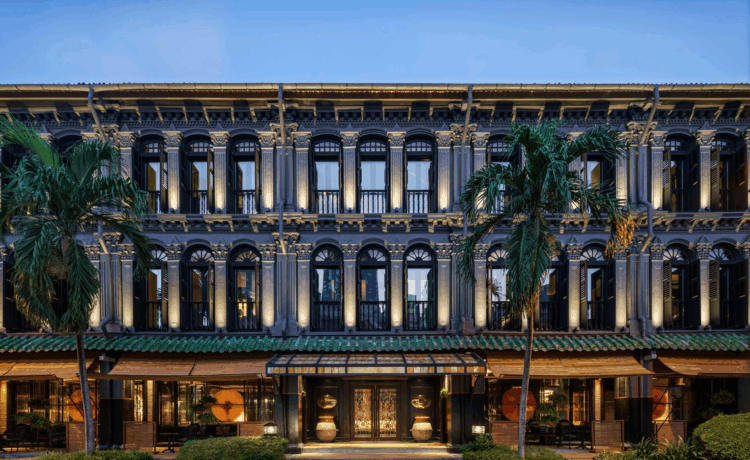
In Singapore, investors gravitated towards boutique hotels. Duxton Reserve was sold in May for $80 million, or about $1.6 million per key. The 49-key boutique hotel was sold by Singapore-based hospitality company The Garcha Group to Lotus One Investment, the investment arm of Lotus Singapore, a family office focused on ventures in South Asia.
In April, the 48-key shophouse hotel 21 Carpenter was sold by 8M Real Estate to Indonesian-born, Singapore-based billionaire Leo Koguan. According to industry sources, it was sold for $100 million, or about $2.1 million per key.
Hybrid hotels, with an extended-stay component, are also attracting investment from private equity groups.
Ms Tan Ling Wei, senior vice-president of investment sales at JLL Hotels & Hospitality Group, noted: “Singapore’s boutique hotel sector continues to attract private capital seeking both diversification and long-term capital value.”
For the full year, hotel transaction value in Singapore is projected to reach US$1.2 billion, JLL said. This is higher than the US$744 million recorded in 2024.
Across the entire Asia-Pacific region, hotel transaction value is expected to total US$12.8 billion, a 5 per cent increase from 2024.
“This forecast anticipates accelerated investment activity in the second half of the year as the backlog of deals in due diligence is expected to settle then,” noted JLL.
It added: “Although institutional investors remain selective, private capital is moving decisively to secure prime hospitality assets that offer both defensive income characteristics and growth potential, which should ensure an uptick in activity in this year and into the next.”
JLL expects private equity funds, family offices and regional operators with access to private capital to emerge as the most active buyers for the rest of the year as they seek assets requiring operational expertise to maximise their value.
Some analysts, however, are turning less sanguine on the outlook for Singapore’s tourism and hospitality sector.
For the first seven months of 2025, the Republic had about 10 million tourists, 2.4 per cent higher than in the year-ago period, according to the latest data from the Singapore Tourism Board.
A report by OCBC Investment Research noted that in June 2025, revenue per available room was the lowest on record since January 2023.
While the Singapore Government has put in significant effort to revitalise the tourism landscape through the opening of attractions such as Rainforest Wild Asia and the Singapore Oceanarium in 2025, weak hospitality momentum may persist due to tariff uncertainty and global growth concerns, OCBC said.
Cautious tourism sentiment, a strong Singapore dollar and China’s slow recovery as a source market may also negatively impact the sector.
THE BUSINESS TIMES