(This story was updated to add new information.)
Nearly three million Floridians and 42 million Americans may not see their November SNAP benefits hit their EBT for the month of November, due to the ongoing government shutdown.
The federal government has been shut down for 30 days as of Oct. 30, 2025, and it is the second-longest shutdown in U.S. history. The USDA announced that funding has run out for the Supplemental Nutrition Assistance Program (SNAP), also known as food stamps.
“Bottom line, the well has run dry. At this time, there will be no benefits issued November 1,” the USDA website says.
A last-minute ruling may help. After multiple nonprofits and mayors filed a federal lawsuit, U.S. District Judge John McConnell said at a hearing Oct. 31 he would block the administration from suspending benefits during the federal shutdown. Will benefits go out Saturday? It remains to be seen.
Here’s what SNAP benefits are, who funds them, the average amount that SNAP participants will be missing out on next month and some resources for Florida families seeking food assistance.
Live shutdown updates: SNAP food benefits set to expire Nov. 1. Shutdown day 30
Are SNAP benefits and food stamps the same thing?
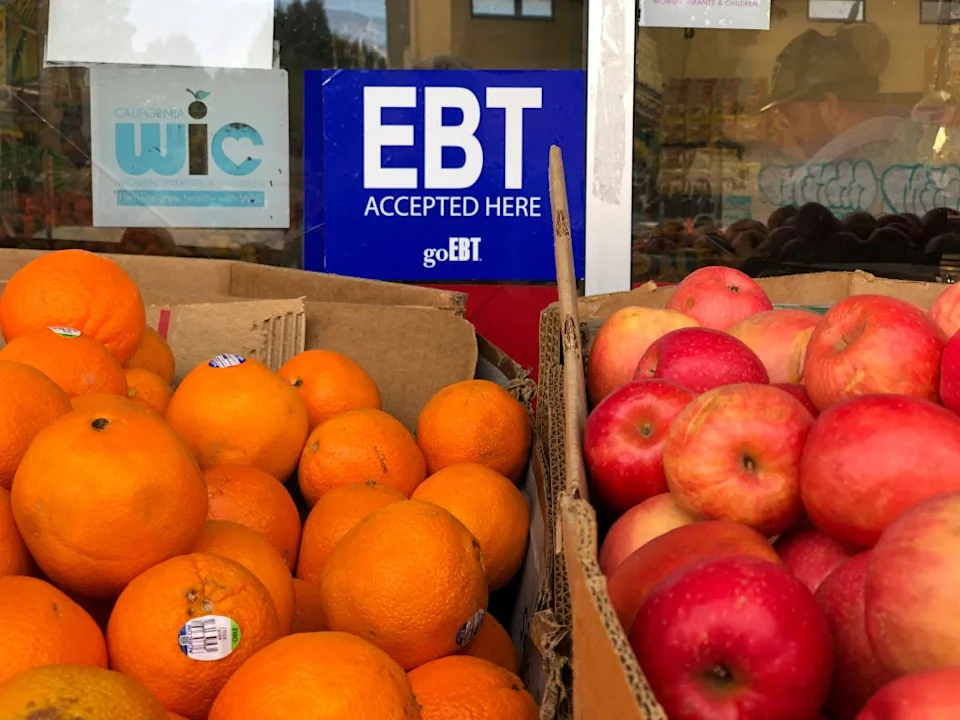
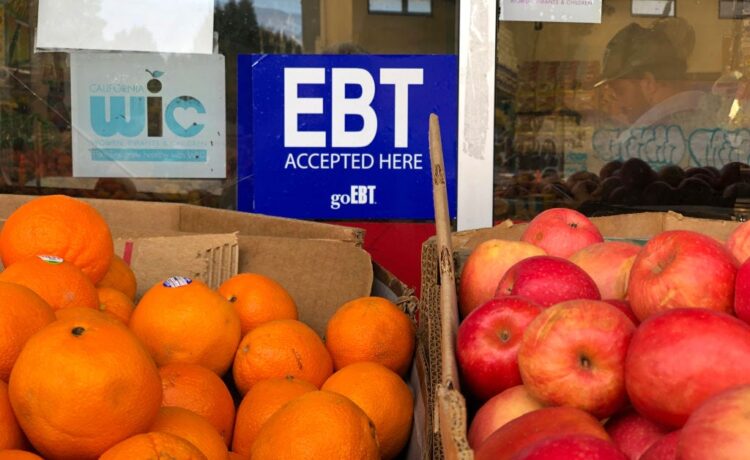
SNAP provides monthly benefits to millions of Americans via an Electronic Benefits Transfer (EBT) card, which can be used to buy groceries at authorized retailers. Stores often advertise their participation in the program.
Yes, SNAP benefits are often referred to as food stamps. Electronic Benefit Transfer (EBT) is how SNAP participants use their benefits to purchase food.
The program was formerly named food stamps because the benefits were issued as paper coupons in the past. SNAP switched from issuing benefits through food stamps and implemented EBT in 2004.“When a participant shops at a SNAP authorized retail store, their SNAP EBT account is debited to reimburse the store for food that was purchased. EBT is in use in all 50 states, the District of Columbia, Puerto Rico, the Virgin Islands, and Guam,” The U.S. Department of Agriculture (USDA) website says.
Who is responsible for SNAP benefits?
The federal government funds SNAP, and the USDA’s Food and Nutrition Service (FNS) oversees the program, establishing rules and eligibility requirements. Individual states are responsible for administering the program and determining eligibility based on FNS guidelines.
“The federal government currently funds 100% of benefit costs, and the state’s administrative costs are currently shared 50/50 with the federal government. These cost-share policies will change in future years..” The Library of Congress website says.
According to a new law established on July 4, 2025, as a part of the Trump Administration’s One Big Beautiful Bill Act, in the 2028 fiscal year, states may be required to share part of the cost of SNAP benefits, depending on the state’s payment accuracy, with the possibility of later implementation for some states. And in the 2027 fiscal year, states’ shares of administrative costs will rise to 75%.
Government shutdown latest: States sue over SNAP cutoff
How much do you get for one person on SNAP?
According to the Center of Budget and Policy Priorities website, the average monthly SNAP benefit payout for one person in the 2026 fiscal year, which began this month, is $204, with a maximum benefit of $298.
Here’s what the CBPP website says for larger households:
-
Two-person household: Maximum $546, average $370
-
Three-person household: Maximum $785, average $588
-
Four-person household: Maximum $994, average $715
-
Five-person household: Maximum $1,183, average $839
-
Six-person household: Maximum $1,421, average $954
-
Seven-person: Maximum $1,571, average $996
-
Eight-person: Maximum $1,789, average $1,246
Is SNAP ending on November 1?
SNAP benefits will not renew on Nov. 1, due to the ongoing government shutdown. Although any existing EBT funds will still be available for SNAP participants to use, new payments will not be disbursed until the federal government re-opens.
That will affect the 42 million Americans (about 12% of the population) currently receiving SNAP benefits, including 2.9 million in Florida.
As of Nov. 1, the government has been shutdown for 32 days, the second-longest government shutdown in U.S. history. The most recent and longest government shutdown, which lasted from December 2018 through January 2019, spanned 35 days and cost the economy around $3 billion.
When will SNAP benefits end? How to get help in Florida
Can I still use the balance on my EBT card during the shutdown? Does your SNAP balance expire?
You still can use your existing SNAP benefits, which roll over every month if not used. You can check your EBT card’s balance at ebtEDGE.com or by calling 888-356-3281.
Where can I get food help? What assistance programs are available in Florida?
Ther are several food assistance programs in Florida that can help.
Feeding Florida: A statewide network of local food banks that serves all 67 counties. Feeding Florida offers a searchable map to help you locate a food bank near you, such as:
-
Second Harvest of the Big Bend: Calhoun, Columbia, Dixie, Franklin, Gadsden, Gulf, Hamilton, Jackson, Jefferson, Lafayette, Leon, Liberty, Madison, Suwannee, Taylor, Wakulla
-
Feeding Northeast Florida: Alachua, Baker, Bradford, Clay, Duval, Flagler, Gilchrist, Levy, Nassau, Putnam, St. Johns, Union
-
Feeding Tampa Bay: Citrus, Hardee, Hernando, Highlands, Hillsborough, Manatee, Pasco, Pinellas, Polk, Sumter
211 United Way: Heart of Florida United Way offers a free 211 Information & Referral Line, available 24/7/365, where someone can help you find resources in your area. You can also search their site for local food and meal resources.
Local churches: Many churches hold food drives to help their community, check near you. The Catholic Churches of Central Florida also offers mobile food drops, you can request assistance here.
However, be aware that food banks are also suffering a dramatically increased demand.
Some local groceries, restaurants and third-party companies are also offering sales and deals to help.
This article originally appeared on Florida Today: SNAP benefits pausing in November, what to know about food stamp funding