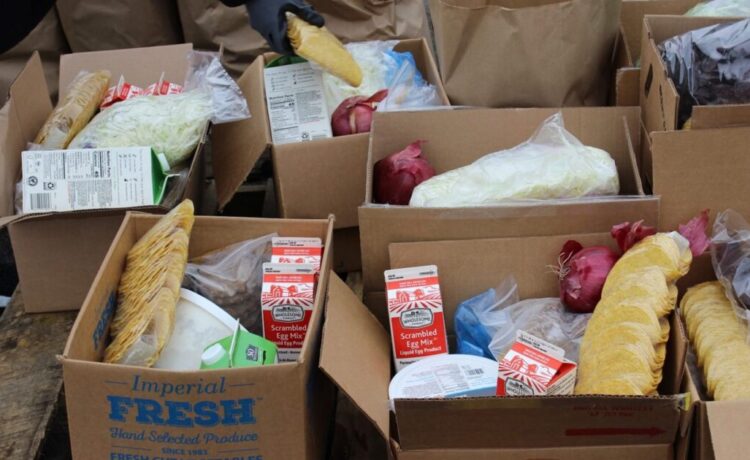
The newly-passed Pennsylvania state budget contains a much-needed multi-million dollar boost for the state’s food banks.
The state’s network of food banks has been walloped this year by cuts at the federal level, a lengthy state budget impasse that temporarily halted funds to the food banks, and a huge spike in demand when the monthly food assistance benefits of nearly two million people were delayed by the federal government shutdown.
The state budget, which was passed by legislators and signed into law by Gov. Josh Shapiro last week, includes an $11 million annual increase for a number of food assistance-related programs, state officials said.
“At a time when the federal government is cutting funding for our farmers to feed people, we are strengthening the ties between our farmers and our food banks, providing $11 million more for food security and support for hungry Pennsylvanians,” Shapiro said during a budget-signing ceremony last week.
Those include: a $3 million increase to the State Food Purchase Program, an additional $1 million for the Pennsylvania Agricultural Surplus System, $2 million for a new state Food Bucks program to supplement SNAP, and $5 million in new funding to Pennsylvania food banks. This brings the total amount the state spending to more than $40 million in state funding on fighting food insecurity.
Food banks and anti-hunger groups said they welcomed the additional funds.
”Hunger Free Pennsylvania is eternally and extremely grateful for the fact that both sides of the aisle and the Governor recognized hunger is a real and pivotal issue, and everyone worked to make it a priority,” said Stuart Haniff, executive director of Hunger Free Pennsylvania, an umbrella organization of food banks.
“Our food banks are realizing a surge and an increase in demand, which is really unprecedented and is matching or exceeding the levels that existed during the height of the pandemic,” Haniff said.
The State Food Purchase Program allows food banks to buy pantry staples, both shelf-stable items as well as fresh foods, said Charlese McKinney, chief program officer at the Greater Pittsburgh Community Food Bank. The Pennsylvania Agricultural Surplus System, also called PASS, provides Pennsylvania-grown produce and proteins that food banks purchase and distribute to families in need instead of letting that surplus go to waste. The Greater Pittsburgh Community Food Bank uses this program to obtain milk and eggs, popular items for those the food bank serves, McKinney said.
The $50.1 billion annual spending plan was signed last week, more than four months overdue.