
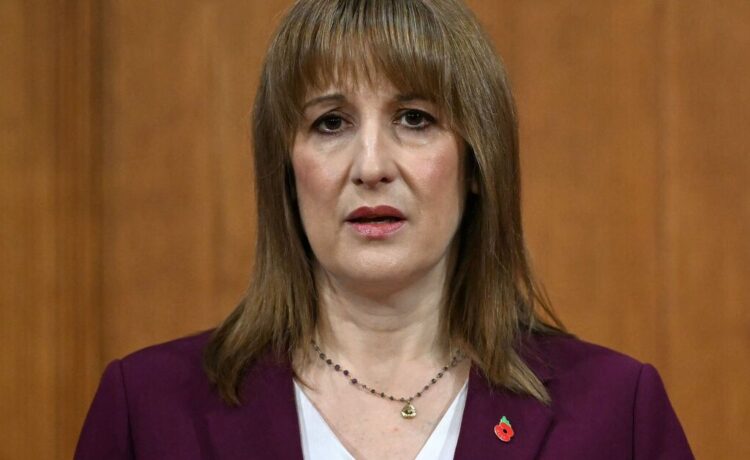

Six changes Rachel Reeves is most likely to make on Wednesday (Image: Getty)
Rachel Reeves will unveil her Budget on Wednesday, setting out Labour’s next round of tax and spending plans. With the UK’s fiscal watchdog expected to slash growth forecasts for 2026 and beyond, the Chancellor faces a £20-30billion hole in public finances, driven by weaker economic growth and rising debt costs.
Ms Reeves has warned that everyone will “have to contribute” to securing the country’s economic future, and speculation is rife over which taxes she may raise. Here, we break down some of the changes the Chancellor is most likely to announce as she seeks to shore up the books.
READ MORE: Cutting cash ISA would be huge ‘backward step’ for UK economy, warn experts
READ MORE: Kemi Badenoch unleashes on Rachel Reeves as she exposes ‘stealth tax bombshell’

Ms Reeves will unveil her Budget on Wednesday, November 26, at around midday. (Image: Getty)
Income tax
Rachel Reeves is widely expected to extend the freeze on income tax thresholds until 2030. By keeping the thresholds at current levels, the Treasury could raise around £8.3billion a year in 2029/30.
This move would trigger “fiscal drag”, pulling more people into paying tax for the first time or into higher rates. The number of Britons paying the top rate is set to climb by 500,000 to seven million this year.
The move is seen as a way for Ms Reeves to boost revenue without formally raising tax rates, a strategy often dubbed a “stealth tax”. Current income tax thresholds have been frozen since 2021 under Boris Johnson’s Conservative Government. At the moment, these thresholds are frozen until 2028.
Mansion tax
Brits with high-value homes could face a new tax on their property, which has been referred to as a “mansion tax” in the lead-up to the Budget.
The charge would target around 100,000 of the country’s priciest homes, revaluing properties in council tax bands F, G and H. The new surcharge is expected to apply to homes valued at £2million and above.
Salary sacrifice schemes
Another area attracting attention in recent weeks is pension salary sacrifice schemes.
Ms Reeves may be drawing up plans to restrict or cap pension salary sacrifice schemes, a move that would raise revenue from National Insurance contributions but hit both employers and employees.
Salary sacrifice allows workers to exchange part of their pay for pension contributions, reducing income tax and NI bills for both sides. Treasury officials are reportedly considering a £2,000 annual cap on the amount of salary that can be sacrificed without incurring NI.
If introduced, this would cost a worker on £45,000 about £30 more in NI each year, and their employer £34, reducing the incentive to contribute more to pensions.
Critics warn that limiting the NI exemption could discourage pension saving, particularly among higher earners, at a time when the Government is seeking to improve retirement adequacy.
Cash ISA allowance
It’s largely expected that the Cash ISA tax-free allowance will be cut from £20,000 to around the £12,000 mark, in an attempt to encourage more savers to invest in Stocks and Shares ISAs.
While the potential move has been widely criticised, the average amount subscribed to a Cash ISA in the 2023–24 tax year was almost £7,000 per person. This is much lower than the annual allowance – and lower than the potential cut.
However, building societies warn that the move could have a knock-on effect on mortgage rates, as a smaller allowance would impact their ability to lend.
Tim Bowen, CEO of Wilmslow-based Mutual Vision and former CEO of Penrith Building Society, said the move would be a step backwards. He said: “Cutting the Cash ISA limit to £12,000 would not just be a backward step for UK savers but the whole building society ecosystem. Less money being saved means there will be less to lend, which is bad news for borrowers and the property market as a whole.
“Last year, in her Mansion House speech, the Chancellor acknowledged the value that mutuals bring and their critical role in the UK financial services landscape, also stating she wished to double the size of the mutual sector, so this would undermine that and be a backwards step.”
Two-child benefit cap
Ms Reeves is expected to scrap the limit that restricts the child tax credit and Universal Credit to the first two children in most households.
Estimates vary on the cost of this measure, with the Resolution Foundation estimating around £3.5billion by the end of this Parliament (2029/30), while the Child Poverty Action Group and Joseph Rowntree Foundation have lower calculations of around £3billion by then.
The move could prove particularly lucrative for larger families, as calculations suggest a family with six or more children could pocket an extra £14,000 per year.
Ms Reeves will unveil her Budget on Wednesday, November 26, at around midday.