
European Social Commerce Market

Dublin, April 21, 2026 (GLOBE NEWSWIRE) — The “Europe Social Commerce Market Intelligence and Future Growth Dynamics Databook – 50+ KPIs on Social Commerce Trends by End-Use Sectors, Operational KPIs, Retail Product Dynamics, and Consumer Demographics – Q1 2026 Update” has been added to ResearchAndMarkets.com’s offering.
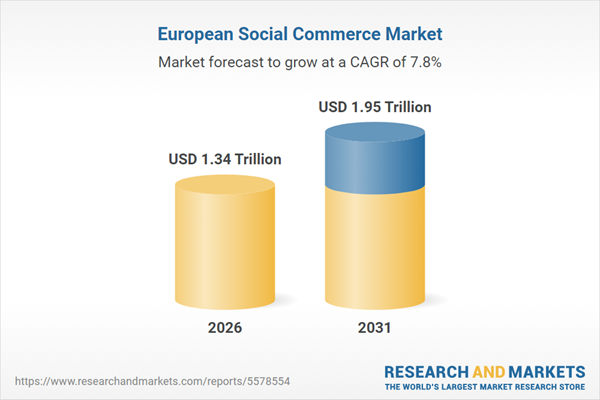
The social commerce market in Europe is set to continue its significant growth trajectory, with expectations to expand by 8.9% annually, reaching a projected value of USD 1.34 trillion by 2026. This expansion is fueled by a robust compound annual growth rate (CAGR) of 10.8% experienced during 2022-2025, and a forecasted CAGR of 7.8% for 2026-2031. By 2031, the sector is expected to grow from USD 1.23 trillion in 2025 to approximately USD 1.95 trillion.
Key Trends and Drivers
Move Checkout Inside the Content Stream
-
Europe is transitioning social platforms from simple referral tools to transaction channels. Recent expansions by TikTok Shop to countries such as Spain, France, and Germany highlight this shift. Retailers face pressure to minimize the distance between discovery and purchase, enhancing conversion rates, particularly in categories like beauty, fashion, and lifestyle.
-
Platforms aim to retain users in-app longer to capture a larger share of the shopping journey. This trend will not spread evenly, with some markets adopting hybrid paths where social content drives users to retailer or marketplace sites.
Live Shopping and Short Video as Routine Selling Layers
-
Live shopping and short-form videos are becoming regular parts of commerce operations, exemplified by TikTok’s practices in the UK and ABOUT YOU’s live events in Germany. The functional appeal lies in product demonstration, consumer interaction, and streamlined decision-making.
-
This model is particularly effective in driving sales in segments like beauty, apparel, and lifestyle, and is anticipated to evolve towards regular, thematic programming rather than occasional campaigns.
Integrating Creator Commerce into Retail Operations
-
The shift from influencer campaigns to structured creator-led commerce is evident, with TikTok Shop’s affiliate programs and strategic creator partnerships shaping the market. Retailers must develop scalable models for continual engagement, employing creators as a staple in their selling infrastructure.
-
Expect models to evolve, combining content production, affiliate incentives, and live hosting to optimise creator commerce, requiring disciplined management of creators and measurable performance metrics.