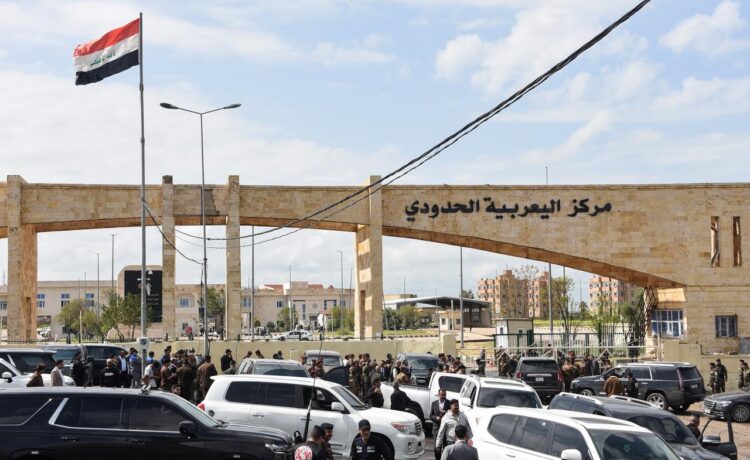
People wait to cross over into Syria on the al-Rabia border crossing on April 20, 2026. (AFP Photo)
April 22, 2026 10:33 AM GMT+03:00
The United States has stopped dollar shipments to Iraq and suspended military cooperation and counterterrorism support, including halting a cargo plane carrying close to $500 million in cash, in an escalating pressure campaign demanding that Baghdad dismantle Iran-backed militias that have been attacking American bases.
The development placed Iraq, which maintains ties to both Washington and Tehran, under mounting pressure to choose sides as its two partners are at war.
Treasury stops cargo plane carrying $500M in cash
The Wall Street Journal (WSJ) reported on Tuesday that U.S. Treasury Department officials stopped a cargo plane carrying nearly $500 million in cash intended for Iraq’s central bank, the second planned dollar transfer that Washington had postponed since the Iran war began on Feb. 28.
The pause followed weeks of militia attacks on American facilities in Iraq and neighboring countries.
Washington also notified Baghdad it was suspending financial support for certain counterterrorism initiatives and military training programs until militia attacks ceased and Iraqi authorities took action to disband the armed factions.
An Iraqi Defense Ministry official who spoke to the WSJ said that the halt to cooperation and funding was “until further notice.”
The Pentagon said it “continuously evaluates security assistance provided to allies and partners to ensure it is aligned with U.S. priorities.”
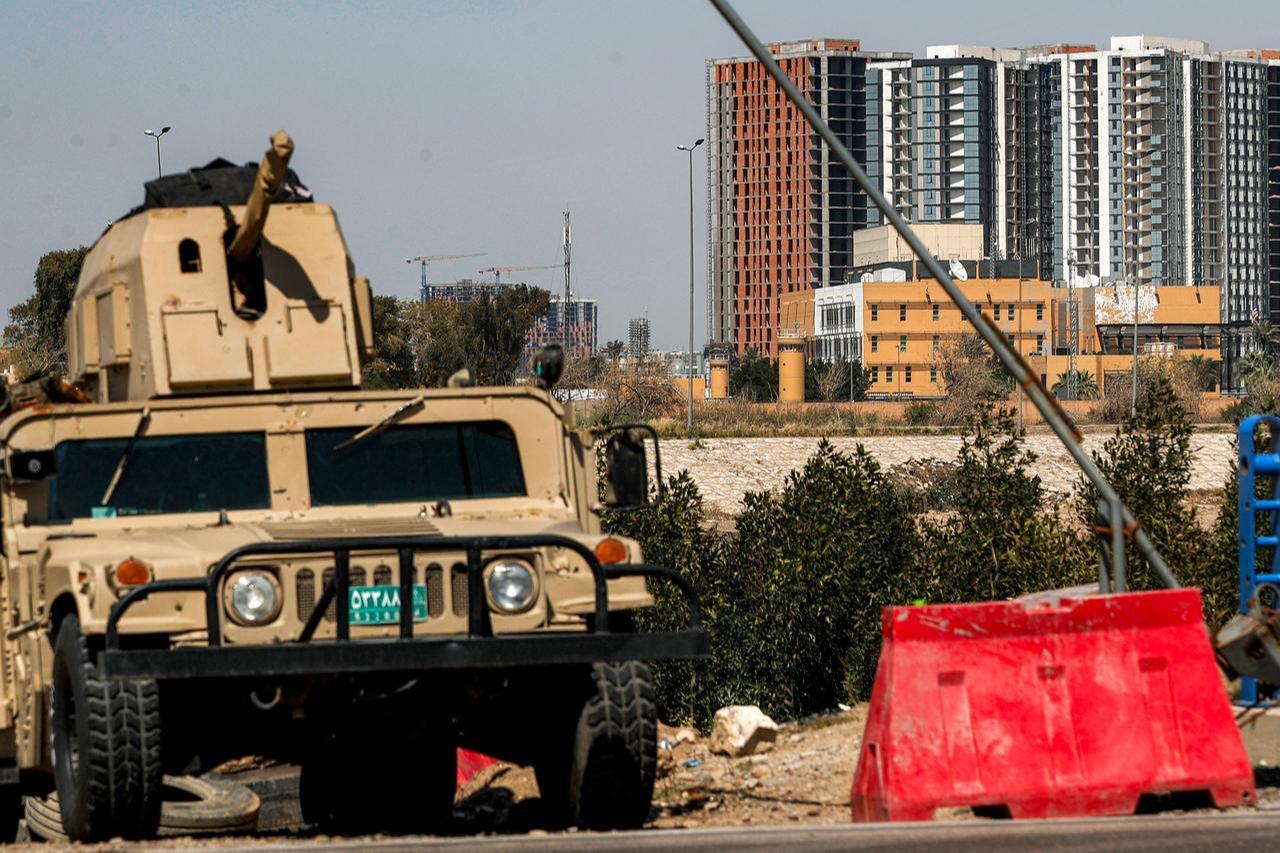

An Iraqi army armoured humvee vehicle is deployed near the banks of the Tigris River to protect the US Embassy headquarters (R) in Baghdad’s fortified “Green Zone” on March 18, 2026. (AFP Photo)
‘Dismantle Iran-aligned militias, or the relationship is affected’
State Department spokesperson Tommy Pigott issued a formal statement.
“The Iraqi government’s failure to prevent these attacks while some elements associated with the Iraqi government continue to actively provide political, financial, and operational cover for the militias adversely impacts the U.S.-Iraq relationship.”
“The United States will not tolerate attacks on U.S. interests and expects the Iraqi government to immediately take all measures to dismantle the Iran-aligned militia groups in Iraq,” Pigott said.
The halt to security cooperation includes the suspension of joint counterterrorism operations against Daesh, as well as training and logistical support for Iraqi forces.
An Iraqi official said losing U.S. support would affect logistical support for the Iraqi air force as well as training programs.
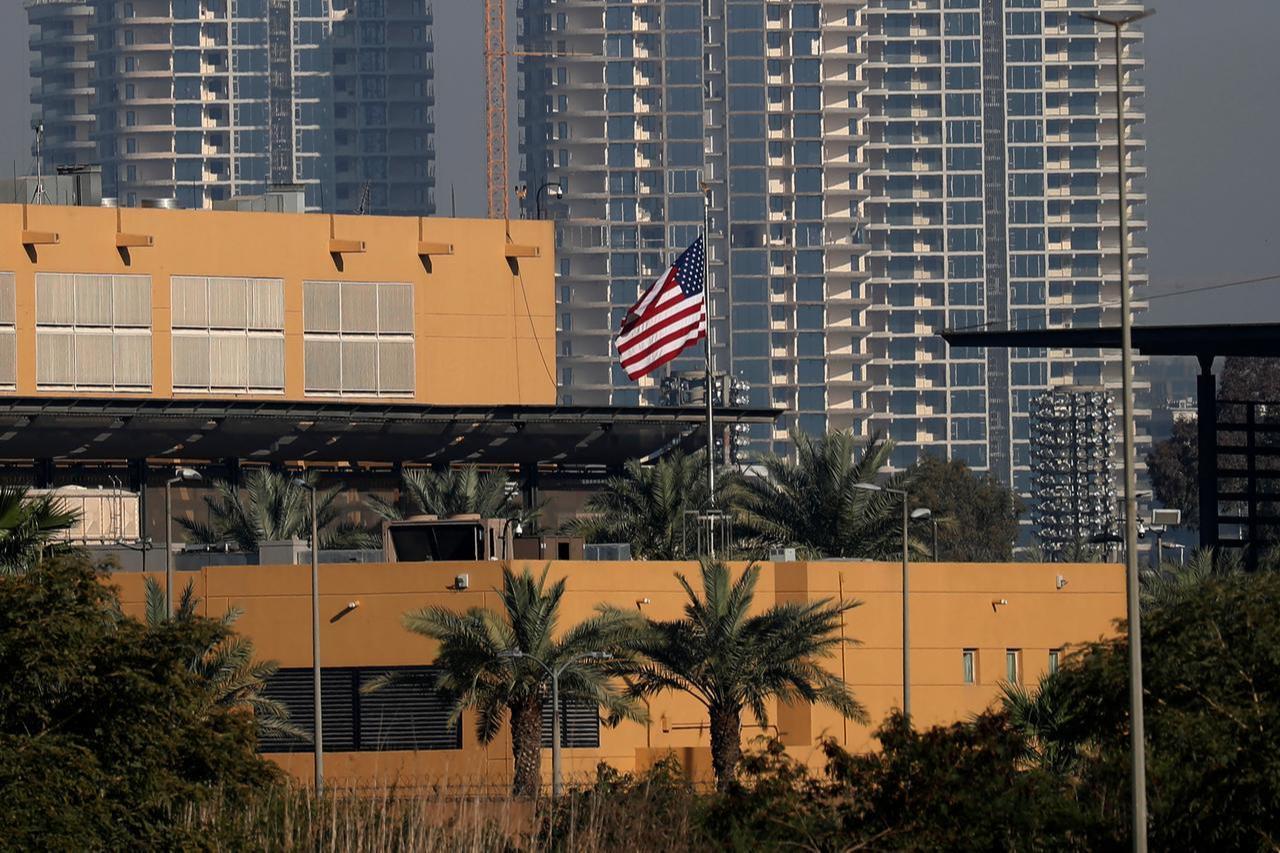
The US flag flutters outside the US Embassy, seen across the Tigris River in Baghdad’s fortified Green Zone on March 17, 2026. (AFP Photo)
‘Boundaries of Iraqi state itself blurred’
Ramzy Mardini, founder of Geopol Labs, told the Wall Street Journal that forcing out Iran-linked militias now risked triggering state collapse.
“The issue isn’t simply a lack of willpower or capacity; it’s that the boundaries of the Iraqi state itself are blurred. American coercion, in this case, rests on the flawed assumption that the Iraqi government can act as a unified, autonomous actor. What exactly constitutes ‘the state’ in Iraq when independent armed actors are embedded within it? It’s a reality that the Trump administration has repeatedly failed to grasp,” Mardini said.
The U.S. Embassy in Baghdad posted a warning Monday that Iran-backed militias in Iraq were planning attacks on U.S. citizens and U.S.-connected targets, reiterating its warning against travel to Iraq and suspending all consular services.
Earlier this month, American journalist Shelly Kittleson was kidnapped in Baghdad by Iran-allied militia Kataib Hezbollah and freed after a week, following negotiations by the Iraqi prime minister.
New government formation ‘could unlock’ cooperation
Hussein Allawi, security adviser to Iraqi Prime Minister Mohammed Shia al-Sudani, told the WSJ that U.S. support had been suspended “until a new government has been formed,” which could happen within days or weeks.
“The cooperation and coordination is something that needs to be continued,” Allawi said.
Trump had previously threatened in January to withdraw U.S. support for Iraq if former Prime Minister Nuri al-Maliki, seen as Iran-aligned, returned to power.
Al-Maliki called the threat “blatant American interference.”

April 22, 2026 10:34 AM GMT+03:00