
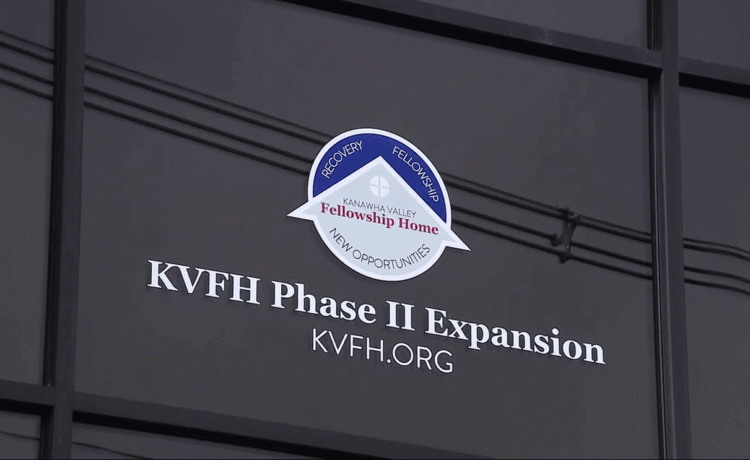
Charleston, W.Va. — Kanawha Valley Fellowship Home is expanding its Charleston recovery campus with opioid settlement money as demand for sober housing remains high.
The project will add 12 beds and bring more stages of recovery onto one Virginia Street campus, giving more men the opportunity to move from structured sober living toward independence.
Executive Director Dick Daugherty said the expansion comes as overdose deaths are declining, but the need for recovery support remains.
“The problem is that people aren’t using any less drugs,” Daugherty said. “They’re just staying alive from it. So we’re having an opportunity to help them get better.”
Daugherty said sober housing fills an important gap for people leaving treatment, jail or unstable living situations.
“Transitional living or sober housing is very, very important,” he said. “It’s a building block. You can’t recover from addiction unless you have a place to live.”
The Fellowship Home currently has a waiting list. The expansion will add 12 beds, bringing its total capacity to 47.
The project will remodel the building next door and create a more connected recovery campus. Daugherty said 27 beds will be available along Virginia Street for men to stay for up to one year.
“We think the first year is a critical point for people in early recovery,” Daugherty said.
The Fellowship Home uses a phased approach that moves residents from structured sober living into aftercare and eventually toward independent living.
Daugherty said the organization helps residents find jobs, regain driver’s licenses, address health needs and build the stability needed to live on their own.
Some of the expansion is being supported by money recovered through opioid settlements.
Daugherty said the Fellowship Home received $25,000 from the city of Charleston last year and expects at least that much again this year.
Jonathan, who spent 10 months at the Fellowship Home while recovering from alcohol addiction, said the structure was difficult at first.
“I didn’t like it at first,” he said. “All the structuring and people telling me what to do and how to do it.”
He said he eventually embraced the program, found work and became active in Alcoholics Anonymous.
“Now I’m involved in AA,” Jonathan said. “I do all the things that they tell me to do and help another alcoholic to have what I have.”
Jonathan said seeing money invested in expanding the program gives him hope that others can find the same support.
“It makes me feel proud,” he said. “Hopefully people will get it and understand the way I understood it.”
For Daugherty, success is ultimately measured by what happens after residents leave.
“We believe that men are sick, getting well, not bad, getting good,” he said.
Jonathan said his own life looks much different today.
“I was broke and beaten down,” he said. “I was really angry, a hateful person. And today I know peace and serenity. And that means everything.”