It is a clear political fact of life that the Trump administration has been working to shatter all the post-war organisations and mechanisms set up, largely on the initiative of the United States, to maintain the economic and financial stability of the global capitalist system.
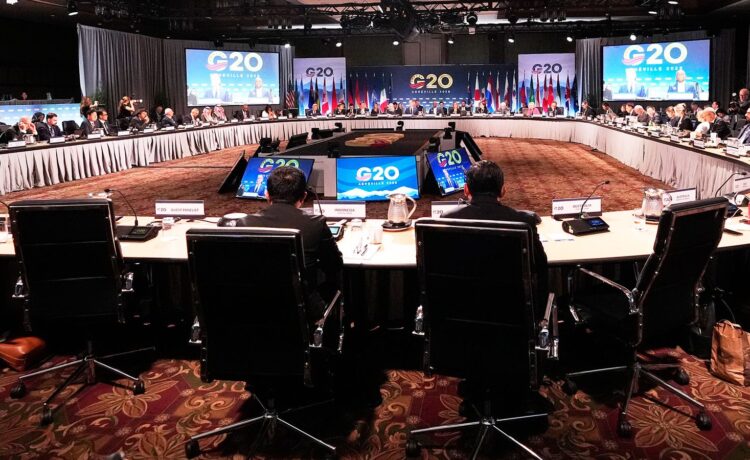
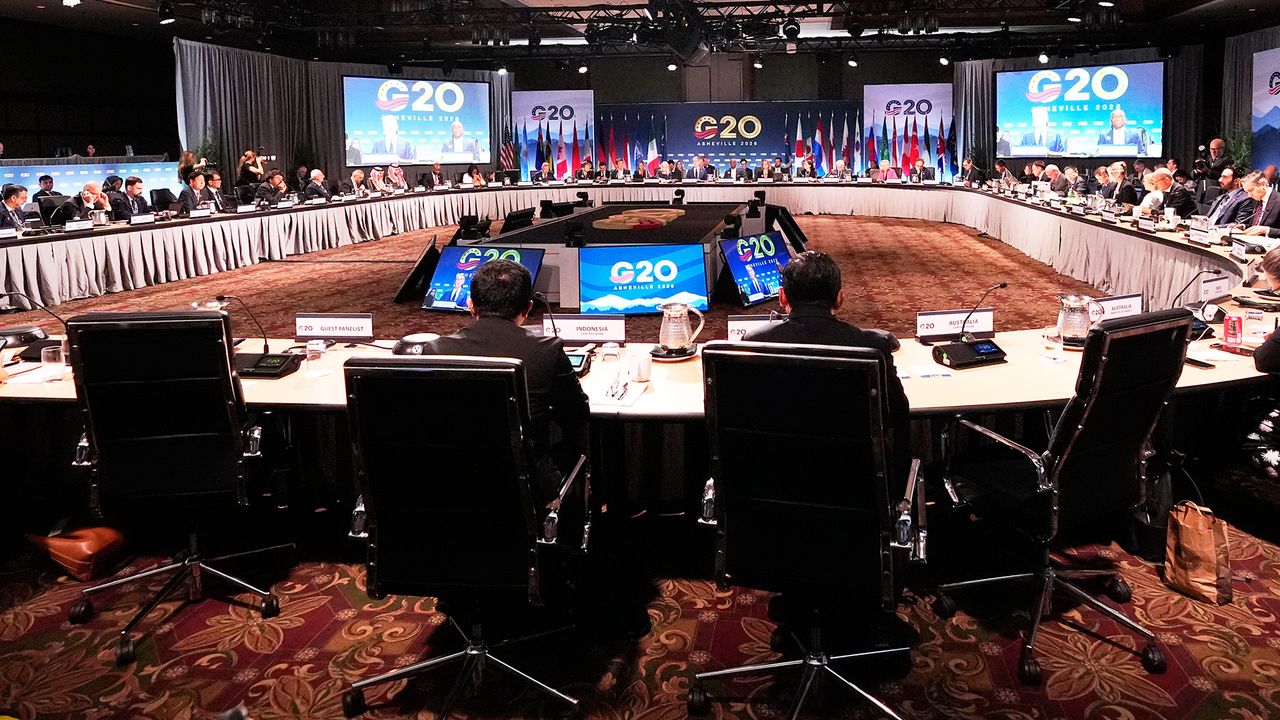
This reality has been underscored by the meeting of G20 finance ministers and central bankers held for two days earlier this week in Asheville, North Carolina.
The fundamental view of the Trump administration is that all the supposed mechanisms of international cooperation, established by the US in the immediate post-war period to advance its interests, have turned into the opposite.
Instead of being the means through which US capitalism could prosper, through a stable and expanding global economy, they have become a means through which it is taken advantage of, robbed and “ripped off,” not least by its one-time partners and allies.
Confronting the US decline, the Trump administration—expressing in its most naked form the drive of the financial oligarchy to restore the dominance of American capitalism and take it to new heights—has initiated sweeping tariff measures, deployed financial sanctions against a range of countries and used Mafia-like standover tactics to demand foreign investments in the US—Japan and South Korea being two notable recipients of this treatment.
The operation against the post-war organisations is now being extended to the G20 formation, which was set up in response to the financial crises that started to engulf global capitalism from the end of the 1990s.
It was established in 1999, based on the belief that the G7 was too narrow a body and that a new international mechanism for managing the affairs of global capitalism needed to be put in place. It was a response to the Asian financial crisis which, despite President Bill Clinton’s claim that it was only a “blip” on the road to globalisation, had an international impact, not least in the US.
The turbulence caused by the Asian crisis was ultimately responsible for the September 1998 collapse of the US hedge fund Long Term Capital Management (LTCM), which had to be bailed out to the tune of $3 billion by the New York Fed lest its demise set off a crisis in the US financial system.
Following the global financial crash of 2008, of which the LTCM collapse had been a preview, the G20 was upgraded so that once a year it would be a summit gathering of government leaders. Its enhanced role began with a meeting in London in November 2008 in which it was pledged that never again would there be a return to the dog-eat-dog struggles of the 1930s.
Those commitments lie in tatters, as the G20 meeting this week demonstrated.
It began with the decision by Trump that South Africa, as he had foreshadowed last year, would not be invited because white farmers faced a “white genocide.” These claims, which have been found to be false, serve as a cover for the real reason—hostility of the US towards South Africa’s closer ties with China via the BRICS grouping of countries.
It will also be excluded from the leaders’ meeting which is to be hosted by the US at the Trump-owned golf club in Doral, Florida, in December.
The administration, as has happened on other occasions, then issued a list of journalists from a range of news organisations who would not be given credentials. The most prominent of those blackballed was Alan Rappeporte from the New York Times, who has covered multiple G20 meetings since 2017. No reason was given for his banning and others.
Having established that the meeting was to be a US-dominated affair, Treasury Secretary Scott Bessent then laid out his agenda. There was no talk of international co-operation; it was very much America first.
“We want the rest of the world to come along with our growth agenda, whether it’s deregulation, the energy interdependence, and we want to discuss global imbalances, banking regulations, some sovereign debt restructuring for developing countries,” he said on the eve of the meeting. In other comments to the business channel CNBC, he said: “We are really pushing for an American growth agenda for the rest of the world.”
That commitment was underscored by the invitations to American business chiefs, including from banking and cryptocurrency, to attend the gathering and meet with government leaders to create networking opportunities.
But the administration turned down a request from other G20 countries that some of their business executives be allowed to attend.
Underscoring the deepening divisions, the meeting opened on Monday with uproar from the European powers over the US decision, without informing its nominal allies across the Atlantic, that the Russian finance minister Anton Siluanov had been invited to attend in person. They protested by refusing to pose for a group photo with him present. While the European powers were up in arms, it was reported that Siluanov had held “productive” discussions with Bessent.
High on the US agenda was the drive to secure support for its economic sanctions against countries and entities that have trade and financial dealings with Iran. China is the main target, but Bessent has not specifically named it nor set a timeline for action, commenting when he announced the plan that he did not want to “blow up” the world financial system.
But the US is determined to go ahead with what it has called “Operation Economic Outcast.” In an interview on Sunday, Bessent said the administration was prepared to exact “financial violence if we have to” in order to completely cut off Iran from the global economy.
Just as the conference began with deepening divisions, so it concluded.
A final communiqué was not issued because of the US insistence, backed by the other powers, that it contain a reference to eliminating “non-market policies” to curb trade imbalances to which China would not agree.
Asked why China had opposed the language, a US official replied: “They are guilty.” This is in line with the persistent claim of the US and other major powers that the chief reason for increasing Chinese dominance in key areas of the economy, and their growing advances in the high-tech sphere, is not because of more efficient and cheaper production methods but is the result of state subsidies—non-market methods.
This accusation coming from the US is very much a case of the pot calling the kettle black because it is carrying out the largest series of non-market interventions, with the acceleration of the Trump trade war against the rest of the world.
Hanging over the meeting, as each of the participants sought the most favourable overcome for them, were the deepening problems in the global financial system. These were outlined in a letter to the gathering from Bank of England governor Andrew Bailey, in his capacity as chairman of the Financial Stability Board (FSB), a global financial watchdog.
The letter had two key messages: the new risks posed to the financial system by the development of ever more powerful AI models and the risks that are already present.
Bailey said the financial risk landscape had been complicated by the “emergence of frontier AI models, which are showing increasingly sophisticated autonomy and problem-solving abilities, as well as threat capabilities.”
The most immediate concern was the potential impact on cyber risk and that frontier AI may have the ability to “materially alter the speed, scale and economics of cyber risk, which could undermine market confidence system-wide.”
Needless to say, Bailey did not comment on the fact that, within utterly irrational capitalist economic relations, a technology which has the potential to enormously increase the productivity of human labour and economic advancement should contain the potential to set off a devastating financial crisis.
The other message was to repeat warnings the FSB has made on numerous occasions. This was that markets “remain vulnerable to potentially disorderly correction [a euphemism for a meltdown] that could spread across borders, particularly given fragilities in sovereign debt markets.”
Bailey said he remained concerned that, with the development of high levels of leverage in financial markets, “a large shock or combination of shocks could concurrently trigger multiple vulnerabilities.”
The G20 finance ministers meeting did nothing to address these concerns, nor will the leader’s summit in December, assuming the organisation staggers on until then.