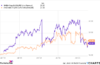

Emerging-market currencies are in the midst of an unusually prolonged rally. The MSCI Emerging Markets Currency Index rose for a 10th consecutive week through Friday, extending its longest winning streak in roughly 19 years since 2007. The U.S. jobs report came in far stronger than expected, briefly triggering dollar buying, but currencies such as the South African rand and Mexican peso quickly recovered their losses, leaving the upward momentum intact.
Market attention has already pivoted to next week’s U.S. inflation data. The prevailing view is that the Producer Price Index (PPI) on September 10 and the Consumer Price Index (CPI) on September 11 will largely determine whether the Federal Reserve proceeds with a rate hike at the September 15–16 Federal Open Market Committee (FOMC) meeting or holds steady.
US Jobs Report: Strength and Dovish Signals Mixed
The U.S. Labor Department reported on Friday morning that nonfarm payrolls increased by 162,000 in August, a sharp rebound from July’s unexpected decline. The figure far exceeded the consensus estimate of 56,000 and underscored the resilience of the labor market. The unemployment rate held steady at 4.1%. Average hourly earnings rose 3.1% year-over-year, slowing from 3.2% in July.
The deceleration in wage growth was interpreted as evidence of easing inflationary pressure. Noel Dixon, senior macro strategist at State Street, noted that the year-over-year increase in average hourly earnings was the lowest since June 2021. “The unemployment rate was flat, but wage growth is clearly slowing. If influential Fed officials are looking for justification, this number provides it,” he said.
The probability of a September rate hike implied by interest-rate futures rose to 57% from 50% before the jobs report. In New York foreign-exchange trading, the dollar gained against the yen and euro, though gains were partially trimmed amid position adjustments ahead of the three-day weekend and caution ahead of next week’s inflation data. The dollar index rose 0.21% to 99.17. The dollar-yen pair traded 0.26% higher at 156.19 yen.
Multiple Factors Supporting Emerging-Market Currencies
The extended rally in emerging-market currencies is not driven by any single factor. Marco Oviedo, strategist at XP Investments, said the jobs report “confirmed that CPI is the data point that really matters.” He suggested that if core inflation decelerates on a year-over-year basis, a Fed pause would be nearly certain.
Inflows into emerging-market assets more broadly have also been notable. With advanced-economy bond yields rising sharply, investors have increasingly sought diversification. Additionally, the yen’s sharp appreciation—driven by expectations that the Bank of Japan may accelerate its rate-hike pace—has exerted downward pressure on the dollar, providing a tailwind for emerging-market currencies. The yen is testing the 155.21-per-dollar level reached after the coordinated Japan-U.S. intervention in late July; a break above that level would mark the strongest yen since May 6.
Emerging-market equities are also performing well. The MSCI Emerging Markets Equity Index rose 1.5% on Friday, with artificial intelligence (AI)-related stocks leading the advance. The index has turned positive on a weekly basis as well.
Fed Officials’ Remarks and Market Interpretation
Among Fed officials, a cautious stance prevails as they seek to assess the inflation outlook. Governor Christopher Waller said on Wednesday that he would support holding policy rates steady at this month’s FOMC meeting if upcoming economic data confirm easing inflationary pressure. New York Fed President John Williams noted there is evidence that inflation is continuing to decline as the impact of tariffs fades, and said rising energy prices have not spilled over into other service sectors.
However, some caution remains. Dan Pan, economist at Standard Chartered, said that while soft inflation data could provide a temporary boost to emerging-market assets, “inflationary pressures remain entrenched, and market expectations for Fed rate hikes will remain elevated overall.”
Japanese Currency Authorities Remain on Alert
Amid the yen’s sharp swings, Japanese currency authorities are on high alert. Vice Finance Minister for International Affairs Atsushi Mimura said on Thursday that Japan’s stance on currency intervention “remains unchanged—we are in a state of readiness,” adding that he has been “in constant contact” with U.S. currency authorities even after the G20 finance ministers and central bank governors meeting held in the United States through September 1.
Market participants have also pointed to the possibility that rising Japanese government bond yields could prompt Japanese institutional investors—such as insurers and pension funds—to pull back from U.S. Treasuries and shift funds into Japanese government bonds. Such a shift in capital flows would further strengthen the yen and, through dollar weakness, amplify the spillover into emerging-market currencies.
The 10-week winning streak in emerging-market currencies vividly illustrates that global investment capital is increasingly embracing risk. However, if next week’s U.S. inflation data disappoints market expectations, the risk of a sharp reversal in this trend cannot be dismissed.