Nvidia’s numbers have long since transcended the boundaries of a typical chip company. The company is expanding from processors into communications, software, computing systems and investments in AI companies, while also helping to finance the ecosystem that buys its products. In doing so, it is becoming not just the major supplier of the AI revolution, but one of the companies shaping and funding it.
A week and a half ago, Nvidia published its second-quarter results for fiscal 2027. Nvidia reports according to a fiscal year that does not coincide with the calendar year, with its fiscal year ending in the last week of January. The company’s revenue totaled $96.2 billion, an increase of 106% from the corresponding quarter, and it expects revenue of about $108 billion in the next quarter. The results and forecast reinforced expectations that rapid growth will continue through calendar 2027. Following the earnings report, Nvidia’s stock soared, and on August 27, the company’s market value reached about $5.5 trillion. The following day, the stock experienced a slight sell-off, and its market value fell to $5.24 trillion.
Nvidia is the company with the greatest impact on the AI revolution. The processors, computing systems, networking equipment and software it develops form much of the infrastructure on which many of the world’s most advanced AI models are built and run. In recent years, the company has rapidly expanded its product and service offering, from GPU chips to processors, communications systems, storage, software and complete computing systems, with the aim of becoming a central provider of almost every layer of data center infrastructure required for the AI era. Some of that expansion has been achieved through acquisitions.
Nvidia’s success raises a broader question: Is this an unusual investment cycle, or the beginning of a long-term structural change in the semiconductor industry?
Nvidia is the world’s most valuable company and the clear leader in the semiconductor sector. Traditionally, the sector has been cyclical, with periods of rapid growth in demand and investment alternating with periods of overcapacity, inventory buildup and slowdown. A common rule of thumb is a three- to five-year cycle, although the length varies widely across different segments of the industry.
The cyclical nature of the semiconductor industry is particularly evident in the memory chip market, but it also exists in processors, CPUs and other areas. However, the expansion of demand for GPUs and AI systems is taking place on a different scale. Huge investments by cloud companies and data centers in AI infrastructure are rapidly increasing demand for computing and may extend the positive investment cycle beyond the traditional cyclicality of the chip industry. As a result, investors in the semiconductor sector are constantly looking for signs that the growth rate is beginning to change.
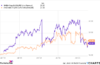
The performance of the capital markets illustrates how unusual the current cycle is. The SOXX basket fund, which invests in semiconductor stocks, rose about tenfold from the end of June 2019 to the end of June 2026, compared with a 2.5-fold increase in the SPY basket fund, which tracks the S&P 500. Nvidia’s stock itself rose about 48-fold over the same period. Part of the extraordinary increase is also related to the acquisition of Mellanox, completed in 2020, which significantly expanded Nvidia’s activities in communications and networking for data centers.
Since the beginning of July this year, the SOXX basket fund has retreated by about 20%. Nvidia, on the other hand, returned to a price close to the peak it recorded earlier this year following its strong earnings report. The gap between Nvidia’s performance and that of the broader sector illustrates that investors do not value all chip companies in the same way, and that Nvidia continues to benefit from exceptionally high growth expectations.
Nvidia employs approximately 42,000 people worldwide, including about 6,000 in Israel. Its Israeli operations have expanded rapidly since the acquisition of Mellanox and include a significant presence in communications, chips, software and systems engineering. Because of its size and scope, Nvidia has a growing impact on the Israeli economy, including exports, employment, activity in the high-tech industry and state tax revenues.
Over the past decade and into the beginning of this decade, Nvidia has significantly upgraded its GPU chips. Products that once focused primarily on graphics processing have become central parallel processors for artificial intelligence applications, simulations and data centers.
In 2022, Nvidia introduced the Hopper GPU architecture, led by the H100 processor. The product family is primarily designed for training and running large AI models, high-performance computing and data centers.
In 2024, Nvidia launched its Blackwell architecture, expanding the company’s approach from a single processor to a complete system that includes a CPU, GPU, memory, communication between accelerators and software.
Expected competition from Google
In December 2025, Nvidia acquired a significant portion of Groq’s technology, particularly its LPU architecture, which was designed specifically for inference, running already-trained models and generating responses at high speed. The deal included a payment of $13 billion and an additional $4 billion in future payments.
Another leap forward is the Vera Rubin architecture. Its main innovation is the closer integration of processors, AI chips, memory and communications, allowing large systems to operate faster and more efficiently. Vera Rubin is designed not only for training models but also for optimizing inference, producing more responses in less time and with lower power consumption, particularly for large models. During the analyst call following the earnings release, Nvidia said that systems based on Vera Rubin had already been delivered commercially to customers during August 2026.
Over the weekend, Nvidia announced that it had agreed to acquire Hugging Face for $11.9 billion in cash and another $1 billion in options. Hugging Face will bring Nvidia models, a developer community and runtime capabilities. Together with the Groq deal, the acquisitions expand Nvidia’s product and service offering into additional parts of the AI chain, as the company seeks to increase the sources of revenue it generates from each data center.
The expectation is that the mix of data center workloads will gradually change, shifting from a high proportion of training, the process of developing models, performed mainly by companies building large language models, toward a growing share of inference, or running already-trained models to generate answers, perform tasks and power AI-based applications.
Nvidia’s preparation for this shift is evident in the combination of Groq technology, which specializes in fast, low-latency inference, and the Vera Rubin platform, which can integrate Groq 3 LPX accelerators dedicated to inference alongside Vera Rubin’s GPU and CPU.
Investors’ concern stems from the expectation that Nvidia will face more intense competition in chips designed for inference, particularly from Google. A shift in the mix of data center workloads toward inference could therefore create a greater competitive challenge for Nvidia.
92% of revenue comes from data center infrastructure
The AI revolution has enabled Nvidia to deliver an extraordinary increase in revenue. In fiscal 2023, which ended in January 2023, the company’s revenue totaled $26.97 billion. In fiscal 2024, it jumped to $60.92 billion, and in fiscal 2025, it doubled again to $130.5 billion. In fiscal 2026, which ended in January 2026, the growth rate moderated to 65%, while revenue reached $215.9 billion.
This year, however, revenue is expected to jump to about $400 billion, an increase of about 85% from the previous year. During the analyst call, Nvidia said it expects revenue to increase by another 70% next year, with that fiscal year ending in January 2028. The company’s confidence in the forecast stems, among other things, from its assessment that demand will remain high and that the factor limiting sales will be chip supply and production capacity.
Nvidia’s gross margin was about 75% in each of the first two quarters. It is expected to fall to about 74% in the third quarter and 71%-72% in the fourth quarter, mainly because of the sharp increase in memory chip prices. The operating margin was about 66% in the first two quarters, and its expected decline later this year is expected to be more moderate than that of the gross margin, thanks to the sharp increase in revenue and the fixed component of operating expenses.
Based on these assumptions, the company’s operating income this year is expected to be approximately $260 billion, while net income on a non-GAAP basis is expected to reach approximately $218 billion.
In this analysis, it is preferable to use non-GAAP data, partly because of the company’s conservative approach to neutralizing certain accounting expenses and because these figures exclude capital gains from investments, which were significant this year. Nvidia reported investment gains of $15.94 billion in the first quarter and $7.77 billion in the second quarter. As noted, these gains are excluded from our analysis.
Approximately 92% of Nvidia’s revenue comes from data center infrastructure, including chips and connectivity. In the first half of the year, the company’s three largest direct customers accounted for 44% of revenue. Geographically, about 62.4% of revenue came from customers headquartered in the United States. Since these are companies with multinational operations, some of those sales ultimately went to other regions. About 28% of revenue came from Taiwan, about 8% from China and Hong Kong, with China’s direct share accounting for less than 1%, and 1.6% from the rest of the world.
Nvidia’s expected earnings multiple for this year is about 24, based on a market value of $5.24 trillion and estimated non-GAAP net income of $218 billion. However, the company’s revenue and earnings are expected to continue growing rapidly next year. According to the assumptions in this analysis, based on revenue growth of about 70% and a gross margin of about 72%, revenue could reach approximately $680 billion and net income about $370 billion. That would bring the forward earnings multiple down to about 14, which appears low relative to the expected growth rate.
Under these assumptions, Nvidia’s stock does not look expensive based on its forward earnings multiple relative to its expected growth rate. This conclusion is also supported by the relatively high probability that the company will meet its sales target for next year. If demand for data center infrastructure continues to grow rapidly from 2028 onward and Nvidia manages to maintain its leading position, further growth in revenue and profits could support a further increase in the share price.
The negative scenario, however, includes a slowdown in the construction of new data centers beginning toward the end of the current decade, the emergence of significant competition from other companies, and the accelerated development of dedicated AI chips by Nvidia’s largest customers themselves. These factors could slow the growth of revenue and profits and weigh on the share price.
Another risk is rapid improvement in computing efficiency. If more AI functionality can be extracted from each unit of hardware, the growth rate in demand for chips could be lower than the growth rate in AI usage.
Nvidia divides its data center revenue into two main markets: hyperscale customers, which mainly include cloud providers and large internet companies, and the rest of the market, defined as ACIE, AI Clouds, Industrial & Enterprise.
Nvidia makes this analytical distinction to show the sources of growth in its data center business and illustrate the expansion of demand beyond the relatively limited group of hyperscale customers. A broader distribution of demand could reduce Nvidia’s dependence on hyperscale customers, which are themselves exposed to the risk of developing dedicated chips, as well as to changes in the composition of demand as the AI market gradually shifts from model training toward inference.
In the second quarter of fiscal 2027, Nvidia’s revenue from hyperscale customers reached $48.7 billion, an increase of 13% from the previous quarter. ACIE revenue totaled $40.3 billion, an increase of 25%.
According to Nvidia’s forecast, most of the growth in the third quarter is expected to come from ACIE, while growth in hyperscale is expected to accelerate again in the fourth quarter and throughout fiscal 2028 as the supply of the Vera Rubin platform expands. As noted, Nvidia expects fiscal 2028 revenue to grow by about 70%, with supply constraints expected to remain a limiting factor at least through the end of that year.
Alongside its business expansion, Nvidia has significantly increased its investment activity across the AI ecosystem. The company reported that, as of the end of the quarter, it had about $99 billion invested in shares of other companies, as well as another $25 billion in commitments for future investments. These investments are focused on AI model makers, infrastructure companies and other private companies.
The investments help fast-growing companies finance the computing and data center infrastructure they need, allowing Nvidia to bridge the gap between the large investments those companies require and the future cash flow expected to result from them. But this also raises concerns about potential circular financing: Nvidia invests in companies that can then use that money to purchase Nvidia infrastructure and processors.
Nvidia, on the other hand, argues that these are also strategic investments in companies with the potential to become technology leaders, strengthening the ecosystem and supporting long-term demand for accelerated computing.
One of Nvidia’s most notable investments was in xAI, Elon Musk’s artificial intelligence company, which was later merged into SpaceX. Following the merger, Nvidia held 122.8 million SpaceX shares at the end of June, now worth about $17 billion. Another significant investment is in Intel. At the end of June, Nvidia held 214.8 million Intel shares worth about $20 billion. In both cases, Nvidia benefited from a significant increase in the value of its holdings.
In August 2026, Nvidia entered into memoranda of understanding with six major investment and financial institutions to establish independent financing platforms designed to raise more than $500 billion from third parties over time to build AI infrastructure. The move is intended to facilitate financing for the acquisition of Nvidia products.
Will demand for AI grow fast enough?
Nvidia expects a significant decline in gross margin over the next two quarters, mainly because of the sharp increase in component costs, particularly memory prices. As noted, the gross margin was 75% in the second quarter, and Nvidia expects it to decline later this year. In fiscal 2028, the gross margin is expected to stabilize at around 72%-73%, after the price increases take effect in the first quarter.
The advanced memory market is largely dominated by three manufacturers: SK Hynix and Samsung of South Korea, and Micron of the United States. Of particular importance is HBM, or high-bandwidth memory, which has become a vital component in advanced AI computing systems and one of the key growth drivers of the memory market. Demand for HBM is expected to continue growing rapidly in 2027, with shipments expected to increase by approximately 50%-60%, although still not enough to meet full demand.
However, part of the increase in memory manufacturers’ revenue and profitability also stems from a sharp rise in component prices caused by supply constraints. This creates a risk for the shares of the three memory manufacturers. If they increase production capacity faster than expected, if additional manufacturers enter the market, or if the growth rate of AI demand moderates, the balance of power in the market could change.
In such a scenario, a decline in memory prices could lead to a sharp drop in the profitability of memory manufacturers and, consequently, weigh on their share prices. On the other hand, at least over the next two years, the current pricing environment could allow memory manufacturers to report exceptionally high profitability.
The conclusion is that the AI revolution is expected to change the intensity and length of the investment cycle in the semiconductor industry, but it will not eliminate the cycle itself.
Nvidia is in a unique position. It is benefiting from the rapid expansion of demand for accelerated computing, expanding its share of the data center value chain and trying to ensure that its massive investments across the AI infrastructure ecosystem will continue to generate demand for its products even as the center of gravity shifts from training to inference.
The key question is whether demand for AI will grow fast enough to justify the massive investments currently being made in AI infrastructure. Nvidia is the biggest beneficiary of that spending, but it is also increasingly dependent on the future development of the very market it is helping to build.
The writer is an economist at an Israel-based tech company.