
With AI popping up in everything from advertisements to cars, it’s difficult to go anywhere without seeing it. And the effects of one AI company almost certainly reaches your finances in unexpected ways and serves as a microcosm for the broader AI craze.
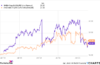
Nvidia, which kick-started the AI boom, is now the most valuable company in the world at around $5.5 trillion and is up nearly 3,500% since the start of 2020. It designs specialized hardware and software that the largest companies in the world require for data centers to train, research and improve on various AI models.
As a result, U.S. stock markets have seen increasing levels of investment in all things AI. Ryan Fisher, the chief investment strategist and financial adviser at Ten Capital Wealth Advisors, believes that the tech-heavy concentration has important implications.
“More often than not … what people may think they’re invested in may not necessarily match up with what they’re actually invested in,” Fisher said.
He also noted how widespread the impacts of AI are.
“Every place you go – Amazon, the hardware store – those companies, whether you’re seeing it or not, are already incorporating AI,” Fisher said. “You’re not actively aware of how much AI is being incorporated into the things you’re doing on a daily basis.”
Grant Forsyth, the chief economist at Avista, said it is hard to measure how exposed the average investor, and by extension the broader economy, really is to AI.
“There’s a lot of debt financing in this AI buildout,” he said. “From a macro standpoint, how exposed is the broader economy – and by extension the average bondholder or target-date retirement fund participant – to that debt without realizing it?”
Because Nvidia and other AI companies have grown so much in the past few years, they now make up a significant portion of the S&P 500. Fisher said that tech outright makes up nearly a third of the index, with Nvidia alone accounting for 8%.
Forsyth said financial portfolio diversification is especially important during a time when AI and tech stocks are such a big focus of investment. Having a diversified portfolio allows you to participate in the growth while limiting the downside, he said.
“There is some growing concern, especially with index-based funds, that we’re getting such heavy weights toward a few companies,” Forsyth said.
As tech-heavy investment is running its course through the markets, Forsyth said it’s important to monitor the performance of Nvidia and other large tech companies. While he questions the sustainability of demand for AI products, he says that their performance is “probably a leading indicator of the demand for AI.”
AI companies also have a large impact on the nation’s GDP, which is the overall production value of goods and services. Forsyth said that AI expansion is the main driver of economic activity in the U.S., which is followed by healthcare.
“If AI spending slowed dramatically, you would see a material decline in GDP growth, because from an infrastructure point of view, it is driving a lot of the infrastructure development in the United States … not just infrastructure, but demand for capital products, machinery and so forth,” Forsyth said.
Noting that AI spending is likely going to account for more than half of the U.S. GDP growth this year, Fisher warns that high GDP growth isn’t a reflection of overall economic health.
“It may be a great environment for U.S. companies, and by virtue of that, U.S. stock market returns to do well, but it may not necessarily match up with what could be the best for the overall health of the U.S. economy,” he said.
The immense growth of AI also is accompanied by high debt, and the talk of stock price inflation. Both Forsyth and Fisher see the similarities between the AI build-out and former market bubbles.
“Longer term, where AI and the potential of a bubble could become a concern is there’s a lot of money being thrown at AI right now,” Fisher said. “At some point, all of these companies are going to need to be able to generate a profit that they can go and, in turn, show investors.
“If we see, going into next year, a lot of these names not be able to generate a tangible product or service that creates revenue, that’s where you see concerns pop up.”