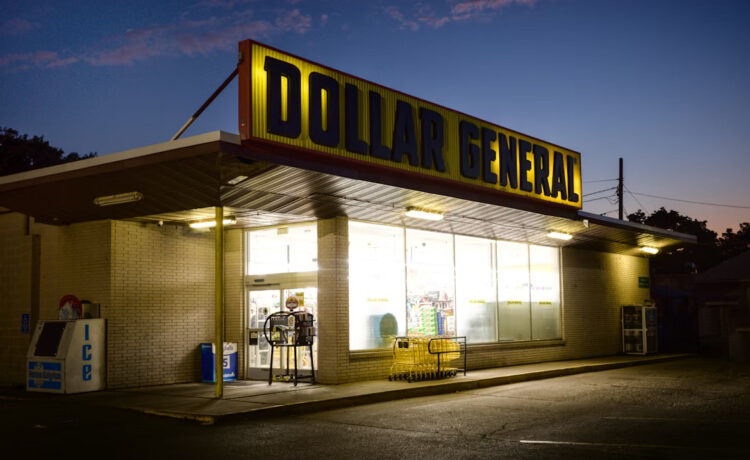
Dollar stores are the fastest-growing groceries in the U.S. today as major supermarket chains abandon low-income markets. Their popularity is based on the promise of low prices every day, but do they really deliver those savings? An investigation by The Guardian finds that they often do not and lower-income consumers are paying the price.
Both Family Dollar and its larger rival, Dollar General, promise everyday low prices for household essentials but the Guardian found that the prices displayed on the stores’ shelves often aren’t what ring up at checkout.
Dollar General stores have failed more than 4,300 government price-accuracy inspections in 23 states since January 2022 and Family Dollar stores have failed more than 2,100 price inspections in 20 states over the same time span, a Guardian review found.
Many of the stores that failed state or local government checks were repeat violators. A Family Dollar in Provo, Utah, flunked 28 inspections in a row – failures that included a 48% overcharge rate in May 2024 and a 12% overcharge rate in October 2025, according to The Guardian.
The pricing issues are starting to draw attention. In May, Arizona’s attorney general announced a $600,000 settlement to resolve a consumer-fraud investigation against Family Dollar. In October, Colorado’s attorney general settled with Dollar General for $400,000 after its stores failed 15 out of 23 state inspections. Dollar General has also settled with New Jersey, Vermont and Wisconsin, and both companies have settled with Ohio, The Guardian reported.
Blame the employees
The stores didn’t respond in detail to the newspaper’s findings but industry watchers and company officials tend to blame employees rather than any corporate conspiracy for the inaccurate price tags. They say that when the company decides to change the price of an item, the change is automatically transmitted to cash registers —but not to the price tags on the store shelves. That’s left up to the low-paid employees who are in many cases already hard-pressed to attend to all of their daily tasks.
In a statement, Dollar General said its store personnel “are empowered to correct the matter on the spot,” but that does nothing for harried consumers who neglect to verify every single item on the cash register receipt against the price posted on the shelves. Even if the overcharges are accidental, consumer advocates say the stores know about the problem but have neglected to do anything about it.
“If they’re called on it, they’ll say, ‘Oh yeah, our mistake,’” said Kennedy Smith of the non-profit Institute for Self-Reliance. “Until they’re called on it, they’re happy to let those scanner errors bring in the millions.”
How’s business?
Despite such shortcomings —and a notable lack of fresh foods at many dollar stores —the stores are booming. Last year, nearly half of new stores that opened in the U.S. were chain dollar stores. At the start of 2022, Dollar General and Dollar Tree, which owns Family Dollar, together operated more than 34,000 stores in the U.S., more than McDonalds, Starbucks, Target, and Walmart combined.
In many cities, the dollars have all but replaced traditional markets, which generally feature a much broader selection including fresh produce and meat, often sorely lacking in the discount stores. They tend to be clustered in minority and low-income areas and in rural areas, where they often are the only retail food stores left.
That all adds up to a lot of lower-income customers who can ill afford to pay more than the price indicated on the shelf but who may lack the time and confidence to point out errors.