
Is this the year that Switzerland first reach the European Championship knockout stages?
As hosts, they qualified automatically, making this their third consecutive Euros appearance, having first appeared in 2017.
On home soil, the pressure will be on and they have been drawn into what looks like a favourable Group A, featuring Norway, Iceland and Finland. Norway are favourites, but the Swiss — led by Swede Pia Sundhage, a former United States women’s national team manager — will believe a top-two finish is entirely possible.
Who is the manager?
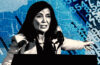
Sundhage’s appointment in January 2024 was a clear statement from Switzerland that they were taking the assignment of being tournament hosts seriously. Sundhage carries with her an extensive pedigree of not only playing and coaching in the highest echelons, but of winning.
The former USWNT, Sweden and Brazil head coach won the Euros in 1984 with Sweden as a player and was the tournament’s top goalscorer. As a coach, she twice won Olympic gold with the USWNT and was the beaten finalist in the 2011 Women’s World Cup. She led Sweden to the semi-finals at Euro 2013 and their first Olympic medal, taking silver in 2016.
Why did Switzerland — relatively unproven novices in international tournaments and with less star power than previous teams she has coached — appeal? “That kind of feeling when everybody’s coming together, that is unique,” Sundhage told BBC Sport in December 2024, referring to the advantages of being a host nation. “So it was easy to say ‘yes’.”
How do they play?
In a 3-5-2, with their wing-backs pushing high and wide up the pitch to spread the play. Sundhage has tried to encourage her team to be braver and to play front-foot football, particularly using width. That said, the back three is an attempt to keep Switzerland solid at the back against more technical teams.
Who are their three most influential players?
Arsenal’s Lia Walti, together with injured Houston Dash forward Ramona Bachmann and Seattle Reign’s Ana-Maria Crnogorcevic, have been the heart and soul of the national side for years. The trio’s quality on and off the ball is a level above the rest of the team, which can be seen as both a good and a bad thing. Former manager Inka Grings once called her team’s dependence on the triumvirate “damn dangerous” after a defeat in 2023 by Iceland — who are in their Euros group — for which Bachmann and Walti were not available.

Lia Walti won the Champions League with Arsenal in 2024-25 but was an unused substitute in the final (Daniela Porcelli/Getty Images)
Bachmann’s absence here means there are opportunities for others, and this could be a breakout tournament for exciting Barcelona forward Sydney Schertenleib.
What is their biggest strength?
Never underestimate the power of home turf. While the pressure will be on for Switzerland to improve their mediocre tournament record, there is only one way to make diamonds (hint: starts with p and ends in ressure). Armed with Sundhage’s experience, some youthful verve and a bit of luck, it is not impossible they could come up with something special.
What weakness might other teams be able to exploit?
According to Sundhage, Switzerland’s greatest weakness is “their mindset” and a consistent lack of belief they are world class. Another potential weakness: goalscoring. In Sundhage’s 18 matches in charge, Switzerland’s 25 goals have come from 14 different scorers (as well as two own goals), which seems on paper a nice spread of attacking firepower. Yet, in their six Nations League games against France, Norway and Iceland, they managed just four goals, three of which came against Iceland in one match.
At the 2023 World Cup, Switzerland scored just three goals in three group games but that was enough to finish first before losing against eventual winners Spain in the last 16.
Any notable absences?
Bachmann is the biggest loss, the anterior cruciate ligament injury she suffered in mid-June leaving her devastated. “I’m heartbroken to miss the Euros, especially here at home in Switzerland,” she wrote on Instagram. “This tournament was a huge goal for me, and I’ve given everything over the past months to be ready for it. To suffer a serious injury now, so close to the start, is incredibly hard to accept. Not being able to step onto the pitch and represent my country in front of our fans hurts deeply.”
FC Koln midfielder Alena Bienz sustained an ankle injury heading into Switzerland’s final Nations League matches against France and Norway in June.
What is their strongest starting XI?

How have they performed over the past 12 months?
A positive start to life under Sundhage has been put into harsh perspective in the past seven months. A 1-1 draw with Australia was followed by a 2-1 win against France in October 2024, suggesting Switzerland were a team who could challenge the continent’s best. Yet, a 6-0 thrashing by Germany in front of a record crowd of more than 17,000 in Zurich shortly after has led to a seven-game winless run, with Switzerland failing to score in five of those.
Switzerland are in an interesting position in that they have played two of their Euro 2025 group-stage opponents in the Nations League. Switzerland managed two draws with Iceland and lost twice against Norway, though their final Nations League match was controversial as Norway took a quick throw-in after a Swiss player put a deflated ball out of play, leading Switzerland midfielder Smilla Vallotto to accuse her opponents of not “playing with ‘fair play’”.
“That motivates me for the next match. It’s really not possible that they did that,” she told broadcaster RTS.
What are they expected to achieve at these Euros?
The draw could have been far more difficult. Switzerland will feel they have a chance of joining favourites Norway to progress to the knockouts and failure to do so will be a tremendous disappointment for the hosts.
Did you know?
Switzerland won the right to host Euro 2025 after they decided to turn their bid, held in front of the UEFA executive committee who cast the votes for hosting rights, into a rap. You read that right. Where everyone else used laser pointers and PowerPoint presentations, the Swiss FA were rapping. The rap flipped “at least one voter”, according to Tatjana Haenni, the former Switzerland head of women’s and girls’ football who helped put the bid together.
(Top photo: Getty Images; design: Eamonn Dalton)