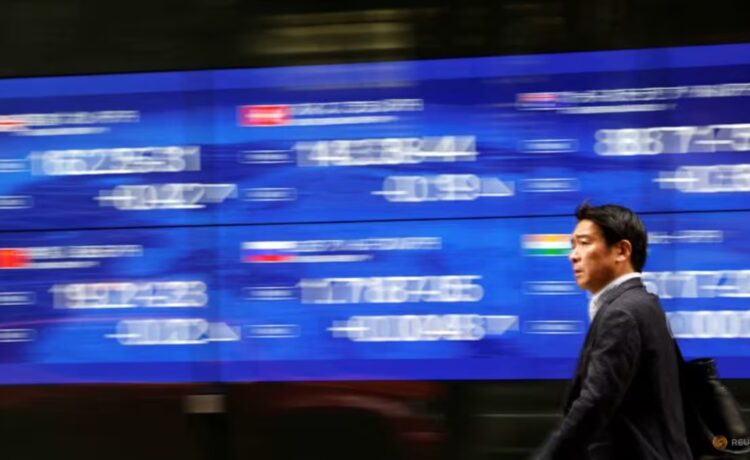
LONDON :Global stocks headed into a jittery final session of the month on Friday, as an outage at exchange operator CME Group halted trading in a swathe of futures on currencies, commodities, Treasuries and stocks, further draining market liquidity.
The outage at CME datacentres came with U.S. investors due to return from the Thanksgiving holiday for a shortened session on Friday.
Europe’s STOXX 600 was roughly unchanged on the day, having gained 0.5 per cent in November, marking its weakest monthly performance since June, despite having hit record highs a couple of weeks ago.
The S&P 500 is set for its first monthly decline since April, with a fall of 0.4 per cent in November, although it has recovered from two-month lows a week ago that implied a month-to-date drop of 5 per cent.
CHOPPY NOVEMBER
November this year proved to be unusually choppy for global equities as concerns about tech stocks’ sky-high valuations shook markets while a U.S. government shutdown ended only after a record 43 days. Bitcoin, a good reflection of investor risk appetite, has fallen 16 per cent in November.
The lack of economic data from the government shutdown has made the Federal Reserve cautious about further policy easing, but heavyweights like Fed Governor Christopher Waller and New York Fed President John Williams have voiced support for a rate cut next month, which has been central to the recovery in stocks.
“Usually you expect volatility in September and October, we’ve had it in November, but recovered most of it,” Lombard Odier economist Samy Chaar said.
“We were pricing the probability of a cut in December of around 30 per cent and we’re now over 80 per cent. And that, I think, is a very strong reason for the month-end rally,” he said.
Fed funds futures are implying an 85 per cent chance of a rate cut next month, a sea change from just 30 per cent a week earlier, CME FedWatch showed.
BOJ HIKE IN VIEW
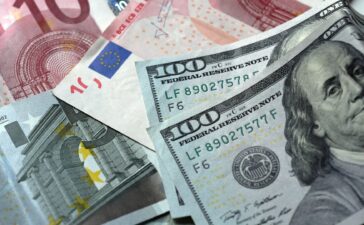
In the broader currency market, the dollar edged up against a basket of major currencies, but headed for its largest weekly fall since July, leaving it almost unchanged on the month.
The Japanese yen was flat at 156.37 per dollar, having bounced off last week’s 10-month low of 157.9. Investors are watching for intervention from Japanese authorities after weeks of verbal jawboning to stem the currency’s relentless slide.
Data showed on Friday that core consumer prices in Tokyo rose 2.8 per cent in November from a year earlier, above forecasts for a 2.7 per cent gain. That added to a slew of data that have kept bets for a rate hike from the Bank of Japan alive.
There are growing whispers that the BOJ could hike rates as soon as next month, which is now about 30 per cent priced in by markets. More BOJ board members are signalling a hike as the yen tumbled and political pressures to keep rates low faded.
“Today is also month-end and FX performance can often be determined by those less predictable flows,” MUFG strategists said in a note.
The Aussie and the kiwi are big gainers this week, up 1.1 per cent and 1.8 per cent, respectively, as markets bet that the rate-cutting cycles in both countries are nearing an end. Minutes from the European Central Bank’s latest meeting showed policymakers there were not in a rush to cut rates either.
The euro eased 0.2 per cent to $1.157, for a gain of 0.3 per cent this month.
OIL, GOLD UP
Oil prices rose on Friday but were set for a fourth straight month of losses as the U.S. pushed for the peace plan for the Ukraine war. Brent crude futures rose 0.3 per cent to $63.55 a barrel, down 2.3 per cent in November.
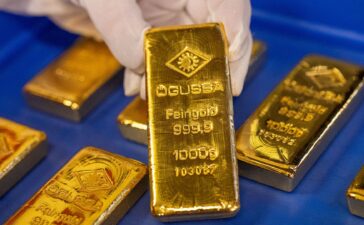
Spot gold prices were up 0.2 per cent at $4,166 an ounce, bringing the monthly gain to 4.5 per cent, although they are still some distance away from the record high of $4,381.
(Additional reporting by Stella Qiu and Tom Westbrook; Editing by Sam Holmes and Kate Mayberry)