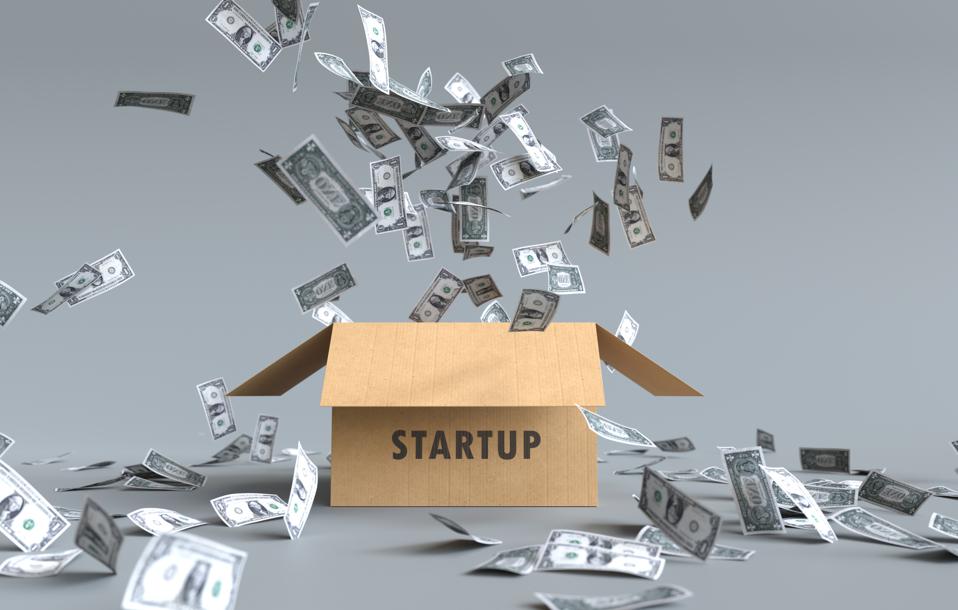
Dollar cash rising from startup concept box. 3D illustration
getty
OpenAI CEO Sam Altman recently revealed that he believes the first $1 billion solo startup will be built by one person with a laptop, an internet connection, and an army of AI agents. I have experienced GPT-5, and I now believe that this milestone will arrive significantly earlier than most people project, likely by 2028.
The image of the billionaire founder is about to be rewritten. No sprawling teams. No Ivy League pedigrees. No nine-figure venture war chests. The next mega empire will be operated behind a kitchen table and directed by an individual strong builder with an army of AI agents, no-code automation and the capacity to disseminate concepts around the world in real-time. The silos that required separate teams dedicated to research, marketing, sales, and customer support are being replaced by programs that operate 24/7 in the cloud.
Billion-dollar startups were once rare, but they’ve become increasingly common as venture capital funding and tech innovation has surged. Data Source: PitchBook. (Graphic by Visual Capitalist via Getty Images)
Getty Images
Five converging forces
Five converging forces are making this not just possible, but inevitable. The first is the emergence of agentic AI: autonomous and focused programs that have the ability to guide research, produce content, reach out to customers, conduct analytics, and even sell, all without downtime, burnout, or red tape. The second is the fusion of no-code tools with API orchestration, enabling entrepreneurs to assemble fully functional, end-to-end business systems in days rather than months. The third is the reach of global digital distribution.
Platforms, such as X, LinkedIn, and YouTube, are no longer content hosts, but services that offer all users direct access to in-depth knowledge of the dynamics of attention, reaching tens of millions to hundreds of millions of people. The fourth is the arrival of mass-market AI-powered micro-monetization, subscription-based pricing, and AI-only-delivered services that can scale without the overhead of human labor costs. And finally, there is the falling cost of intelligence itself. “Thinking work” is becoming as cheap as cloud storage—an economic inversion that changes the rules of productivity entirely.
Rapid Change will Continue
The trend is already visible. Sam Altman has openly predicted that the first one-person billion-dollar company is on the horizon, and after the recent GPT-5 reveal, that prediction feels less like futurism and more like a weather forecast. Tech leaders and investors are quietly adjusting their expectations. Others, such as Dario Amodei of Anthropic, think that such a reality may come as soon as 2026. According to Carta data, less than a third of newly formed startups are led by solo founders, nearly double the rate from 2015, due to the availability and effectiveness of AI tools.
PARIS, FRANCE – MAY 22: Co-founder and CEO of Anthropic, Dario Amodei, an artificial intelligence safety and research company attends the Viva Technology show at Parc des Expositions Porte de Versailles on May 22, 2024 in Paris, France. Viva Technology, the biggest tech show in Europe but also in a unique digital format, for 4 days of reconnection and relaunch thanks to innovation. The event brings together startups, CEOs, investors, tech leaders and all of the digital transformation players who are shaping the future of the Internet. The annual technology conference, also known as VivaTech, was founded in 2016 by Publicis Groupe and Groupe Les Echos and is dedicated to promoting innovation and startups. (Photo by Chesnot/Getty Images)
Getty Images
The irony is that the most challenging part of building this kind of company will not be the building itself. As AI agents become increasingly capable, spinning up an operational stack will be trivial. The actual choke point will be sales: making yourself heard, building confidence and turning interest into dollars.
A New Inevitable Trajectory for Founders
This new breed of founder will follow a trajectory that feels almost inevitable. They will begin by creating an audience and introducing an AI-powered service that appeals to a specific community. That service will be refined into a product, supported by a growing network of AI agents, until they dominate a niche. From there, expansion into new verticals will follow, along with API integrations and enterprise deals. Over time, their operation will evolve from a service to a platform and, ultimately, into an ecosystem that others build upon.
That journey may sound ambitious, but it is increasingly within reach of anyone willing to work with both urgency and focus. The building blocks, such as automation, global distribution, and monetization models, are already in place. What’s missing in most cases is not the means to execute, but the willingness and work ethic to move with the speed and precision necessary. The founder who can master both will not only create a successful business, but they will also reset the playbook for being an entrepreneur.
The Era of Solo-preneuership
Indeed, in practice, we are already getting early balloons of this shift. Replit’s CEO calls it “vibe-coding,” where applications are built in hours through natural-language prompts rather than weeks of manual coding. Hobbyists are becoming product creators overnight. Meanwhile, researchers are outlining the “Solo Revolution” theory, which shows how AI lowers the barriers to entrepreneurship through skill augmentation and radically reduces resource requirements.
The most important insight to keep in mind is that we are not replacing human judgment with AI; we are augmenting it. Taste, vision and the ability to motivate others are purely human attributes, as automation eliminates the mechanical component of these qualities. The solo founder who wields AI agents with discernment will have the leverage once reserved for Fortune 500 companies.
This is why the first $1 B solo startup is no longer a thought experiment. It is the logical endpoint of the trends we are currently observing. Code is abundant. Intelligence is cheap. Distribution is limitless. The deciding factor will be the nerve to act before the rest of the world catches on.
And when that moment comes, it will not be won by the person with the “best code.” It will belong to the founder who knows what matters, who can see clearly where others hesitate, and who has the audacity to press “launch” before the ink on their idea is dry. Grit, optimism, and a laptop are all they’ll need. Everything else will be handled by an army of agents.
Not only is solo-preneurship not a fringe model in the age of AI, it is the ideal model. By 2028, it will not be a surprise when a one-person billion-dollar company emerges. The real surprise will come when the rest of the world tries to follow suit and how fast it will be.