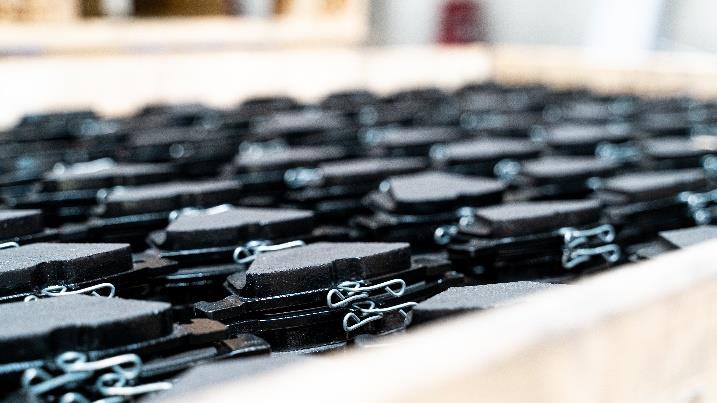
It’s been a year since the new Euro 7 regulation was released. With transition periods, new vehicle models will need to adhere to the limits from 1st November 2026. As original equipment (OE) manufacturers prepare to meet the first deadline, brake friction specialist TMD Friction discusses the work done to date, challenges faced, potential solutions, and the critical issues that need to be considered before the legislation hits the aftermarket in late 2028/early 2029.
Understanding Euro 7
Euro 7 represents the most comprehensive emissions legislation to date in Europe, extending beyond exhaust emissions to include brake and tyre particulate matter for the first time. The regulation will initially affect new vehicle types at the end of 2026, with full implementation across all new vehicle registrations by the end of 2027.
Preparing for Euro 7
As an active participant in the Particle Measurement Programme (PMP) working group, TMD Friction contributed directly to developing the testing methodologies that now define compliance standards. Even with this advanced knowledge and our extensive team of R&D experts working on Euro 7, it still hasn’t been an easy journey.
It is not as straightforward as simply changing a friction formula to produce less emissions. Each raw material has been carefully selected to work in harmony with each other to achieve the perfect performance, quality and stopping power. Removing just one ingredient can compromise the integrity of the product.
In addition, the majority of brake dust emissions actually come from the disc, not the pad. This means that manufacturers must ensure compliance for the entire friction pairing – not just the brake pad alone. It also highlights that a holistic approach to the Euro 7 standards is required. Achieving Euro 7 compliance isn’t solely about friction material innovation. The interaction between the brake pad and the disc creates a complex system where material properties, surface characteristics and thermal behaviour all influence particulate emissions. It has emphasised that the pad-disc pairing is more important than ever in achieving compliance. It is challenging, but we in the R&D team at TMD Friction love challenges.
To help us meet the challenges, we invested €1.5 million in our own emissions dynamometer to ensure faster time to market for compliant products, as well as giving us complete control over our development and validation processes without waiting for external independent testing agencies. It also allows us time to trial different friction formulas without sacrificing the quality, performance, and safety, which are non-negotiable.