President Richard Nixon launched a “war on drugs” in 1971. The campaign against the vice of drug addiction was in apostolic succession to the prohibition amendment and Savonarola’s bonfire of the vanities.
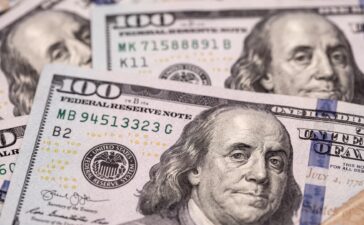
Over the ensuing decades, a staggering $1 trillion was expended seeking to stop the epidemic of drug addiction and torrent of drugs flowing into the United States, fueled by the iron law of supply and demand. Nothing worked. The demand remained undiminished. The price remained steady. Supply chains migrated from place to place to outfox law enforcement.
The voluminous evidence was as certain as Newton’s laws of motion. The war on drugs was and remains a monumental failure. It deserves an epitaph like the prohibition amendment’s repeal.
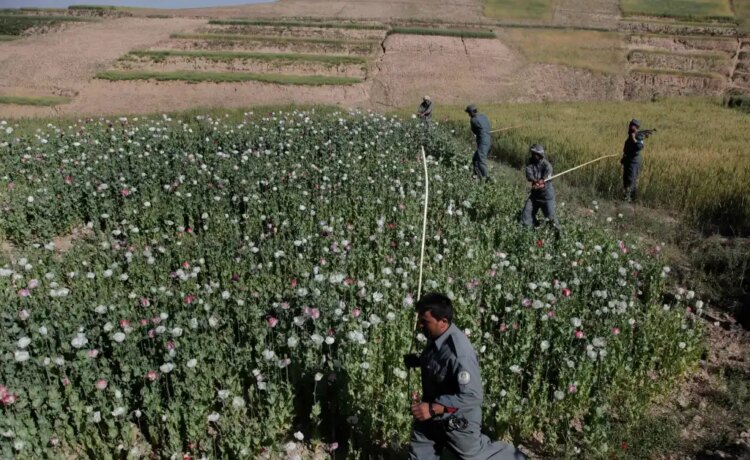
The Central Intelligence Agency, however, purported to know better. According to a recent report in the Washington Post, the CIA, for over a decade ending in 2015, squandered billions in a predictably futile effort to sabotage opium production in Afghanistan without denting the demand curve or arresting supply chain agility. Thereby hangs a tale of the CIA’s incorrigible failures. It is way over its pay grade.
The agency was born in 1947 of a myth: namely, that Pearl Harbor was an intelligence failure. It was not. As with 9/11, the intelligence was in plain view, supplemented by breaking the Japanese diplomatic code “Purple” in 1940. But as Yogi Berra put it, “It’s tough to make predictions, especially about the future.” Political decisions are invariably contingent, indeterminate and vulnerable to U-turns or tacking. They defy algorithms.
Pearl Harbor was not inevitable. Japan could have chosen a land war against the Soviet Union, notwithstanding its April 1941 Neutrality Pact. After all, Adolf Hitler had attacked the Soviet Union on June 22, 1941, despite the Molotov-Ribbentrop Pact. The 1904-1905 Russo-Japanese War had ended in Japan’s favor. The two rivals had warred over Russia’s border in 1939. Moreover, Japan could have been satisfied with its Southeast Asian Co-Prosperity Sphere while remaining at peace with the United States. In other words, Pearl Harbor was not inevitable like the rising and setting of the sun. History brims with turning points that didn’t turn.
The CIA is predicated on a falsehood. It assumes the political future can be foreseen by use of secret intelligence with materially greater accuracy than can be deduced by philosophers who understand human nature and the lust for power. Theory might be for it. But all experience is against it. The massive Chinese intervention in the Korean War. The Bay of Pigs calamity. The 1956 Hungarian Revolution. The Sino-Soviet split. Prague Spring. China’s Cultural Revolution. The Iranian Revolution. The fall of the Berlin Wall. The Soviet invasion of Afghanistan. The dissolution of the Soviet Empire. India’s nuclear tests in 1998. WMDs in Iraq. Arab Spring. Ad infinitum. At present, the CIA is clueless about the outcome of Russia’s war against Ukraine, the future of Gaza, the West Bank, Lebanon, Syria, a post-Maduro Venezuela, a Chinese invasion of Taiwan or countless hot spots around the planet.
Why does the CIA endure despite consistent report cards filled with Fs and Ds? Secrecy is the main culprit. Its blunders are characteristically classified and concealed for decades while congressional oversight committees are squinting, uninformed cheerleaders of the intelligence community. A placebo effect is also at work. The American people feel they are safer with spies and professed intelligence gurus, even if they are not. James Bond novels sell.
The CIA should be abolished as worse than useless. It creates the illusion that we know what we don’t know and can’t know about the future. It fuels serial, costly misadventures. Its epitaph should warn: “Know the indeterminacy of the world, and that knowledge shall make you wise.”
Bruce Fein was associate deputy attorney general under President Reagan and served as research director for Republicans on the Joint Congressional Committee on Covert Arms Sales to Iran. John Kiriakou is a former CIA officer who led the capture of high-ranking al-Qaida official Abu Zubaydah in Pakistan in the immediate aftermath of the Sept. 11 attacks.