
As per the RBI circular, the priority sector lending requirements have been reduced for small finance banks from 75% to 60% from the financial year 2026. The figure will be 60% of Adjusted Net Bank Credit or Credit Equivalent of Off Balance Sheet Exposure, whichever is higher.
Adjusted Net Bank Credit is the total loan amount given by a bank after making certain adjustments. CEOBE is the off-balance sheet exposures that help eligible foreign banks meet their priority sector lending targets in India.
PSL norms mandate banks to allocate a portion of their lending to specific sectors of the economy. Banks are required to keep 40% of PSL, while for SFBs, that figure is 75%, which has now been cut. Any shortfall is met through the purchase of priority sector lending certificates.
Brokerage firm Morgan Stanley said the RBI’s move is a structural positive as it will give SFBs greater flexibility in terms of portfolio diversification and operational ease.
Additionally, this will likely improve their potential growth run-rate over the long term.
According to Citi, the RBI move offers structural relief and operational flexibility, and the SFBs with a more diversified portfolio can now scale up the non-Priority Sector Lending portfolio.
Shares of Equitas Small Finance Bank are trading 1% higher at ₹65.1, while those of Jana Small Finance Bank are up 1.5%.
Those of AU Small Finance Bank have given up earlier gains and are trading near the flat line, while shares of Ujjivan small Finance Bank have also given up early gains to trade 1.3% higher at ₹48.82.
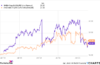
Shares of Equitas Small Finance Bank are down over 40% from their 52-week high.
Shares of Ujjivan Small Finance Bank are trading close to their 52-week high, as are those of AU Small Finance Bank.
Shares of Jana Small Finance Bank are also trading well below their post-listing high of ₹760.
(Inputs shared by Gaurav Jawalkar)