Koo Yun-cheol stresses expansionary policies, ministry restructuring as keys to long-term economic vitality
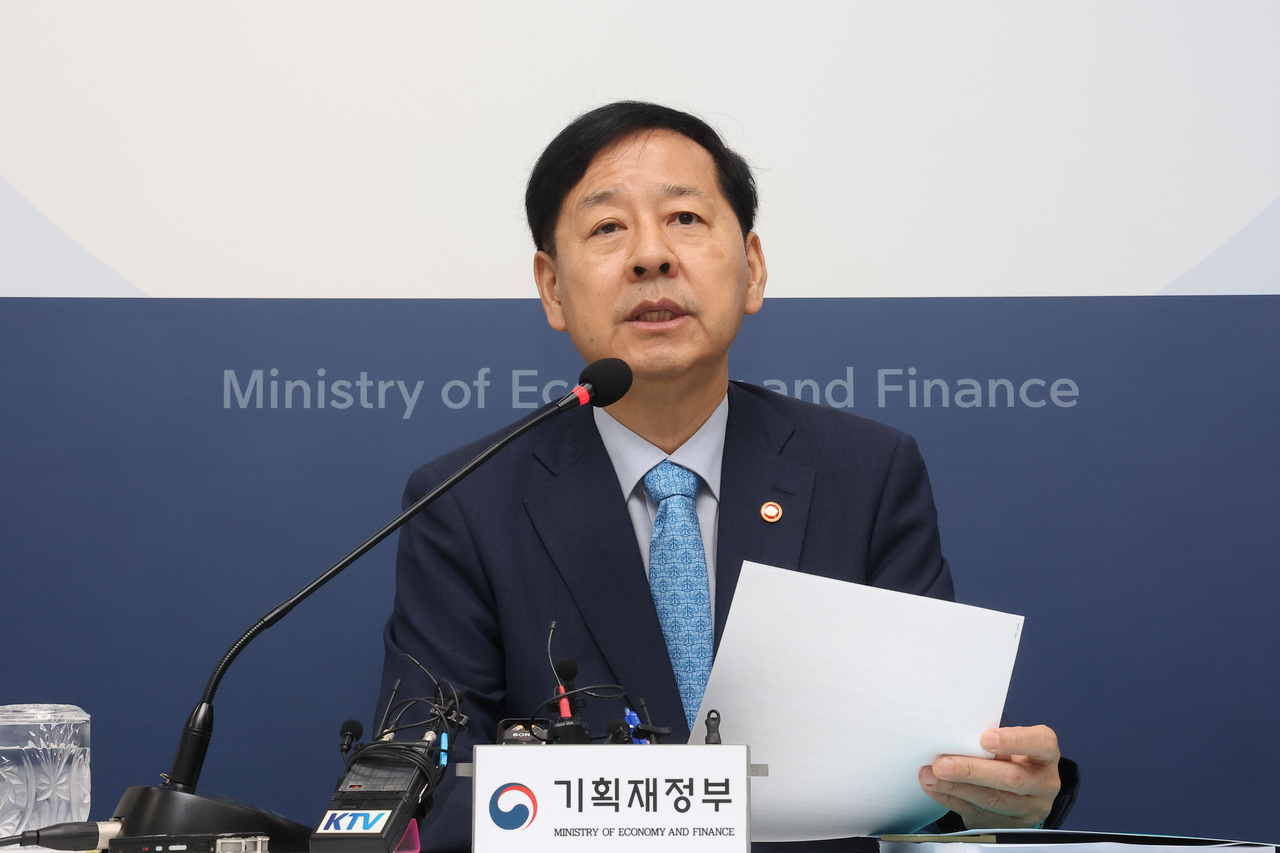
Finance Minister Koo Yun-cheol said South Korea should target investment in strategic sectors instead of fixating on spending cuts, arguing that growth is the only way to repair its weakening finances.
“By concentrating resources on strategic industries, we will secure new growth engines, expand GDP and restore fiscal health over the medium to long term,” said Koo, who also serves as deputy prime minister for the economy, at a press briefing Monday.
He warned against austerity now. “If we suppress spending, increases will be swallowed by mandatory costs, while discretionary outlays that fuel development will shrink further. This is why we now see a fiscal balance deficit ratio of 4 percent,” Koo said. “This is the time to invest in productive sectors and deliver results.”
Koo’s remarks reinforced President Lee Jae Myung’s commitment to expansionary spending, which is projected to keep the managed fiscal balance deficit ratio around 4 percent over the next five years, above the government’s earlier rule of capping it below 3 percent. The ratio currently stands at 4.2 percent, stoking concern over fiscal deterioration.
Delivering results in sectors tapped as new growth drivers, including artificial intelligence, semiconductors and energy, is the top priority. In August, the ministry identified 15 projects under its “AI transformation” agenda and another 15 for its “super-innovative economy” initiative, pledging expanded fiscal support for industries and companies critical to future growth.
“Of the 30 projects we’ve selected, we are confident 20 will produce concrete results. Success in just two would meaningfully lift Korea’s productivity and transform the economy,” he said. “We’re planting seeds for long-term growth.”
Koo said the government is moving quickly. The finance ministry will set up a task force this month with research institutes, experts and universities to draft a roadmap by October and finalize budget plans before year-end, ensuring projects can launch in January.
The impact of expansionary spending is already visible. The economy grew 0.7 percent in the second quarter, beating forecasts, while consumer sentiment in August hit its highest level in more than seven years.
Koo said strategic investment could accelerate the recovery and help Korea reach its potential growth rate of 2 percent by 2027.
“Our growth target for next year is 1.8 percent, but if our ‘super-innovative economy’ projects take off and lift corporate investment sentiment, growth could be even higher,” he said. “If the rate climbs to 2 percent the following year, we expect the country can achieve a real economic turnaround.”
Koo downplayed concerns over a sweeping reorganization of the Finance Ministry announced Sunday. The plan will spin off the ministry’s budget office to the prime minister’s office, giving the president more direct control over spending. The ministry, tentatively rebranded as the “Economic Ministry,” will focus on policymaking, including oversight of financial affairs now handled by the Financial Services Commission.
“The Finance Ministry and the budget office have always worked like one family, and separation doesn’t mean we stop being family. We may discover new advantages we didn’t see when we were together.”
He highlighted his budgeting expertise and added, “I’ve long coordinated policy and understand the budget’s logic, so there’s no concern about decision-making. We will ensure clear communication and synergy between the organizations through economic ministers’ meetings and new financial coordination bodies.”