Greetings Free Lunch readers. I am not in Washington this week, but I reckon many of you are, together with the world’s finance ministers. Indeed, you may be one of them! But whether you are or not, I would be keen to hear your takeaways from the IMF-World Bank annual meetings. Write to us via [email protected].
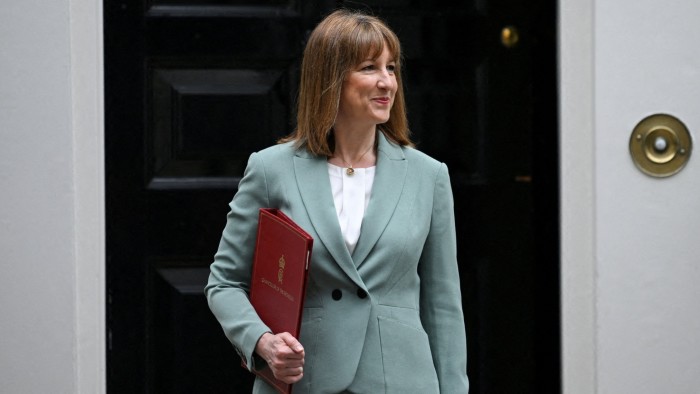
UK chancellor Rachel Reeves will return from DC and have to plunge straight into the preparations for November’s Budget. Indeed, she has already used press appearances to signal tax rises and spending cuts in the offing, as well as belatedly pointing out the economic cost of Brexit. She has also tried to boast about IMF forecasts, which show the UK as the fastest-growing G7 economy outside North America this year and next. If anyone doubts the IMF’s relevance in the era of Donald Trump, well, the doubts are probably warranted, but at least the forecasts still have their domestic political uses. What matters more, however, is what lessons Reeves takes home — and what lessons she arrives home to — for her own Budget.
If we are going to think about the IMF’s influence on the ground, I think the most relevant publication from this year’s meetings is the fund’s latest Fiscal Monitor, with an analytical chapter devoted to smarter public spending. This, more than any short-term flattery in the forecasts, is what Reeves should bring back to the UK. So should whoever will be France’s finance minister by the end of the week.
The IMF’s basic idea is that without spending more, governments can rearrange what they spend money on and get more bang for their buck or, alternatively, achieve the same outcomes at less cost. The idea is also that by doing so, governments can raise their countries’ economic output above a business-as-usual scenario, which, in turn, can boost tax revenues and moderate spending needs.
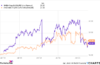
What is the size of the potential gain from spending smarter? The fund’s research says existing “efficiency gaps” are large, roughly 25 to 40 per cent for important categories of public spending (public investment, health, education and research and development). Although one should take such methodologies with a pinch of salt — they rely on estimating a “frontier” of how good it is possible to get if one does everything according to best practice — the basic idea that there is a lot of room for improvement is worth taking very seriously indeed. The chart below shows by how much an IMF model estimates output would rise if a government repurposed 1 per cent of GDP from public consumption to better uses.

You should pay particular attention if you are the UK (or France!) and have to prepare a budget under fiscal pressure and with a desperate need to raise growth. For illustration, digging into the Fiscal Monitor spreadsheets, I see a number of 30.8 per cent for the UK’s “public investment efficiency gap”, which I take to mean that Reeves is getting 30.8 per cent less out of the money she spends on public investment than she could. Even if it’s only one-third of that, that is quite a prize for someone who used her first Budget to significantly raise employer taxes to fund a big boost to public investment. So far, she is paying the political and economic cost of it without reaping a reward of either kind.
Of course, you can be smarter about how you tax as well as how you spend. Back in London, this is a live conversation and experts are reasonably pointing out that there is more flexibility on the taxing side than with spending plans that have just been laid down for several years ahead. (The IMF’s Fiscal Monitor, by the way, has the UK down as a country with particularly high “rigidity” of public spending.)
There is a good reason why this debate is intensifying now, even with six weeks still to go until Budget day. It is widely expected that Reeves will fall foul of her fiscal rules without some consolidation. So the question is whether that consolidation will be the smallest possible — with marginal tweaks — or an opportunity for a bigger change in the structure of taxes. The latter option would not just allow the government to meet the rules with a bigger margin, but would make the entire tax system “smarter” in the sense of being more conducive to growth.
As someone who has argued in favour of the bolder choice, I am pleased to see the highly respected Institute for Fiscal Studies make a push for more ambition so as not to keep reliving “fiscal groundhog day” as IFS head Helen Miller has put it. The IFS’s Green Budget, published this morning, is the best independent guide to the choices and opportunities the chancellor will face on Budget day. The chapter on tax options is particularly instructive. Here is a key summary paragraph:
However much revenue she seeks to raise overall, the Chancellor could create a fairer, simpler, more growth-friendly tax system. That means grasping the nettle and pursuing genuine tax reform (property and capital taxes would both be good places to start). At a minimum, the Chancellor should avoid measures that worsen the design of the tax system.
And on the taxation of capital specifically:
Higher tax rates on income from capital — including rental income, dividends, interest and self-employment profits — could raise money. So too could removing capital gains forgiveness at death. But simply raising rates would discourage saving and investment. The case for genuine reform is clear: improving the design of the tax base (entailing some giveaways) and then more closely aligning overall tax rates across different forms of income and gains would produce a fairer and more growth-friendly system.
(The IFS does not like the idea of a wealth tax. Do, nevertheless, read its arguments. Regular readers will know that I think most arguments against a wealth tax are flawed, so read mine too.)
Another appealingly bold proposal is from the Resolution Foundation, a think-tank with very close ties to the Labour government. It, too, recently issued an ambitious call for smartening up the tax system. It points out that there are quite a few taxes that can be raised — by way of removing special treatment for some activities — in the expectation that this would boost growth by making taxation less distortionary. The Resolution Foundation highlights the too-high threshold for value added tax liability and how limited liability partnerships avoid national insurance. I agree, and so, from what I can tell, do most experts.
The foundation’s most interesting proposal is to simultaneously raise the income tax rate and lower employees’ national insurance by 2 percentage points. This would spread out the tax burden to those, currently and unjustifiably paying less or no NI, while leaving untouched regular employees (a fair if narrow definition of the “working people” Reeves has promised not to raise taxes on).
That is just scratching the surface. (Don’t get me started on property taxation, which everyone agrees is deeply unfair and inefficient, but note that Reeves’ own party allies want root-and-branch reform.) There are plenty of recipes, then, for taxing smarter, which would allow the chancellor a fatter budget and better prospects for productivity growth.
There are two things to be said about this, however. One is that this sort of decision cannot be made in the countdown to Budget day. The details can be worked out until the last minute, but the big political call — whether to go for comprehensive reform or not — will need to be made as soon as the chancellor returns from Washington. Free Lunch, at least, will welcome it if that is her choice, and lament it if not — and the signs are I am not alone.
The other point is the obvious one — that the bigger the reform, the more losers you may create. That will factor into the political choice. But here are some reasons not to shy away from imposing losses on some. Large-scale reform also provides the opportunity to create many winners (one could lower rates while widening the tax base), giving the government a much-needed, immediate achievement that voters would feel. This advantage is amplified (and the losers mollified over time) if taxing smarter also leads to faster growth. And, finally, substantial reform would finally give people the sense that this government is acting and not talking. That, at a time when the public is yearning for action, would be likely to give the government as much political capital as it fears it could lose by going big.
Other readables
● Tej and I greatly enjoyed answering your questions at last week’s live ask-an-expert event.
● The global economy is proving more resilient than many expected, according to the latest Brookings-FT index. Chris Giles takes a sideways look at how the IMF has upgraded its forecasts.
● A former high-ranking European Central Bank official warns that France may soon test the ECB’s bond market rescue facilities.
● Trump tariffs are making the US car industry suffer.
● Scott Bessent lashes out at Beijing. Meanwhile, China’s exports keep rising.