
Nine meritorious land conservation projects in Hawaiʻi vied for management grants from the state last week. But amid a continuing cash crunch at the Legacy Land Conservation Program, only five got recommended for the full amounts they sought.
The competition before the state Legacy Land Conservation Commission required the nonprofit groups to show how they would use the money and provide proof that they had found private donations to match the public money they would receive.
Then a panel of commissioners voted last Friday afternoon on which ones they believed most deserved or needed the money.
It’s kind of like “Shark Tank” for good guys.

Ideas showcases stories, opinion and analysis about Hawaiʻi, from the state’s sharpest thinkers, to stretch our collective thinking about a problem or an issue. Email [email protected] to submit an idea or an essay.
In the reality television series, entrepreneurs pitch their business ideas to angel investors. But here the takeaway prizes aren’t financing new startups for business people eager to make a killing in the market but instead will help conservationists pay for stewardship of Hawaiʻi’s valuable lands.
Eight of the applicants made their pitches to the commission either in person or via Zoom. The presentations occurred at the state Department of Land and Natural Resources boardroom in the Kalanimoku Building in downtown Honolulu.
The nine-member Legacy Land Conservation Commission is a volunteer board composed of people with deep experience managing public lands. At the hearing, they closely questioned the applicants about whether donated funds they had expected to receive had in fact materialized, what educational or public programs they were hosting at their sites and specifically about how they intended to use the money.
The Legacy Land Conservation Program, championed by former Big Island lawmaker Russell Kokubun, was created by the Legislature in 2005 to provide a dedicated source of money for acquisition of lands especially valued because of their unusual beauty, cultural or environmental significance or importance as habitats for endangered species. The program focuses on sites that are in danger of development or damaging use.
It is funded by the real estate conveyance tax. Under the 2005 law, the state transfer tax on higher-cost homes was increased, with 10% of the revenue dedicated to the Legacy Land program fund. The next year that fund was expected to provide $3.6 million for the Legacy Land program and the money was made available for grants, according to news reports in 2006.
Since then, home prices have soared, and the fund now collects considerably more money. According to the state’s annual taxation report for 2023-2024, the state collected almost $100 million from the conveyance tax in 2024, a slight increase from 2023. That was down from the peak real estate Covid boom year of 2022, when the state raked in more than $180 million from that tax. Under the original formula, the program should have received $18 million to disperse in 2022 and $10 million in both 2023 and 2024.
Instead, the Legislature capped the amount for the Legacy Land fund, first at $6.8 million and then at $5.1 million, with the excess money going into the general fund for use elsewhere. That means the program now receives less, adjusted for inflation, than it received two decades ago, even as the cost of land escalates. Money has been diverted in other ways, too.

Nevertheless, in the 20 years of its existence, the fund has been used to help purchase more than 80 properties, including access to the Halulu Fishpond on Kauaʻi, the Ka Iwi coastline on eastern O’ahu and 52 acres of undeveloped shoreline at Kawela Bay on the North Shore.
It’s been very popular legislation. At an environmental forum in 2018, in fact, Colleen Hanabusa who was running for governor against incumbent Gov. David Ige, criticized him for voting against the legislation that created the program, leaving him scrambling to try to explain his position. After the debate Ige stressed that he valued the fund and was pushing its use to buy additional valuable properties.
Most of the money the Legacy Land program distributes is for the purchase of land, but it also sometimes gives out money for operations, maintenance and management costs. This year the Legacy Land program was able to offer $255,000 in operations grants.
The nine land conservation projects that applied for the recent grants had previously received Legacy Land grants on lands they now have under stewardship.
Last Friday the commission voted to recommend six projects, five for full funding and one for partial funding. The recommendations need approval from legislative leaders and the Board of Land and Natural Resources. Gov. Josh Green then needs to release the money.
Here are the recommended awardees:
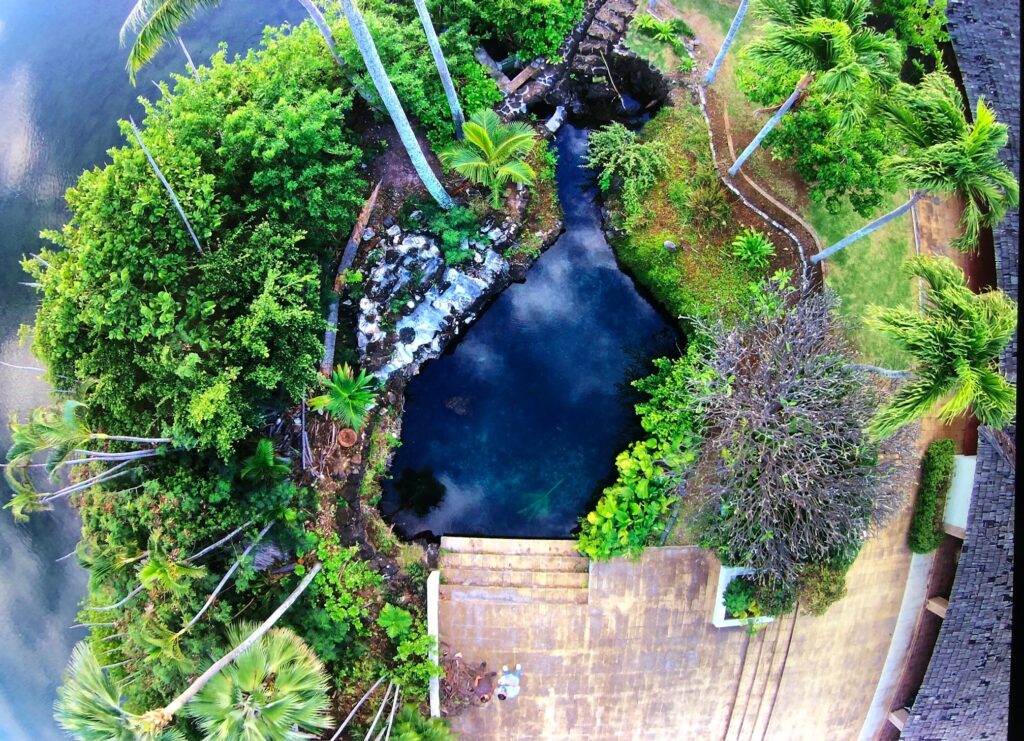
• Maunalua Fishpond Heritage Center, the top vote-getter, asked for $50,000 to replace the disintegrating roof at Kanewai Spring, a cultural preservation site at Maunalua Bay, in Hawaiʻi Kai on Oʻahu. A new roof will allow the center to host more public events.
• The Amy B. H. Greenwell Ethnobotanical Garden, a 13.6-acre public garden on the Big Island formerly owned by Bishop Museum, sought $51,000 to fend off invasive vegetation and overgrowth to prevent further deterioration of the garden. The garden will use the money to buy a weed steamer that removes invasive vegetation without chemicals and a compact tractor to maneuver the steamer and for additional grounds maintenance.
• Two projects tied for third place, so both got their full awards. The Kona Historical Society on Hawaiʻi island operates the Kona Coffee Living History Farm, also known as Uchida farm, in Kealakekua. Costumed interpreters demonstrate traditional crafts and farm activities. Its gardens were neglected during the Covid pandemic and the nonprofit sought $15,328 to hire workers who could help them catch up with delayed maintenance.
• The Hawaiian Islands Land Trust sought $51,000 for wetlands management at the 78-acre Nuʻu refuge in the Kaupo district of Maui. The wetlands are an important habitat for birds, including the Hawaiian stilt and endangered Hawaiian coot.
• The National Tropical Botanical Garden in Hāna on Maui, including the Kahanu Garden and the preserved Piʻilanihale Heiau, a national historic landmark, sought $50,000 to remove invasive species from the site.
The fact that one of the applicants, the Amy Greenwell Garden, asked for less money than the maximum allowable left something on the table for another project. Aloha Kuamoʻo ʻĀina, is a nonprofit that cares for the 47-acre historic property where the 1819 Battle of Kuamoʻo was fought, in a final showdown over the fate of the old religion in Hawaiʻi as the Kamehameha dynasty introduced new customs to the islands. The group got $37,000 for road repairs to make the site more accessible for visitors and for the community members who tend the grounds.
Three groups came away empty-handed, including Ke Ao Haliʻi of Hāna, which sought funds for an archaeological survey and to remove invasive species and rebuild fallen rocks. Māhukona, a 642-acre Polynesian voyaging navigational and ecological complex on the Big Island and ‘Anaehoʻomale Kapalaoa, a 27-acre ancestral homeland and cultural center in Waikāloa on the Big Island, which sought funding for maintenance, paths and signage.
Afterward, in interviews, the winners expressed gratitude and the losers put on a brave face.
“We’re very, very grateful,” said Chris Cramer, describing the disintegration of the roof at the Maunalua Fishpond Heritage Center, and the need to repair it after buying the site in 2017. “We walked into a situation where there was decades and decades of maintenance that had to be done.”
Scott Fisher, director of ʻāina stewardship at the Hawaiʻi Land Trust, had pressed for funding at two sites, the Nuʻu refuge and the Makuhona navigational complex. One, Nuʻu, won an award but Makuhona did not.
He was glad about Nuʻu and took the Makuhona news stoically.
“There are consistently more applications than funding that is available,” Fisher said. “That’s just the way things shake out.”
The applicants, commissioners and staff at the Legacy Land program are concerned about the diminishing level of funding.
For the past few years, state employees and conservation organizations have been pleading for the Legislature to give the fund the intended amount. The fund took a major hit in 2020, when the Legislature withdrew $15 million from the Legacy Land program in anticipation of slowed revenues during the Covid pandemic. The money has never been restored.
During the recent legislative session, DLNR Chair Dawn Chang asked lawmakers to deposit $9.8 million into the Legacy Land account, instead of the $5.1 million it has been given annually. She said the amount going into the land fund was at its lowest level in its 18-year history.
In written testimony, Chang called it a “critical amendment that would further restore the State’s ability to help protect resources.” But she added the caveat that the additional funds would be desirable as long they did not adversely affect “priorities indicated” in Green’s budget requests to the Legislature.
The Legislature maintained the cap at $5.1 million.
Commissioners at the hearing Friday said they were disappointed there wasn’t more money in the fund to distribute.
“All these applications deserve to be funded at the level they requested but we don’t have that amount of money,” said Maui-based commissioner Jay Penniman, the special projects and development specialist at the Maui Nui Seabird Recovery Project.