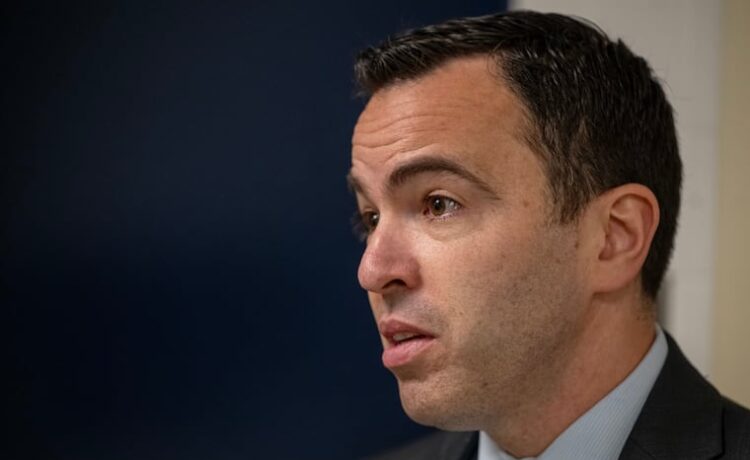
New Jersey Attorney General Matthew Platkin is leading a coalition of Democratic-led states suing President Donald Trump’s administration over immigration-related conditions they’ve placed on funds for victims of violent crime.
The lawsuit filed Monday argues that Trump’s Department of Justice broke the law when it tied grants for victim assistance and compensation to states’ cooperation with federal immigration enforcement.
Platkin called the Trump administration’s policy “the most heinous act that I’ve seen in politics,” accusing the president of using crime victims as pawns. “We will not allow them to put politics ahead of public safety.”
The New Jersey attorney general was joined on the suit by Delaware Attorney General Kathy Jennings and Democratic attorneys general from more than a dozen other states. Pennsylvania Attorney General Dave Sunday, a Republican, did not join the suit.
The Department of Justice declined to comment.
The suit is the latest in several Democratic attorneys general have brought against the administration seeking the restoration of funds stripped away from state governments, often with conditions related to immigration as Trump threatens actions against sanctuary jurisdictions.
Victim assistance funds are provided by the federal government in the form of annual grants and are typically administered by state governments. The funds are used on a variety of services including shelters, funerals, processing of rape kits and crime victim hotlines.
Trump’s DOJ has sought to require states to cooperate with ICE and to share information about recipients with the Department of Homeland Security in order to receive the federal grant money.
New Jersey’s annual funding from the program has range from $30 million to $94 million over the past 10 years, according to the suit. Delaware receives $15 million annual under the program.
Democratic attorney generals argued these funds were essential tools for law enforcement and critical to helping victims of violent crime put their lives back together.
It’s unclear how many victims that benefit from those funds are undocumented. In Delaware, Jennings said, law enforcement doesn’t ask as the law establishing the funds does not require that beneficiaries be legal residents.
“You are a victim regardless of your status,” she said.
The conditions, the suit argues, force states to either sacrifice essential programs or ignore their own best judgement on law enforcement matters to turn over information on the legal status of witnesses and victims to federal authorities.
The attorneys general are asking a federal judge in Rhode Island to find that the conditions violate the Victims of Crime Act and prevent the Department of Justice from enforcing them when states apply for grants later this year.