The Portage City Council added its stamp of approval Tuesday to five new residential TIF districts, the first in the city’s history.
The votes to affirm actions already taken by the Plan Commission and Redevelopment Commission mean the only remaining action is for the RDC to hold a public hearing and give final approval to the TIFs on Nov. 6.
Tax increment financing districts have been used for years to give developers an additional incentive to locate or expand in a community. In a TIF district, a redevelopment commission captures the additional property taxes generated by new development and uses them to pay for infrastructure needs and a few other purposes.
What sets residential TIFs apart is that Indiana communities are now allowed that extra revenue to address public safety needs, including operations, as well as buildings and equipment.
In Portage, Redevelopment Director Dan Botich added an extra twist – the developers of the five subdivisions participating in Portage’s plan will provide annual payments to the city, starting Feb. 1, that equal the amount the city is expected to get when the subdivisions are fully built out. Those annual payments end when building permits have been issued for 80% of the lots in a subdivision.
By then, Botich said, the additional property taxes on the homes already built will be generating about as much as the annual payments.
The council was counting on those annual payments when it approved raises for police officers this year.
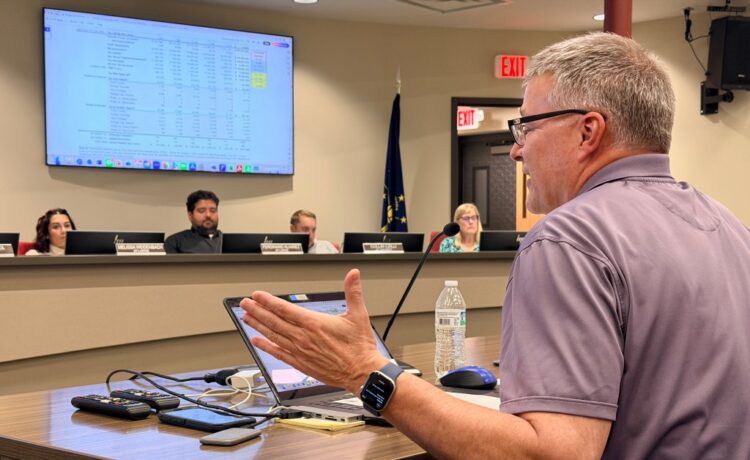
There’s enough additional revenue to pay those raises this year, and next year’s budget factors in those raises without the benefit of the $622,000 bonus the residential TIFs will bring, Mayor Austin Bonta said Tuesday.
But Clerk-Treasurer Liz Modesto said last week the 2026 budget up for adoption next Tuesday is the tightest she’s ever seen, including her 24 years on the council.
Because a TIF district has a 20-year lifespan, Bonta said it would be smart for the city to consider using the extra public safety money for things like overtime rather than relying on it for salaries.
“It sounds too good to be true,” Councilman Collin Czilli said, so he asked what risk the city faces in approving the plan.
The developers have agreed to buy the bonds to pay for the infrastructure, so they’re the ones facing the risk if the economy sours and the homes don’t sell, Botich said.
The benefit to the city is the annual payments for up to six years as the subdivisions are being built. The benefit to the developers is a lower interest on the bonds than if they were sold on the open market, Botich said.
“Residential growth is very beneficial to a lot of communities,” Bonta said, but also requires more spending for public services. Communities can charge user fees for utilities and trash pickup, but not police, fire and EMS services. That’s one of the ways the TIF law was fine-tuned in recent years to sweeten the pot for municipalities.
When completed, the five subdivisions will bring a total of 1,206 homes to the city.
The first five subdivisions participating in the plan – Botich expects more developers will want this financing plan in the future – are Rivertrace, Providence at Farmington, Bauer Farm, Sandy Trail and Swanson Trails.
They’re expected to bring more than 3,000 new residents to the city – beginning with 325 next year, 599 in 2027, 782 in 2028, 785 in 2029 and 571 in 2030.
Doug Ross is a freelance reporter with the Post-Tribune.