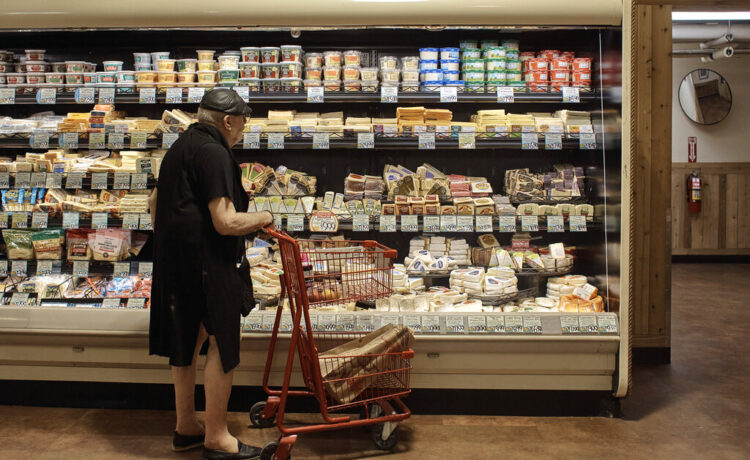
Millions of Americans who rely on food stamp programs will face the danger of their benefits being cut off next month as the government shutdown drags on.
The current shutdown has led to the first in nearly two decades that the Supplemental Nutrition Assistance Program is facing a full disruption of distribution of benefits including its Electronic Benefit Transfer system. The United States Department of Agriculture’s Food and Nutrition service, which operates the SNAP program, has instructed all 50 states to “hold their November issuance files. The federal agency cited “insufficient funds.”
“We’re going to run out of money in two weeks,” Agriculture Secretary Brook L. Rollins said to reporters at the White House on Thursday.
“So, you’re talking about millions and millions of vulnerable families, of hungry families that are not going to have access to these programs because of this shutdown.”
Nearly 27 states have either stopped accepting new applicants or have already issued warnings to residents that the upcoming disbursements for November have been delayed or outright halted.
“If the current lapse in appropriations continues, there will be insufficient funds to pay full November SNAP benefits for approximately 42 million individuals across the Nation,” reads a letter from the USDA, which was signed by SNAP development director Sasha Gersten-Paal.
On Friday, 3.5 million people in Texas were notified by state officials that their SNAP benefits would be cut off in November if the federal shutdown continues into next week, according to a report from The Texas Tribune, which would put a halt on more than $614 million in benefits. Among those impacted would be 1.7 million children.
A total of 19 million residents in Illinois were told they will lose their benefits in November if the shutdown persists, with the state unable to “backfill” approximately $350 million in federal funds, according to a statement from the Illinois Department of Human Services.
“SNAP is a proven, time-tested program, one that protects children and families from going hungry,” IDHS secretary Dulce M. Quintero said. “The federal government needs to ensure families receive their benefits on November 1, so their livelihoods are not disrupted.”
Other states that have already warned of an upcoming halt on SNAP benefits include Pennsylvania, Kansas, New Hampshire, New Mexico, and Minnesota where new SNAP enrollments have already been halted.
The USDA’s shutdown contingency plan includes a reserve fund to cover administrative costs and benefit payments, but the agency hasn’t disclosed how much money remains available.
The contingency plan could be exhausted if the shutdown goes past October, but the Trump Administration could decide to tap into a multiyear fund to cover the lack of current funding, according to the Committee for a Responsible Federal Budget.