
-
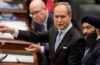
The Wilkes-Barre City Aggregated Pension Fund Board of Trustees held a meeting on Wednesday, May 7, 2025. (JASON ARDAN / STAFF PHOTOGRAPHER)


1 of 12
The Wilkes-Barre City Aggregated Pension Fund Board of Trustees held a meeting on Wednesday, May 7, 2025. (JASON ARDAN / STAFF PHOTOGRAPHER)
WILKES-BARRE — The Wilkes-Barre City Aggregated Pension Fund Board of Trustees learned Wednesday that the fund value dropped more than $4.2 million in the first quarter of 2025, and voted to spend $15,500 for a benefits valuation.
Board members got their first look at performance of the funds’ investments PNC Institutional Asset Management began managing the pension funds’ investment portfolio in March. The board voted to replace longtime manager PFM Asset Management with PNC and replace actuarial firm Korn Ferry with Gallagher at a special meeting in November.
Paul Kamor, a senior investment manager with PNC, provided the board with an overview of the pension fund’s investment portfolio performance between Jan. 1 and March 31.
“The market started off pretty strong in the first quarter, where we actually hit a new all-time high in the middle of February. But, since that time, the market kind of … reassessed itself based on a lot of changes that were occurring, particularly in regard to economic policy,” Kamor said.
Kamor said the stock market was down by a little over 4% as of March 31, with domestic stocks struggling, particularly larger tech stocks that were impacted by President Donald Trump’s tariff policy. However, international markets were “quite strong” and, along with positive returns in the bond market, helped offset the losses.
Carmen Lopresto, a PNC investment advisor, said the company is keeping “a little bit more in cash” in the portfolio to supplement retiree benefit payments “so we don’t have to sell if markets continue to stay choppy.”
Cash reserves total about $5.5 million, or a little over 6% of the portfolio, and are equivalent to about four months of retiree benefit payments, he said, and also laid out PNC’s other investment strategies for the portfolio.
He noted that the pension funds’ year-to-date return on investment was down 1.4%, and the total market value of the fund dropped from $94.1 million as of Dec. 31 to $89.9 million as of March 31.
Lopresto said the portfolio has been averaging a little over 8% per year over the last five years; 6.3% per year over the last 10 years, and 5.74% since its inception in January 1999.
Those longer-term earning numbers have been concerning some board members because the board had set the pension fund’s discount rate, which is the expected rate of return on investments, at 8%.
If investments don’t average out to 8% or higher in the long term, the pension fund’s liability will increase, meaning there will be less money in the fund from investments to cover future retirees’ pensions, so the City would have to contribute more from the general fund to help shore up the pension fund.
The city’s annual payment to the pension fund, known as the minimum municipal obligation, or MMO,
That could necessitate a property tax increase, or the City borrowing money to shore up the pension fund. And the City just borrowed $22 million in 2022 to do just that with a loan agreement that allows the City to use annual state pension aid payments to pay back the loan.
Some board members had been pushing to gradually lower the discount rate to 7% over a several-year period to better shore up the fund. But, Mayor George C. Brown, the board chairman, convinced the board to wait for a report and recommendation from the actuary.
Brown has said the previous actuary, Korn Ferry, had been non-responsive to a request.
Jason Fine, principal and consulting actuary with Gallagher, told the board on Wednesday his firm discovered that Korn Ferry had been overvaluing medical benefit costs for the spouses of retirees, which means that the City’s reported liability should be lower than what Korn Ferry had determined.
Fine said Gallagher would perform an OPEB (Other than Pension Employee Benefits) valuation for 2025, but that valuation relies on data from a 2023 valuation that Korn Ferry should have provided to the City but did not.
The board voted unanimously to pay Gallagher $15,500 to perform the 2023 valuation, and Brown instructed city finance director Brian Swetz to request a refund from Korn Ferry for work that was not completed.
Fine said he will present an actuarial report at the board’s next quarterly meeting, scheduled for 9:30 a.m. Aug. 6, that will help the board members better understand the risks of keeping the discount rate at 8% or lowering it.
Originally Published: