
Property is a favourite British conversation topic. Nearly everyone has an opinion on where house prices are heading, the next property hotspot or where homes should – and shouldn’t – be built.
But to get a true sense of what’s driving the market, it is worth listening to the people who live and breathe property day in, day out.
In this series, we put an expert through their paces each month.
We want to know their view on all of the hot-button topics mentioned above as well as mortgage rates, buy-to-let and housebuilding.
We will even question them about their best and worst investments to date.
This month we spoke to Richard Donnell, executive director at Zoopla.
Richard has more than 30 years of experience in the property industry, having become a director at upmarket estate agent Savills at the age of 28.
At Zoopla he heads up the research team, looking into the most important trends across the housing market.

In the hot seat: this month we spoke to Richard Donnell, executive director at Zoopla
1. What will house prices do over the next 12 months?
Richard Donnell says: We started the year forecasting that house prices would go up by 2 per cent, which was on the lower side of what others were predicting.
Now we think house price growth will be closer to 1 per cent by the end of 2025 and we expect this slower pace to continue into 2026.
More homes hitting the market and mortgage rates staying higher than expected are the main reasons why growth has slowed.
But slow house price growth isn’t necessarily bad, as long as people still feel confident enough to sell and buy.
2. What about the next 10 years?
We expect house prices to just about keep pace with growth in incomes over the next decade, so two to three per cent a year.
The move to higher mortgage rates is working its way through the market.
Affordability remains a barrier to large price gains in southern England, with room for growth in more affordable markets across the rest of the country.
3. Where will mortgage rates be in 12 months?
Average mortgage rates are likely to remain relatively stable around 4 per cent over the next 12 months with some deals in the high 3 per cent range.
Changes to the mortgage stress-test rules have meant that buyers using a mortgage can borrow up to 20 per cent more than they could just three months ago – for the same household income and mortgage rate.
This is good news for the property market and those hoping to buy even though rates haven’t fallen more.
Will Labour hit its 1.5 million home target?
It’s unlikely we will build 1.5million homes over this parliament. However, there is a chance we get to a run rate of 1.5million by the end of the parliament, meaning that by 2029 we could be building about 300,000 homes per year.
Planning reforms and more money is great news, but builders are concerned about the demand for homes with builders pushing for a return of Help to Buy type equity loan scheme.
We’re only going to build more homes if we build a range of tenures and price points to enable more buyers to buy and to get more homes for rent – both private and social.
What is the most urgent property crisis?
The affordability of housing is the big problem for home buyers and renters. It’s harder to buy homes which limits access for first time buyers which creates even greater demand for rented homes pushing rents higher.
We have to improve affordability and the only long term solution is by building many more homes to buy and rent.
What could stop house prices rising?
History shows that rising unemployment is the biggest risk to house prices, as fear of unemployment weakens demand and prices fall.
While mortgage rates more than doubled between 2021 and 2023, the impact on prices was relatively modest [because employment was stable].
Homeowners and buyers shouldn’t expect the high levels of annual price inflation we have seen in the past. Prices will keep rising, but in low single digits.
Are landlords being unfairly targeted?
There are over 2 million private landlords owning property in the UK. They are providing much-needed rented housing.
Being a landlord was almost too easy in the 2000s, and the Government changed tax relief to limit the competition with first-time buyers.
This slowed investment and limited growth in supply, which is one reason there has been a rapid increase in rents over the last three years.
One big change is that half of all rented homes are owned by the 20 per cent of landlords with more than five homes. The landlord sector has professionalised which can only be a good thing.
The focus for most is providing good homes for rent over the long term.
Is buy-to-let a good or bad investment today?
The motivations for being a landlord have changed. Today’s landlords are focused on strength of cashflow and rental income rather than letting rising house prices boost returns, which was the motive in the 2000s.
Almost two in five landlords bought their first property to live in, and it is this group who are leaving the market as they never saw being a landlord as a business.
It’s the larger professional landlords that remain seeing it as an income-focused business.
If you could pick one area to invest in property for the next decade, where would it be?
I would invest in a three-bed house that needs refurbishment in a town in close commuting proximity to Manchester, as this will provide rental income and steady price inflation.
I would buy a home that is cost effective to make an Energy Performance Certificate B or C.
I also think there are some good buying opportunities in leasehold flats in London where the rents are strong, but lots of care is needed to buy the right property.
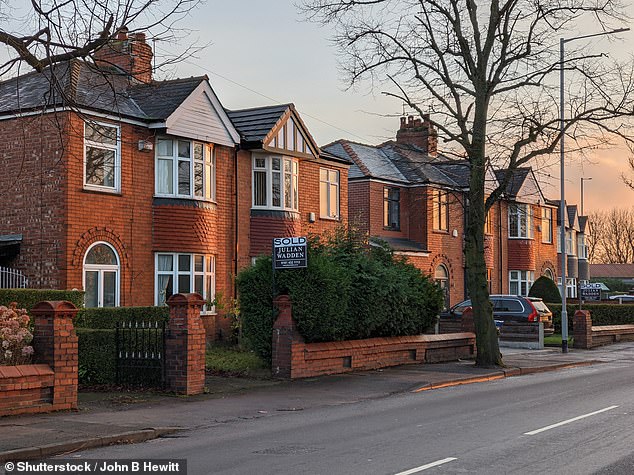
Best investment: Donnell says he would buy a three bed house that needs a refurbishment in a town in close commuting proximity to Manchester
Prime central London prices are below their 2014 peak: Will it boom again?
The prime London housing market is struggling in the wake of successive tax changes impacting overseas buyers; the Brexit vote which impacted the attraction of London as a place to do business; and growing competition for where global capital can invest in property.
Value for money is slowly returning to the inner London market but the outlook for housing really depends on jobs growth and inward investment into the London economy.
If you were Chancellor, how would you help first-time buyers?
Build more homes, and continue the review into mortgage regulations introduced in 2015 which have restricted access to the housing market.
Building more homes is the only long-term solution to ease the pressures on the housing market – homes for both sale and rent.
Mortgage regulations have started to be eased, but there is further to go to support first time buyers where the greatest assistance is needed in southern England.
The market is less problematic for first time buyers outside that area.
Do you have any tips for buyers making offers to estate agents?
Don’t underestimate the importance of having a mortgage agreed in principle, and a conveyancer who is primed to proceed if you have an offer accepted.
This will highlight to estate agents that you’re a serious buyer who is ready to move quickly.
Set out in an email why you want to buy the property, and the rationale for why you have made the offer, citing evidence where possible.
This can lead to a better negotiation.
What’s the best piece of advice you’d give to someone looking to get on the ladder?
Don’t chase home ownership at any cost. A young couple looking to start a family shouldn’t take a 35-year mortgage and stretch themselves to buy a one bed flat as they may be stuck in that property some time.
First-time buyers should buy a home they plan to live in for 10-12 years.
What advice would you give someone planning to sell their home this year?
Sellers need to be realistic on pricing if they are serious about finding a buyer and moving home in 2025.
Many sellers have a price in mind that they want to secure a sale for their home, or a price they need to achieve in order to unlock their next home move.
They may eventually get this price, but may have to wait a long time to achieve it.
Ultimately, it’s a choice for sellers between prioritising a specific sale price, or setting a realistic price and agreeing a sale in a timely manner.
The question you really need to ask the agent is, what asking price should I go with to guarantee a sale within four weeks? You may be surprised at the answer.

Buy for the long-term: Donnell suggests that first-time buyers should be buying with a 10-12 year time horizon
What’s your best ever property investment?
Many of the best decisions are a mix of fate or great, unplanned timing that turns out well.
When the mortgage market was in disarray post the global financial crisis I fixed for five years at a base rate tracker which proved an amazing deal as base rates fell to record low levels. It will have cost the bank money but was a fate of timing and opportunity.
What’s the worst investment you’ve ever made?
Luckily I haven’t had any bad investments as yet, but I do live in an old home that needs continued investment and TLC.
This is going to be a growing issue for all homeowners in future as the costs of building and insurance increase, so it is a factor to consider when planning your next move.
What would you do if you inherited £100,000 tomorrow?
I would put it in a self-invested personal pension (Sipp) over 2.5 years, putting in £40,000 a year at most to take advantage of the tax relief boost.
I’d invest in a low-cost 80-100 per cent global equity blended fund.