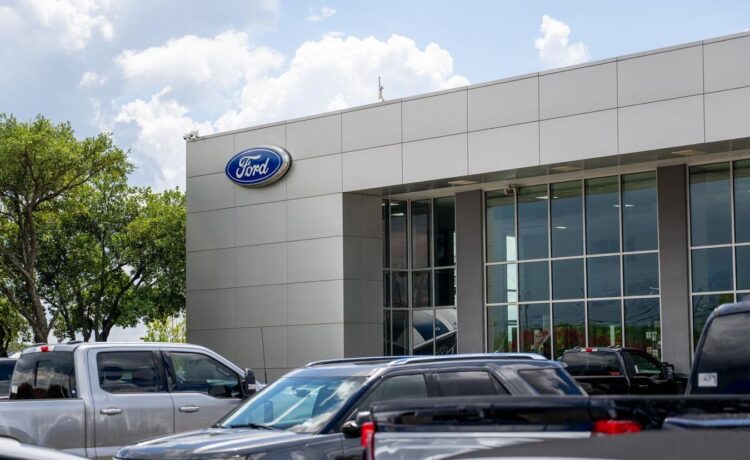
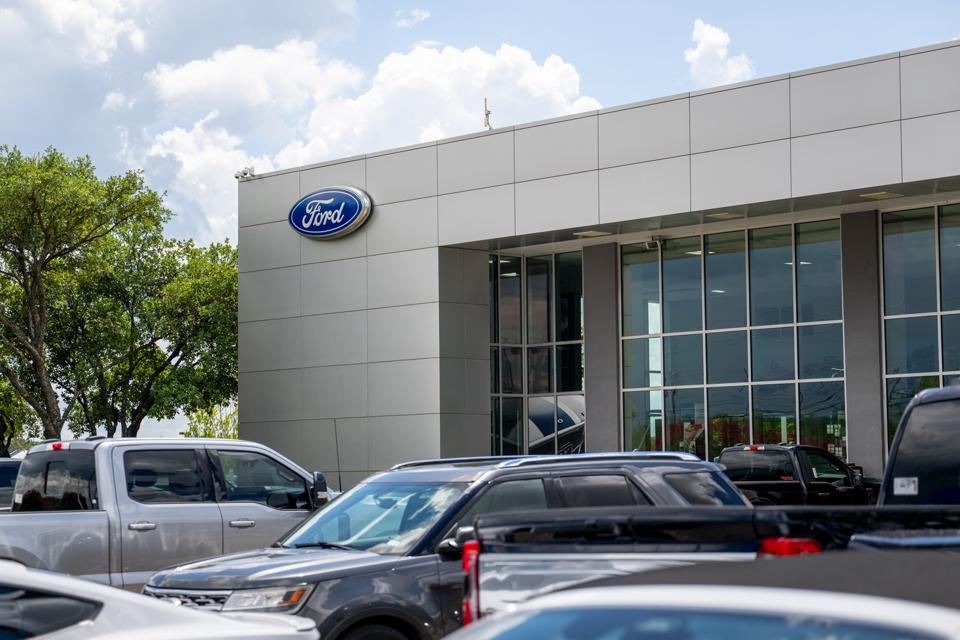
AUSTIN, TEXAS – JUNE 24: Ford vehicles are seen for sale on a dealership lot on June 24, 2025 in … More
Ford Motor (NYSE:F) is under ongoing scrutiny in 2025 regarding its vehicle quality and safety standards, leading the U.S. auto industry in safety recalls by a significant margin. In the first half of the year, Ford has issued 88 recalls — over four times the number of the next manufacturer, as per federal data. Just last week, Ford reported another major recall involving 850,000 pickup trucks and SUVs due to a potential fuel pump failure that could cause the engine to stall during operation, presenting a serious risk to drivers. Additionally, consider the potential for growth in Google Stock To $350?
What implications does this carry for Ford and investors? The consequences are serious. Quality issues could damage consumer trust and increase warranty and recall costs. Ford stock remains down approximately 15% over the past 12 months, while the S&P 500 has gained 11%, indicating investor worries about the company’s escalating operational and reputational challenges. On a separate note, cryptocurrencies are starting to gain momentum again. See – Will The Rally In XRP Price Continue?
How The Recalls Affect Ford
The rising number of recalls could become costly. Ford must bear the costs of repairing or replacing faulty components across millions of vehicles. This will include expenses for parts, labor, and logistical efforts to oversee the recall process. More critically, the ongoing presence of safety concerns may undermine consumer trust and Ford’s reputation for reliability. As quality issues escalate, Ford risks ceding market share to competitors perceived as more reliable, especially as the auto industry gradually shifts towards electrification. CEO Jim Farley has already recognized Ford’s disadvantage in this sector, stating that the company is lagging behind Chinese automakers who currently dominate several global EV markets.
These quality concerns are already impacting Ford’s financial performance. Warranty costs have become a consistent burden, increasing by 22% to $6 billion in 2024, primarily due to recall-related repairs. Since recalls generally fall under warranty coverage, these new concerns directly contribute to these costs. These challenges put pressure on margins and complicate Ford’s ability to enhance profitability, particularly as it anticipates a loss of between $5 billion and $5.4 billion in its electric vehicle segment this year.
How Ford Might Address Issues
To tackle these quality and cost challenges, Ford is intensifying its focus on internal testing and product validation. Last year, CEO Farley mentioned that Ford is now “putting vehicles to the test until they fail” under extreme conditions to identify defects earlier in the development phase. However, the company has cautioned that it may take as long as 18 months for these changes to yield results in reduced warranty claims and improved product reliability.
In the meantime, Ford’s key product lineup continues to demonstrate strength. The company reported a year-over-year sales increase of 14.2% in the U.S. during Q2 2025, reaching 612,095 units. This growth was primarily fueled by strong demand for pickups like the F-Series, Ranger, and Maverick, which collectively registered a 15% rise. F-Series sales grew by 11.5% to 222,459 units — marking the best Q2 since 2019. Ford Pro Super Duty sales jumped by 13.5%, while hybrid models also saw increases.
Notably, the Maverick recorded a record quarter with 48,041 units sold, with almost 60% of buyers being new to the Ford brand. The EV market is also experiencing a slowdown, with industry leader Tesla witnessing a nearly 14% drop in deliveries during Q2. This may provide a respite for Ford, which has lagged in this segment. Slower growth in EV demand could afford Ford more time to generate revenue from its gas-powered vehicles and high-end pickups while restoring its quality assurance.
Although Ford Motor stock has been underperforming, you might consider the Trefis Reinforced Value (RV) Portfolio, which has outperformed its all-cap stock benchmark (a combination of the S&P 500, S&P mid-cap, and Russell 2000 benchmark indices) in generating substantial returns for investors. What accounts for that? The quarterly adjusted mix of large-, mid-, and small-cap RV Portfolio stocks has allowed for a responsive approach to capitalize on positive market conditions while minimizing losses when markets retrench, as detailed in RV Portfolio performance metrics.