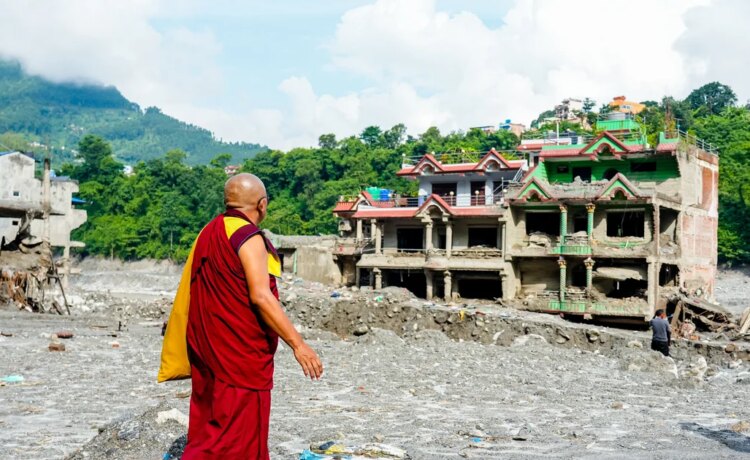
Nepal’s flood is exactly the kind of disaster the fund exists for, but its request breaks from the usual process. It arrives after the funding window has closed and asks for an emergency decision outside the normal calendar, something the board has never granted. Eight members representing Africa, Asia and the least developed countries have called for an extraordinary meeting (Opens in new window) on the appeal, treating it as a test of whether the fund can act fast when it matters. Even if the board agrees, the numbers make the outcome predictable: some support may follow in December, nowhere near the quantum of cash needed to cover the damage Nepal has cited.
The scale of destruction in Nepal is the worst the region has seen in years, and it forces a reckoning with how climate finance, and loss and damage funds in particular, are built to respond to vulnerable countries hit by disasters of this magnitude.
The FRLD’s own mandate allows it to provide funding immediately following extreme weather events, according to its governing instrument (Opens in new window), not only for long-term reconstruction. The problem is that the machinery built to deliver that mandate still operates like a conventional development fund rather than an emergency response mechanism. Its only funding cycle (Opens in new window) runs eleven steps, from origination through technical review, board approval, implementation, and three years on, it remains the fund’s sole track.
This is not to say technical review and due diligence are unnecessary. Multilateral climate funds and bilateral donors need that kind of scrutiny to run multi-year, multi-billion-dollar projects on emissions cuts and resilience-building. But loss and damage finance is different, and it demands a different lens of urgency. Countries facing catastrophic loss of life and destruction of their economies cannot afford to wait years for procedural and technical review. At the same time, the developed world, and the high-emitting countries in particular, cannot evade responsibility. They must put more money into climate finance, and especially into loss and damage. The $350 million currently available against $2.8 billion in requests, let alone Nepal’s own four-to-seven-billion-dollar claim, is an insult to injury.
And if adequate, just compensation isn’t available in the form of grants, what choice do vulnerable countries have but to take on more loans for recovery, adding to the burden on economies already struggling to service existing debt?