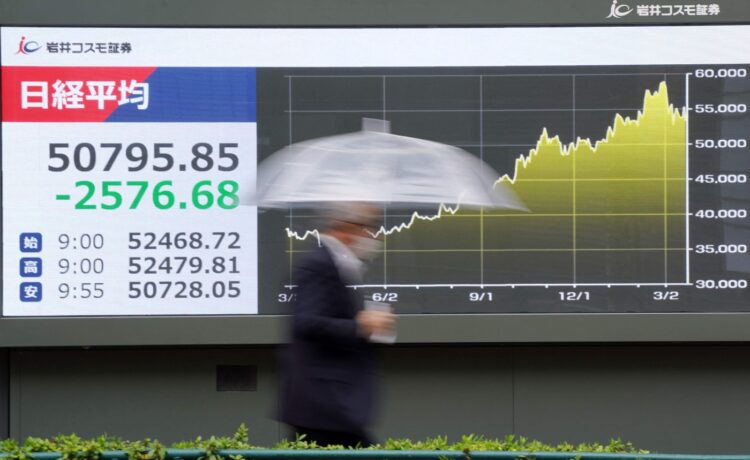
NEW YORK: An index tracking global emerging-market stocks hovered around multi-month highs on Wednesday, largely powered by gains in tech-heavy Asian bourses, while surging oil prices kept broader risk appetite in check ahead of US economic data.
The MSCI’s EM stocks gauge gained zero point three per cent and was trading near two-month highs.
South Korea’s tech-laden KOSPI gained, with chipmaker SK Hynix rising three point five per cent, tracking a renewed bout of interest for AI stocks. Regional peer Taiwan also added zero point two per cent.
Benchmark Brent crude oil futures rose past US$100 a barrel, breaching the symbolic barrier for the first time since Jul 24 as intensifying conflict in the Middle East fuelled growing concern about oil flows from the region.
“Risk appetite remains weak as rising oil prices occupy the headline,” said Ipek Ozkardeskaya, senior analyst at Swissquote.
“Summer was full of hope that a peace agreement could be achieved. This optimism is fading as we enter September.”
Elevated energy costs stemming from the conflict have pushed policymakers globally to reassess their monetary policy stances.
Markets will also await the US consumer price data on Friday to gather cues on the Federal Reserve’s policy outlook when it meets next week.
Traders currently price in a 60.40 per cent probability that the Fed will hike interest rates at its September meeting, up from a 44.40 per cent chance a month ago, CME’s FedWatch Tool showed.
Back in Asia, Chinese equities on the Shanghai Composite and Shenzhen indexes inched up zero point three per cent each. Factory-gate inflation gathered pace in August and consumer price growth quickened, driven largely by elevated energy costs tied to supply risks from the Middle East war, even as underlying domestic demand remained subdued.
The yuan firmed and hovered at three-year highs.
Asian currencies were mostly higher tracking a weaker US dollar. MSCI’s index following EM currencies rose zero point two per cent, touching a new record high.
Indonesian rupiah strengthened zero point seven per cent, to its strongest in nearly four months. Despite the session’s gains the currency is among the worst performing currencies in Asia this year.
Elsewhere in South Africa, the economy shrank for the first time in almost two years in the second quarter of 2026, official data showed on Tuesday, dragged down by the Iran war.
Equities index fell one point three per cent, and the currency dropped zero point two per cent.
In emerging Europe, currencies were weaker against the euro.
Polish assets were in focus ahead of the central bank’s rate decision later in the session. The National Bank of Poland (NBP) is expected to keep interest rates unchanged at 3.75%, a Reuters poll showed.
The local stocks index declined zero point six per cent, while the zloty dipped zero point two per cent.
Elsewhere, Senegalese bonds nudged higher broadly, with the 2031 dollar bond rising about 0.29 cents on the dollar to be bid at 52.168, its highest since late August.
The country’s bonds had suffered sharp losses after a debt restructuring announcement earlier this month. If gains hold, most bonds will have erased those losses.