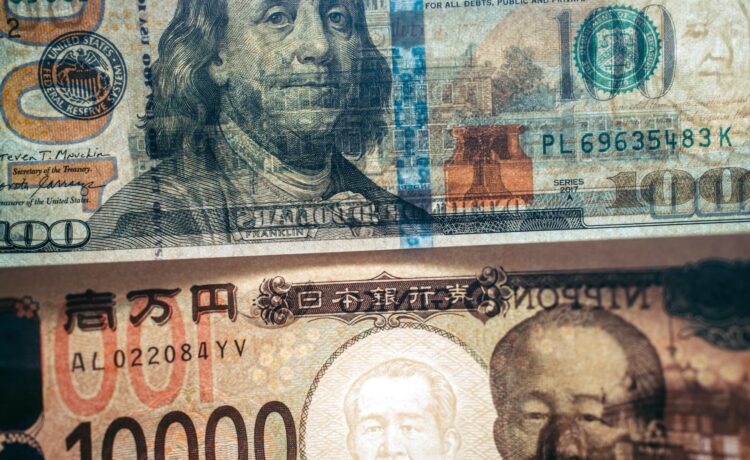
The yen steadied near the 160-per-dollar level on Tuesday after U.S. Treasury Secretary Scott Bessent ramped up pressure on the Bank of Japan to hike rates later this month, while currency markets kept a wary watch on renewed attacks in the Middle East.
Kentaro Takahashi | Bloomberg | Getty Images
The dollar strengthened on Tuesday as renewed U.S.-Iran hostilities sent oil prices higher, fuelling inflation worries and sparking a global bond selloff.
U.S. President Donald Trump threatened further strikes against Iran after the first exchange of direct attacks in a month, pushing U.S. oil to $90 a barrel.
The 10-year Japanese government bond yield touched 3% for the first time in 30 years, while the yield on 10-year Treasury notes hit its highest since January 2025.
“A rout in global bond markets is intensifying and the dollar is climbing as an outbreak in hostilities between the U.S. and Iran revives inflation risks, raises the likelihood of interest rate hikes in the months ahead, and makes safe havens more appealing,” said Karl Schamotta, chief market strategist at Corpay.
The move comes after Federal Reserve Chairman Kevin Warsh was seen as adopting a more hawkish tone on monetary policy. In his debut speech at the Jackson Hole symposium, Warsh said the Fed would “have work to do” if inflation failed to cool, his strongest hint yet that further rate hikes could be needed to contain price pressures.
Fed funds futures traders are now pricing in 68% odds of a September rate hike, up from 35% before Warsh’s comments on Friday.
August’s jobs and consumer price inflation data, which are both due before the Fed’s September 15-16 meeting, may now be key to whether the U.S. central bank hikes next month.
This Friday’s jobs report is expected to show that employers added 56,000 jobs last month, according to the median estimate of economists polled by Reuters.
Fed Governor Michael Barr said on Tuesday that if inflation does not cool quickly, it will be time for the U.S. central bank to increase interest rates.
U.S. Treasury Secretary Scott Bessent, meanwhile, said on Tuesday that U.S. bond yields are showing that inflation expectations are “flat to down” and reflect accelerating U.S. growth.
The dollar index, which measures the greenback against a basket of currencies including the yen and the euro, rose 0.28% to 99.70, with the euro down 0.26% at $1.1586.
Sterling weakened 0.28% to $1.3508.