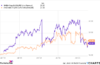

When military action disrupted the Strait of Hormuz earlier this year, the price of Dubai Crude Oil – the key benchmark for Southeast Asia – more than doubled in three weeks, surging from around US$60 per barrel to a peak of US$137.82.
While the price has come down as of mid-June, the impact on inflation expectations across the region is already underway. The Asian Development Bank now projects that inflation across Southeast Asia could nearly double, rising from 3.0% in 2025 to 5.6% in 2026, while regional economic growth could ease from 5.4% to 4.7% if the disruption persists into the third quarter.
This data sets the stage for a complex set of circumstances that could impact everything from currency strength to central bank policy decisions.
How External Shocks Impact Domestic Markets
Southeast Asian countries are highly reliant on energy imports from the Middle East. According to analysis by S&P Global, around 90% of the crude oil that is shipped through the Strait of Hormuz flows to the Asia-Pacific region. Just over half of the crude and condensate oil Thailand imports comes from the Middle East, while around 85% of Vietnam’s oil imports come from the region. This concentration of supply dependency means that disruption to a single maritime chokepoint translates almost immediately into domestic cost pressure.
The impact of higher oil prices on inflation works through several channels. Elevated oil prices raise production costs for manufactured goods, while elevated shipping costs lead to price increases for imported goods. The cost of domestically produced food will also be impacted going forward due to higher fertilizer costs – the Middle East is a key fertilizer supplier to the region.
Compounding these pressures, U.S. tariffs have added a separate layer of trade uncertainty. Although key exporter nations, such as Thailand and Vietnam, initially saw increased exports and foreign investment as companies relocated manufacturing to avoid higher tariffs, these trade measures also contributed to broader supply chain disruption and heightened uncertainty. These disruptions have put pressure on margins for Southeast Asian exporters, as many producers have absorbed the higher cost of producing goods in the current environment.
Increased Currency Volatility
The intersection of economic risk and trade uncertainty has triggered volatility in Southeast Asian currencies and a flight toward the relative safety of the U.S. dollar. However, this impact is not uniform across the region.