«Saviour of the Euro» to Speak in Zurich
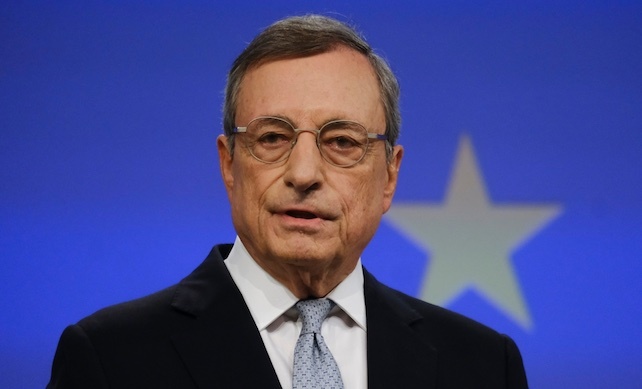
The Italian economist Mario Draghi shaped eurozone monetary policy significantly during his tenure as ECB President from 2011 to 2019 and is considered one of the most influential central bankers of our time, the SNB said in a statement. In recognition of his contributions to Europe and European integration, Draghi will be awarded the Charlemagne Prize this year.
The International Charlemagne Prize of Aachen is regarded as the most prestigious award for services to European unity. It is traditionally presented on Ascension Day — this year on 14 May.
«Mario Draghi saved the euro as central bank president — almost single-handedly when it was on the brink,» said Armin Laschet (CDU), chairman of the Charlemagne Prize board, at the time of the nomination. At the height of the euro crisis in 2012, Draghi declared that the ECB would do «whatever it takes» to preserve the common currency.
Broad Experience
Before his time at the ECB, Draghi served as Governor of the Banca d’Italia, Vice Chairman and Managing Director at Goldman Sachs, Director General of the Italian Ministry of Finance, and Executive Director at the World Bank. Earlier in his career, he was a professor at the universities of Trento, Padua, Venice and Florence. He earned his PhD in economics from the Massachusetts Institute of Technology in 1977.
After leaving the ECB, Draghi served as Italy’s Prime Minister from 2021 to 2022. In 2024, he published the widely noted “Draghi Report” on the future of European competitiveness.
Public Event at ETH
The tenth Karl Brunner Distinguished Lecture will take place on Thursday, 1 October 2026, at 5.30 pm in the Audi Max at ETH Zurich. The event is open to the public and will be held in English. It will also be streamed live on the SNB website.
The Karl Brunner Distinguished Lecture Series was launched by the SNB in 2016 to mark the 100th anniversary of Swiss economist Karl Brunner (1916–1989). Speakers are invited whose work has had a significant impact on the practice of monetary policy at central banks.