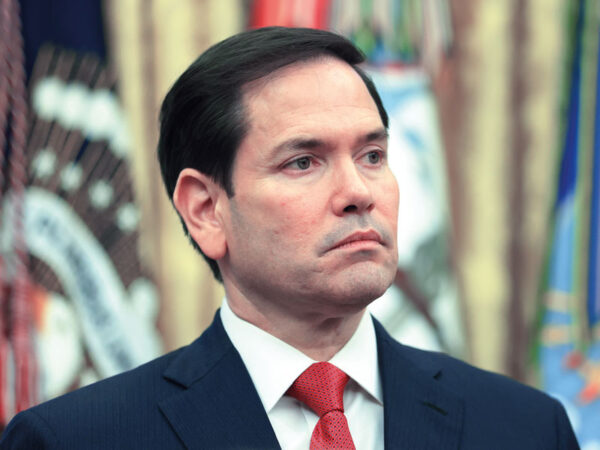
US Secretary of State, Marco Rubio 
Author: John Muchira, Features Writer
When US President Donald Trump reawakened the venomous ghosts of his ‘America First’ mantra during his second inauguration in January 2025, few could have foreseen the tsunami of disruptions and chaos that he intended to unleash on the global arena. “During every single day, I will, very simply, put America first,” he said with his characteristic bravado. True to his words, Trump has unapologetically caused widespread turmoil, with the US global health programmes being among the biggest casualties. To the administration, the programmes were deeply broken, had become inefficient, wasteful and had created a culture of dependency.
Simply put, they were not serving the interests of the US despite billions in annual budgetary allocations. Trump was clear that maintaining the status quo would not be an option. The outcome is a completely different approach to global health assistance, anchored on the largely controversial and divisive America First Global Health Strategy (AFGHS).
“We must keep what is good about our health foreign assistance programmes while rapidly fixing what is broken. This strategy lays out a plan to do just that,” said Marco Rubio, US Secretary of State. For countries that for decades have depended on the US for health assistance, particularly in dealing with infectious deadly diseases such as HIV, TB, malaria, smallpox, burdensome non-communicable diseases and maternal and infant mortality, AFGHS is an extremely bitter pill. Worse still, the road to its unveiling on September 18, 2025, was paved with painful spikes.
It started with the dismantling of the US Agency for International Development (USAID), which for decades had been the face of US foreign aid with missions primarily concentrated in Africa and Asia. In Africa alone, USAID had committed about $132bn across health systems, economic development and humanitarian relief from 2001 to 2024. The health funding gaps created since its shuttering are widespread and devastating. Nigeria and Botswana are cases in point. The former was left with a whopping $600m hole, while Botswana lost a third of its HIV response funding. Notably, USAID was a key implementing agency of the $110bn President’s Emergency Plan for AIDS Relief (PEPFAR) that has saved over 26 million lives since 2003.
Global shockwaves
While the dismantling of USAID was bad enough, the decision by the Trump administration to withdraw the US from the World Health Organisation (WHO) sent shockwaves across the global health systems. Trump has never hidden his disdain of the global body, which he has accused of mishandling the Covid-19 pandemic, refusing to reform and being prone to undue political influence, specifically from China. For WHO, the US withdrawal was a major blow considering Washington was the top donor providing between 12 and 15 percent of its funding. In 2022–23, the US contributed $1.2bn.
Another layer of the paving was a mission to cut the US government’s global health aid funding, a plan scattered by US legislators who approved a $9.4bn package for the current financial year. Though a cut from the $12.4bn allocated in the 2024–25 financial year, the funding is $5.7bn more than what the Trump administration wanted. A key aspect was the fact that Congress upheld funding for programmes such as PEPFAR, the Global Fund to Fight TB, AIDS and Malaria, and HIV/AIDS.
“The US must understand that a withdrawal from global health commitments makes the world – and therefore the US – less safe and less healthy,” says Michele Barry, Director of the Centre for Innovation in Global Health and senior associate dean for Global Health at Stanford University. She adds that Covid was proof that diseases do not respect geopolitical boundaries and is evidence that weakened healthcare systems anywhere in the world can have ripple effects on the US. Despite attracting unprecedented criticism, the Trump administration contends that the AFGHS will make the US safer, stronger and more prosperous. Through the strategy, the US intends to pivot away from open-ended aid to a system that puts emphasis on accountability, clear objectives and defined milestones within stipulated timelines. In essence, the era of blanket funding is gone.
The administration has built a strong case for AFGHS. Top of the list is the need to address inefficiency and wastefulness. Of the billions allocated for foreign health assistance annually, less than 40 percent is used for supplies and healthcare workers. Of this, approximately 25 percent is used for the purchase of commodities while the remaining goes to employing healthcare workers. The fact that 60 percent is spent on ambiguous expenditures and overhead smacks of wastage.
A serious wastage problem
PEPFAR is the poster child of wastage, according to the US State Department. Of its $4.7bn budget, the programme spent $1bn on medical commodity purchases, transport and delivery and $600m on its 270,000 frontline workforce. The remaining $3.1bn was spent on activities such as training, mentorship, supervision, and quality management among others. AFGHS is also designed to cut out the roles of non-governmental organisations (NGOs) in US-funded programmes. To the Trump administration, NGOs have been co-conspirators in aiding wastage with their ‘perverse incentives’ enabling them to self-perpetuate. For the strategy to be effective in saving millions of lives and assisting countries in developing resilient and durable health systems, removing NGOs from the equation and transitioning programmes to local ownership is seen as critical.
The health funding gaps that have been created are widespread and devastating
Though saving taxpayers’ dollars is paramount, the pillars on which AFGHS stands are causing disquiet across the globe, specifically among countries that are dependent on US health assistance. With regards to keeping America safer, the US intends to strengthen global surveillance systems to detect outbreaks to ensure quick response before they reach its shores. Part of this will involve posting a larger number of staff in geographies perceived as high-risk when it comes to outbreaks. To some, this amounts to an invasion of countries’ independence in managing the sovereignty of their health systems.
With regards to making America stronger, the plan is to enter into strategic multi-year bilateral agreements that require countries to co-invest, while on the prosperity pillar, the US will be seeking to create markets for its companies and innovators. Specifically, countries that sign the agreements will be required to open their markets to US health innovations and products. Africa, where the US is aggressively pushing AFGHS, is a key target considering that US pharmaceutical exports to Africa account for only 4.4 percent with India, China and Europe dominating.
“The US is clearly leveraging its central position on the global stage as one of the few actors capable of mobilising financing at scale in an increasingly extractive and transactional way,” states Lami Mabifa, a consultant at Africa Practice. He adds that the explicit linkage between global health cooperation and US national interests could prove highly disruptive.
This is already happening. Critics reckon AFGHS is not only exposing the globe to vulnerabilities of outbreaks but is also a clear representation of modern-day biomedical imperialism by the US. Since its launch in September 2025, at least 28 countries (22 of them in Africa) have signed memoranda of understandings (MOUs) with the US. Most have signed under duress because they need to fill gaps in health funding, a reality amplified by the fact that Africa’s health sector faces a staggering $66bn in annual financing gap.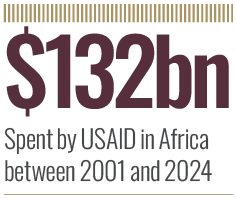
For the countries that have signed the bilateral agreements, US State Department data show Washington has availed $12.7bn in assistance with partner governments contributing $7.8bn in co-financing commitments. This notwithstanding the fact that most countries are feeling the heavy weight of co-investing. A case in point is Nigeria. While the US is contributing $2.1bn, the country is required to raise $3bn, an amount that is close to 40 percent of its 2025 health budget allocation.
Spending commitments
While at one level the co-investment provisions respond to a longstanding concern across Africa that external aid can foster dependency and leave health systems vulnerable when donor funding is withdrawn, on another level it is locking countries into spending commitments that are difficult to meet. The challenge is compounded by the fact that in some of the MOUs, the US is tying financing to sensitive data sharing. For instance, countries are required to share biological specimens and genetic sequence data of pathogens with epidemic potential in the shortest time possible after detection. Besides, some agreements have locked data and specimen sharing arrangements for up to 10 years, well beyond the funding cycle.
These conditions have become the breeding grounds for resistance. Zimbabwe is among countries that have turned their backs. Despite being eligible for $367m in US funding, Harare refused to commit after it was told to share sensitive data. A near similar situation unfolded in Kenya, the first country to sign the MOUs. Despite securing $1.6bn in funding, implementation was suspended by the High Court over concerns on data protection and the constitutionality of the agreement. In Zambia, the US plans to arm-twist the country and tie a $1bn funding to access to critical minerals such as copper, cobalt and lithium ended up backfiring.
“Global health crises cannot be contained through a patchwork of bilateral agreements,” notes Barry. She adds that outbreaks demand cooperation, coordinated, multilateral responses rooted in trust and shared responsibility. “Retreating from multilateral institutions undermines both US security and global preparedness.”
Part of the reasons why the agreements are being termed as ‘patchworks’ is because they are time-bound (averaging five years) and also contain withdrawal clauses, with any party free to exit upon giving a notice of 180 days. This creates room for abrupt disruptions of programmes, some of which are designed to run for years