
Four Vanguard funds promise a hands-off portfolio for nearly zero cost, but owning the wrong combination quietly turns diversification into expensive redundancy. Knowing which one or two to pick changes everything.
This post may contain links from our sponsors and affiliates, and Flywheel Publishing may receive compensation for actions taken through them.
If you want a portfolio you can mostly ignore, Vanguard built the toolkit. Four funds do the heavy lifting for pennies on the dollar:
Each one is a one-decision building block. Together, they can either give you a clean core portfolio or a mess of redundancy, depending on how you use them. This article is about picking the right one or two.
Why Fees This Low Actually Matter
Vanguard’s index funds charge next to nothing. VOO carries a 0.03% expense ratio, and VIG runs a 0.04% expense ratio. Translated: for every $10,000 you put in VOO, Vanguard skims about $2 per year. That leaves the rest compounding for you. Compare that to a typical actively managed mutual fund charging 0.75% and you’re keeping thousands more in your pocket over a couple of decades. Low fees are the closest thing to a free lunch in investing, and this is where Vanguard earns its reputation.
VOO and VTI: Pick One, Not Both
VOO tracks the S&P 500, holding 519 stocks across the largest U.S. companies. As of June 30, the fund managed $1.675 trillion in net assets, with Information Technology at 38.0% and Financials at 11.6% of the portfolio. It’s up 12.10% year to date (YTD) and nearly 72% over the past five years.
VTI does something similar but wider, adding mid- and small-cap U.S. names to the same large-cap base. Its returns look nearly identical: 12.14% YTD and nearly 64% over five years. That’s the point: The overlap between VOO and VTI is enormous. Owning both does not double your diversification. It slightly tilts you toward smaller names. If you want pure S&P 500 exposure, pick VOO. If you want the whole U.S. market in one ticker, pick VTI. Owning both is redundant.
VIG: Quality Compounders on Autopilot
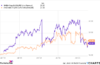
VIG holds US companies with a track record of raising dividends year after year. That screen tilts the fund toward stable, cash-generating businesses, which is why it tends to hold up better in rough markets (we ranked 10 of the longest-running Dividend Kings by valuation in a free report you can grab here: 10 Dividend Kings to Buy Now and Hold Forever). It’s returned 8.58% YTD and 49.54% over the past five years. The forward annual dividend sits at $3.9952 per share, paid quarterly, and the payout has climbed from roughly $0.10 per quarter in 2006 to nearly $1.00 in 2026. Think of VIG as a lower-drama alternative to VOO for readers who want equity growth with a smoother ride.
VYM: When You Want the Cash Now
VYM is the income tilt. It manages roughly $94.6 billion and skews toward higher-yielding names like Broadcom (8.03% of assets), JPMorgan Chase (3.34%) and ExxonMobil (2.72%). The forward dividend is $3.918 per share, paid quarterly, and shares are up 12.59% YTD. This is the one to consider if you need portfolio income you can spend, not reinvest.
The Trade-Off Nobody Talks About
Here’s the caveat. These four funds overlap heavily. VOO sits inside VTI. VIG and VYM both draw from the same U.S. large-cap universe VOO covers, just filtered differently. Buy all four and you’re paying four expense ratios to own many of the same stocks four times over, with a slight yield tilt. That’s duplication dressed up as diversification.
The smarter play is one core plus one satellite. Pair VTI or VOO with VIG if you want quality and lower volatility, or with VYM if you want income. If you truly want set-and-forget simplicity, one fund is enough. That’s the real win here: Vanguard’s fees are so low that picking correctly matters more than owning everything.
Contact [email protected] for any questions or corrections.