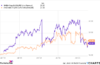

JEPI and JEPQ bury a line in your 1099 that costs top-bracket investors far more than the yield is worth. A newer class of options-overlay funds is engineered to send that same income through a very different tax door.
This post may contain links from our sponsors and affiliates, and Flywheel Publishing may receive compensation for actions taken through them.
If your income allocation runs through JPMorgan Equity Premium Income ETF (NYSEARCA:JEPI) or its Nasdaq sibling JPMorgan Nasdaq Equity Premium Income ETF (NASDAQ:JEPQ), you already know the pitch: monthly checks, roughly 8% headline yields, and shallower drawdowns than owning the index outright. Fair enough. The line that JEPI and JEPQ marketing tends to bury is the 1099-DIV. Because both funds generate most of their premium through equity-linked notes, distributions arrive as ordinary income, taxable up to 37% federally. A newer set of options-overlay funds is engineered around a different tax outcome, and they route the checks through you as mostly Return of Capital.
Why the ELN 1099 Hurts
ELN premium hits the ordinary-income line on your 1099, taxed at your marginal rate before the state adds another layer. Funds that instead sell listed SPX or NDX index calls use Section 1256 contracts, which get a blended 60% long-term and 40% short-term treatment, no matter how briefly they are held. Add a distribution policy that classifies most of each payout as Return of Capital, which defers tax and lowers your basis, and the same 8% to 14% yield becomes materially more efficient in a taxable brokerage account.
Four Funds That Send a ROC-Heavy 1099
SPYI for the S&P 500 Sleeve
NEOS S&P 500 High Income ETF (CBOE:SPYI) owns an S&P 500 basket anchored by Apple at 6.56%, Microsoft at 4.30%, and Amazon at 3.63%, with a data-driven SPX call overlay on top. Trailing distributions totaled $6.33 per share, and the annualized forward rate is $6.51, roughly 12% at Monday’s $53.40 close. Shares are up 10.15% year-to-date and 15.35% over the past year, so the yield is being funded by real option premium, then reported to the IRS with a favorable tax character.
QQQI for the Nasdaq-100 Sleeve
NEOS Nasdaq-100 High Income ETF (NASDAQ:QQQI) applies the same design to the Nasdaq-100. Largest holdings are NVIDIA at 7.65% and Apple at 6.63%, with short NDX calls sitting against the book. Forward distribution is $7.82 per share against a $54.28 price, near 14%. The tax claim is verifiable. QQQI’s Form 8937 filing classified every 2024 monthly distribution as 94.45% return of capital, and each 2025 distribution through May at 98.86%. On a $100,000 position, that is the difference between owing full ordinary-income tax this April and deferring most of it through a basis reduction.
BTCI for Bitcoin Income
NEOS Bitcoin High Income ETF (CBOE:BTCI) applies the overlay to bitcoin exposure and carries a 0.99% net expense ratio. Trailing twelve-month distributions totaled $10.76 per share, though the forward rate has stepped down to $7.55 annualized as bitcoin’s realized volatility cooled. On a $32.80 share price, that forward rate still sits above 20%. NAV has taken the hit that comes with the asset class, down 11% year to date and roughly 30% over the past year. In short, this is bitcoin income paired with bitcoin risk.
XPAY for a Managed 20% Payout
Roundhill S&P 500 Target 20 Managed Distribution ETF (NYSEARCA:XPAY) targets a 20% annualized distribution set from prior year-end NAV, and states that its payouts are intended to consist entirely of return of capital. That is a stated policy: if the fund does not earn 20% in a given year, the shortfall comes out of your cost basis, and NAV drifts lower. XPAY fits investors who want a fixed managed payout stream and understand they are effectively liquidating in installments with a delayed tax bill.
Tradeoffs Nobody Prints on the Fact Sheet
Return of capital is a deferral. Every distribution reduces your cost basis, so when you eventually sell, the gain is larger. In a taxable account, that is usually still a win because the deferred tax hits at long-term capital gains rates rather than ordinary income. Inside an IRA or Roth, tax character is irrelevant, and JEPI or JEPQ is often the simpler pick. Covered-call overlays also cap upside, which is why SPYI and QQQI posted one-year returns of 15.35% and 15.92% in an equity rally that pushed the underlying indexes higher.
Making the Swap Without Handing the IRS a Bonus
In a Roth or traditional IRA, swap freely. In a taxable account, check unrealized gains before selling JEPI or JEPQ. A decade of held appreciation can wipe out years of expected tax savings from the swap. A middle path is to route new contributions and reinvested dividends into SPYI, QQQI, BTCI, or XPAY while leaving the incumbent in place (if the monthly payment cadence is what drew you to JEPI in the first place, we rounded up seven other funds that pay every 30 days in a free report here: The 7 Monthly Dividend Stocks That Pay You Every 30 Days). For a top-bracket taxable investor with fresh capital to allocate, the ROC-heavy structure is worth evaluating on its own merits. For a retiree already holding JEPI inside an IRA, the case to switch is much weaker, and doing nothing may be the right move.
Contact [email protected] for any questions or corrections.