
Key Takeaways
- Diversification protects portfolios when one asset class gets hit hardest.
- Commodities are thriving amid war, weather and dollar weakness this year.
- Gold now behaves more like a momentum trade than a hedge.
- AI infrastructure spending is quietly driving returns across multiple sectors.
- Private investments trade liquidity for access, so vet them carefully.
Investors often frame the market in terms of the S&P 500. Lately, that’s been with good reason, as mega-cap techs have led big rallies beyond the performance of other indexes.
But that’s just one corner of the investable universe. Small- and mid-cap U.S. companies move distinctly from the largest companies that dominate headlines, while international developed- and emerging-market stocks respond to different central banks and currency shifts entirely.
Meanwhile, bond returns vary depending on where rates and inflation are heading. Other asset classes, like real estate, commodities and gold also face their own market pressures. Even cash becomes more attractive when it’s run up. That’s all to say: A portfolio built around one asset class is exposed to whatever hits that one thing hardest.
Below are 10 asset classes that could be part of a diversified portfolio. Here’s what investors should know heading into the final quarter of 2026:
“Commodities tend to flourish when less-than-desirable things happen around the world. Most adverse conditions are caused by politics, war or weather,” says Carley Garner, senior commodity market strategist and broker at DeCarley Trading in Las Vegas.
In 2026, the market is contending with all three, she says. “Adding fuel to the fire has been a sluggish U.S. dollar, which is a tailwind for commodity demand,” she notes. “In our eyes, this has been the perfect storm of commodity-bull-market chaos.”
The SPDR Gold Shares ETF (ticker: GLD) has returned 20.7% over the past year, with the majority of that gain coming in late 2025 and early 2026, although shares are up to about $400 from a July low of $363.
“Precious metals take on several personalities and purposes; you could say their identity is fluid,” Garner says. “At times, gold hedges against inflation; sometimes it hedges stock exposure, and other times it is simply considered a store of value immune to currency devaluation.”
Garner views gold’s recent behavior as an asset that’s trading less like a hedge and more like a momentum play. “Since pandemic-era spending and stimulus began in 2020, gold has most closely resembled a stock,” she says. “The last two times in history when gold moved parabolically, as it did in early 2026, the yellow metal spent a decade or more digesting the move.”
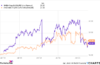
The iShares MSCI Emerging Markets ETF (EEM) has been consolidating in an orderly fashion since late June, finding support at its 200-day moving average. However, a significant rally in January and February, and a smaller uptrend in May and June, pushed the ETF up 25.8% year to date.
This asset class is known for volatility, but in certain market cycles, it can deliver strong returns.
“Emerging markets are interesting because investors can potentially get both diversification away from U.S. equities and exposure to economies with different growth drivers,” says Brett Hina, managing partner and private wealth advisor at Cornerstone Private Wealth in Northfield, New Jersey.
“Valuations can also look attractive relative to U.S. stocks. But I would be careful about treating emerging markets as one homogeneous asset class,” he adds. “Country, currency, political and sector risks can vary enormously.”
Private equity, private credit and other private-market investments have drawn a wave of investor interest lately. Some investors have touted these assets as a new way to diversify away from the well-known risks of stocks and bonds.
The notion is appealing: Access companies and deals that never trade on a public exchange, with a shot at higher yields.
The S&P Listed Private Equity Index, which tracks publicly traded private equity firms around the world, can serve as a proxy for broader industry health. The index is down about 11.6% in 2026 as of Sept. 9.
Are these somewhat arcane investments worth a look?
“Private investments can be good diversifiers to a portfolio, but investors should be careful,” says Jacob Rothman, a certified public accountant (CPA) and certified financial planner (CFP) who’s the founder of Rothman Investment Management in Atascadero, California.
“Price discovery is often limited, making it difficult to observe the actual volatility of private investments and their correlation to public markets,” he adds, noting the contrast between private-market investments and stocks and exchange-traded funds (ETFs), which reprice continually when markets are open.
“Diversification is wonderful, as it smooths out portfolio returns and can even boost returns through occasional rebalancing,” Rothman says. “This only works if the investments are liquid, however. If some assets cannot be accessed, they are not available as a source of cash when everything else is down.”
This is the leading S&P sector in 2026, with the Energy Select Sector SPDR ETF (XLE) returning 48% so far.
Oil-and-gas giants ExxonMobil Holdings Corp. (XOM), Chevron Corp. (CVX) and ConocoPhillips (COP) boast double-digit 2026 returns, while Marathon Petroleum Corp. (MPC), Phillips 66 (PSX) and Valero Energy Corp. (VLO) are up more than 100%.
According to a September report by the Schwab Center for Financial Research, “Energy stocks are generally supported by high oil prices, which have been a factor in the current geopolitical climate and Middle East conflict. Structural demand from the global energy transition and energy security provide support for the sector and is driving investment in production capacity.”
However, that report also noted potential risks, such as vulnerability to policy and geopolitical shifts. In addition, there’s the possibility of company risk, as the sector’s three largest stocks constitute more than half the weighting.
The S&P healthcare sector has returned 7.3% year to date. The Health Care Select Sector SPDR ETF (XLV) has been rallying since clearing a consolidation in late June. Top performers include Moderna Inc. (MRNA), DaVita Inc. (DVA) and Humana Inc. (HUM).
This sector has muddled along in the middle of the pack for years; the last time it ended the year as the top S&P performer was 2018.
“Healthcare is one area that may deserve attention after a difficult period,” Hina says. “You have several potentially favorable long-term forces, including demographics, medical innovation, diagnostics and the application of AI to drug discovery and healthcare delivery.”
But, he adds, healthcare is also a reminder that inexpensive doesn’t necessarily mean immediately attractive. He cites regulatory risk, insurance reimbursement issues and company-specific clinical outcomes as factors that can affect performance.
“For long-term investors, I think the opportunity is less about trying to predict a short-term rebound and more about selectively buying strong businesses in an essential industry when expectations are relatively subdued,” Hina says.
Eight of the 10 S&P stocks with the best year-to-date returns are tied to the AI trade. SanDisk Corp. (SNDK), Dell Technologies Inc. (DELL), Micron Technology Inc. (MU), Seagate Technology Holdings PLC (STX), Intel Corp. (INTC), Western Digital Corp. (WDC), Marvell Technology Inc. (MRVL) and Lumentum Holdings Inc. (LITE) are all semiconductor, memory storage or data-center networking companies with revenue coming from AI infrastructure buildouts.
Noah Schwab, CFP, founder of Stewardship Concepts Financial Services in Spokane, Washington, says analyst targets for S&P performance indicate how much of the current index run-up is a bet on AI delivering, versus a bet on the broader economy.
“I wouldn’t avoid large-cap because of AI exposure,” he says. “It’s hard to avoid given how much of the index it now represents, but I’d make sure clients aren’t unknowingly concentrated in it through several funds that all hold the same handful of names.”
For investors in higher tax brackets, muni bonds can be an important way to manage the amount of money handed over to the government each year.
The iShares National Muni Bond ETF (MUB) is yielding 3.3%, which works out to a tax-equivalent yield well above that for anyone in the top brackets.
Investors should evaluate the yield on an after-tax basis rather than simply comparing the stated yield with a taxable bond, Hina points out.
“For investors in higher tax brackets, municipals are one of the few asset classes where the question isn’t simply, ‘What am I earning?’ but ‘What am I keeping after taxes?'” he says. “That can make their relative value substantially different from one household to another.”
The opportunity today, he adds, isn’t necessarily about reaching for the highest-yielding municipal bond. “I would generally rather see investors focus on credit quality, appropriate duration and diversification,” he says.
The S&P real estate sector is up 7.2% year to date. It may not look like it on the surface, but this is also an AI-driven trade.
According to a July report on data center REITs by the National Association of Real Estate Investment Trusts, these properties delivered year-over-year funds from operations and net operating income growth rates of 29.4% and 15.8%, respectively, outpacing inflation.
“Data centers are a fascinating extension of the AI investment theme because the growth of AI ultimately requires enormous amounts of physical infrastructure like land, power, cooling, connectivity and computing capacity,” Hina says.
However, he adds, investors shouldn’t assume that rapidly growing demand automatically means rapidly growing shareholder returns.
“Capital requirements are significant, and valuations, financing costs, competition and power availability all matter,” he says. “Data centers are a good example of why investors need to separate a great secular theme from a great investment. The theme can be right and the price you pay can still be wrong.”
Bitcoin has been in rally mode since August, although it continues to trade well below its one-year highs. Some investors view digital currencies as a way to diversify; others see these assets as more of a trade, since rallies tend to receive a great deal of attention-getting hype on social media.
“It’s a diversifier in the sense that its price moves aren’t tied to earnings or interest rates the way stocks and bonds are, but it’s also genuinely volatile enough to add real risk to a portfolio, not just uncorrelated risk,” Schwab says.
For investors who are able to take the risk, or just want to dabble, it’s important to be sure it doesn’t become an outsized position relative to other portfolio holdings.
“I treat it the same way I’d treat any speculative position: Size it small enough that a 50% drawdown doesn’t change the plan,” Schwab says.