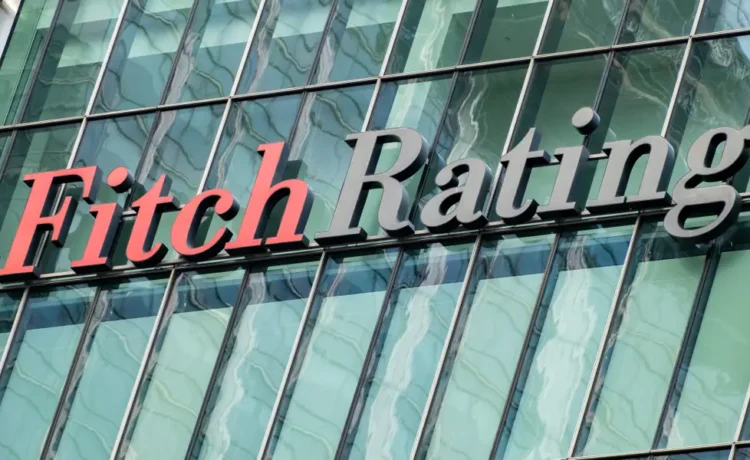
The bursting of the AI bubble would open Pandora’s box for the US and world economy, one of America’s top credit-rating agencies is warning.
Fitch Ratings flagged the risk of cascading economic damage if AI stocks were to see a sharp correction. In a scenario where stock prices in the AI sector were to drop 35% over the course of six months, the US would likely plunge into an economic downturn, with weakness spreading across the rest of the world over the next year, the firm wrote in a report outlining the most likely chain of events on Tuesday.
“A severe AI-related equity price shock — that could possibly result from a major re-evaluation of the ability of AI investments to generate returns — would likely entail a US recession,” a team of analysts led by Alex Muscatelli, a director at the firm, wrote.
In the recession scenario, the firm estimated that GDP could contract as much as 1.5% in the second quarter of next year. Private capital spending would also likely fall more than 6%, and US investment would contract 4.8% as firms reassess their AI spending plans, Fitch estimated.
A consumer slowdown, a hit to household wealth, and higher unemployment are also likely consequences of an AI market crash, analysts added. They noted that the scenario was not their base case for the AI trade.
More researchers on Wall Street have flagged the US economy’s growing dependence on AI recently, with some concluding that the majority of GDP growth is being driven by investment in AI and business activity in the tech sector. Fixed investment in the information technology sector accounted for 5% of GDP in the second quarter, up a percentage point compared to before the pandemic, Fitch estimated.
Much of the economy is also being powered by the wealth effect of higher stock prices, the phenomenon in which people spend more because they feel wealthy when the stock market is booming.
US households held $55.1 trillion in stocks and mutual fund shares in the first quarter, accounting for over 30% of all wealth held by households in the US, according to the latest Fed data.
The total valuation of the US stock market relative to GDP also stands at around 200%, a post-war record, Fitch said.
In the firm’s risk scenario, a US recession would likely spill over and impact the rest of the world economy. Analysts estimated that global GDP would likely fall below 1% over the course of 2027, a rate “consistent with global stagnation or recession in per capita terms,” the report said. A recession is technically defined as a period of at least two quarters of negative GDP growth.
Stock prices in countries like China, Japan, and the UK are also likely to drop by around 15% in Fitch’s bear case scenario.
While fears about the AI bubble percolate, the market has also turned its attention to more existential fears about AI. Some high-profile researchers in the industry have warned lately of the impact of artificial intelligence on humanity. Some doomsday fears center on the idea that AI could spark mass economic disruption and panic, such as if rogue AI models infiltrate the financial system and drain bank accounts and crypto wallets.