A proposed Treasury rule would block the bank’s UAE operations from holding correspondent accounts with US financial institutions
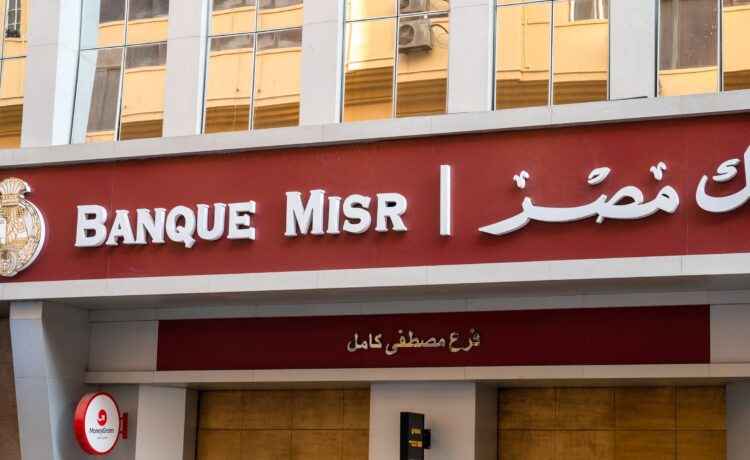
The US Treasury Department has proposed restricting Banque Misr UAE’s access to correspondent banking in the United States, accusing the Egyptian bank’s UAE operations of processing transactions for companies linked to Iran’s shadow-banking networks.
The August 28 action is a proposed measure by the Treasury Department’s Financial Crimes Enforcement Network, known as FinCEN, rather than an Office of Foreign Assets Control, or OFAC, designation against Banque Misr or its Egyptian parent bank. Under Section 311 of the USA PATRIOT Act, FinCEN has issued a Notice of Proposed Rulemaking that, if adopted, would bar US financial institutions from opening or maintaining correspondent accounts for Banque Misr UAE and require safeguards against indirect transactions involving it.
The proposal applies only to Banque Misr UAE, which includes five branches in Abu Dhabi, Dubai, Sharjah and Ras Al Khaimah. Banque Misr’s operations in Egypt and other countries are outside its scope.
Banque Misr said its UAE branches remained open and operating normally while it reviewed the US findings and worked with regulators. The central banks of Egypt and the UAE said in a joint statement that they were coordinating on the matter and that the affected branches would take the required measures within the regulatory period.
FinCEN alleged that Banque Misr UAE processed about $1.8 billion from January 2024 through June 2026 for 103 companies it identified as potential fronts for Iranian shadow-banking networks. It said about $520 million of the transactions took place during the most recent 12-month period it reviewed.
The agency has proposed finding that Banque Misr UAE is a financial institution operating outside the United States that is of “primary money laundering concern.” It is seeking the most severe available Section 311 measure: prohibiting US financial institutions from maintaining correspondent accounts for the bank’s UAE operations.
Correspondent banking allows banks without a direct US presence to access dollar clearing, international transfers and trade-finance services through US financial institutions. Losing that access can complicate cross-border business even when an institution is not subject to an asset freeze.
Nick Turner, a partner at Acrobis Law Group who advises companies on economic sanctions, said FinCEN’s rulemaking process gives Washington more flexibility than an immediate OFAC designation.
There’s lots of things that they can do
“It’s possible that FinCEN might decide not to finalize this rule, or they might decide to modify it, make it more narrow,” Turner told The Media Line. “There’s lots of things that they can do.”
US Department of State adviser Willian I., who requested partial identification by first name and last initial, said the decision reflected a calculation of proportionality.
The Section 311 measure is surgical by design; it only reaches the UAE branches
“Choosing the correspondent-banking mechanism over designating the whole Egyptian parent bank reflects a proportionality calculation,” he told The Media Line. “Sanctioning the Egyptian bank outright would carry unnecessary diplomatic cost with a formal ally and would hit customers who have nothing to do with the scheme. The Section 311 measure is surgical by design; it only reaches the UAE branches.”
The proposal’s formal limits may not prevent wider commercial consequences. Foreign financial institutions are not automatically required to end relationships with Banque Misr UAE, but they may reassess their exposure to the bank and the risk that Iran-linked transactions could create for their own access to dollar clearing.
Willian said financial institutions often reduce their exposure more broadly than a US measure requires.
“On the derisking concern, that’s real, and it’s a recurring feature of every 311 action,” he said. “The track record shows third-party institutions tend to overreact to protect themselves regardless of how narrowly the rule is scoped.”
Treasury Secretary Scott Bessent has indicated that Banque Misr UAE may be an early target in a broader campaign. He said the United States expected to announce new Iran-related secondary sanctions weekly, starting with banks and other financial institutions.
For Tehran, the financial pressure comes as its economy faces mounting strain from sanctions and the continuing conflict. Annual inflation reached 66% in July, while President Masoud Pezeshkian said imports and exports had fallen by nearly 35%. Shipping data cited in recent reporting showed Iranian crude loadings falling from about 2 million barrels per day in March to roughly 220,000 to 255,000 barrels per day in August as US restrictions sharply curtailed exports.
US officials aim to make it more difficult and costly for Iranian networks to move money through banks, exchange houses, front companies and shipping firms. Such networks can shift transactions through new intermediaries when an existing route becomes unavailable, limiting the effect of any single action.
China remains Iran’s largest oil customer, and much of that trade is settled in yuan rather than dollars. Yuan settlement reduces Iran’s direct exposure to the US correspondent-banking system, but Iranian networks still need to convert or move proceeds into currencies and assets usable outside China. Treasury has previously targeted companies and individuals in the UAE, Hong Kong and China that it says helped Iranian networks carry out those transactions.
The Banque Misr action was accompanied by OFAC sanctions against the manager of Bank Melli’s Dubai branch and Hong Kong-based Kameng Trading Limited, which Treasury said were involved in moving money for an Iranian exchange house already under US sanctions.
Willian said Iranian oil and financial networks could carry political weight in US-China discussions even if they are not formally part of trade negotiations.
In practice, anything touching Beijing and Iranian oil ends up carrying political weight at the table even when it’s not on the official agenda
“Formally it shouldn’t be part of the bilateral trade agenda, and that distinction matters to us,” he said. “In practice, anything touching Beijing and Iranian oil ends up carrying political weight at the table even when it’s not on the official agenda.”