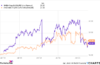

The dollar-yen pair traded with a firm tone in European foreign exchange markets on the 8th. As of 20:00 Japan time, the pair stood at 154.24 yen per dollar, roughly 44 sen stronger for the dollar and weaker for the yen compared with the 153.80 yen level seen at 17:00. Rising U.S. long-term yields attracted dollar buying, and the pair briefly recovered to 154.27 yen before 18:00 amid short-covering.
Subsequently, as the U.S. 10-year Treasury yield pared its advance from the low-4.81% range to the 4.79% range, dollar-yen temporarily trimmed gains to the 153.80-yen level. However, the yen-selling pullback that had persisted since around midday in Tokyo trading remained resilient, and the pair reclaimed the 154-yen range once the move ran its course. After 20:00, dollar-yen swung to around 154.30 yen on dollar strength and yen weakness.
EUR/JPY traded with a firm bias. As of 20:00, the pair stood at 179.11 yen per euro, roughly 50 sen stronger for the euro compared with the 178.61 yen level at 17:00. As with dollar-yen, the yen-selling trend continued, and the pair rose to 179.12 yen at one point. When dollar-yen lost momentum, EUR/JPY followed suit on the downside, but selling stalled below the 178.70-yen level, and the pair recovered to the 179-yen range, lifting its floor to 179.15 yen.
Meanwhile, EUR/USD traded in a narrow range. As of 20:00, the pair stood at $1.1612 per euro, roughly $0.0001 weaker for the euro compared with the $1.1613 level at 17:00. The pair widened its downside to $1.1609 at one point, but trading was centered on yen-related flows, and price action remained limited.
In the London market, the euro’s decline against the dollar was also notable. As of 9:30 UK time, the pair traded at $1.1610–20 per euro, down $0.0020 from the same time the previous day, reflecting euro weakness and dollar strength. The move came as crude oil futures rose on supply concerns, prompting buying of the dollar—the world’s reserve currency—against both the euro and the British pound.
The British pound also fell against the dollar, trading at $1.3525–35 per pound, down $0.0015, reflecting pound weakness and dollar strength. The yen pared its gains against the dollar, trading at 153.90–154.00 yen per dollar, up 30 sen from the previous day in yen-strengthening, dollar-weakening terms.
Middle East Situation and Impact on Crude Oil Markets
The Middle East situation served as a key market catalyst. Some media outlets reported that Yemen’s Iran-aligned Houthi militant group had launched attacks on energy facilities and military sites in southern Saudi Arabia. In response, crude oil futures extended gains, with front-month November Brent crude climbing into the $99-per-barrel range. At one point, the front-month contract hit its highest level since late July, marking a roughly one-and-a-half-month high.
However, dollar-yen did not see an intensification of safe-haven dollar buying. Rather, dollar repurchasing proceeded in tandem with movements in U.S. long-term yields. In European trading hours, higher crude oil prices prompted dollar buying against the euro and the British pound, while against the yen, rising U.S. yields provided support for the dollar.
Reference ranges for major currency pairs today are as follows.
| Currency Pair | Reference Range |
|---|---|
| Dollar-yen | 152.89 yen – 154.39 yen |
| EUR/USD | $1.1609 – $1.1636 |
| EUR/JPY | 177.86 yen – 179.47 yen |
Among market participants, the prevailing view is that dollar-yen downside is limited as expectations for higher U.S. yields persist. With European trading activity picking up in earnest, whether the pair can hold above the 154-yen level will be the near-term focus. If higher crude oil prices push U.S. yields further upward through inflation expectations, that could provide a tailwind for dollar-yen.