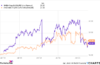

Japan’s currency defense reached a dramatic tipping point in August as official foreign exchange reserves plunged by a record $79.6 billion, falling to $1.208 trillion. This unprecedented drop—the steepest monthly percentage decline on record—was driven by Tokyo’s massive ¥15.4 trillion ($98.7 billion) dollar-selling, yen-buying operations aimed at pulling the nation’s currency back from near 40-year lows.
While the Bank of Japan (BOJ) maintains an ultra-cautious tightening stance, persistent interest rate differentials with the United States, steady import inflation and immense foreign reserve depletion have put an intense global spotlight on the nation’s macro strategy.
Consequently, international investors must be turning their attention to Japanese equities and the exchange-traded funds (ETFs) holding them, seeking to capitalize on potential structural shifts in the nation’s financial landscape.
Amid this backdrop, understanding both Japan’s economic fundamentals and the ETF landscape becomes crucial for investors seeking exposure to the world’s third-largest economy.
The Current Scenario in Japan
The record contraction in Japan’s foreign assets stemmed primarily from an $87.7 billion reduction in overseas securities—chiefly U.S. Treasuries—which Tokyo liquidated to fund its direct foreign exchange operations. This aggressive action was performed due to the stark yield gap prevalent for months between Japan and the United States, which resulted in investors favoring dollar-denominated assets.
Against this backdrop, despite minor rate adjustments, the BOJ’s benchmark interest rate remains far lower than U.S. borrowing costs, incentivizing capital outflows via foreign exchange carry trades.
While direct intervention did provide temporary relief, burning through reserves at this pace is unsustainable over the long term.
This reality leaves the BOJ with limited choices. As reserve limits constrain future intervention, market expectations are rapidly shifting toward accelerated monetary policy normalization. The Bank of Japan is expected to raise its policy rate by 0.25 percentage points at its September meeting, with market-implied probability reaching 98% (as per Money market data from Tokyo broker Tanshi). To this end, BOJ board member Kazuyuki Masu recently stated the central bank will “continue raising policy rates” to prevent underlying inflation from exceeding 2%.
For stock market investors, such rising domestic rates, which should strengthen the yen and potentially benefit domestic-focused businesses, create a dynamic environment, making equity selection highly dependent on currency hedging and business model exposure.