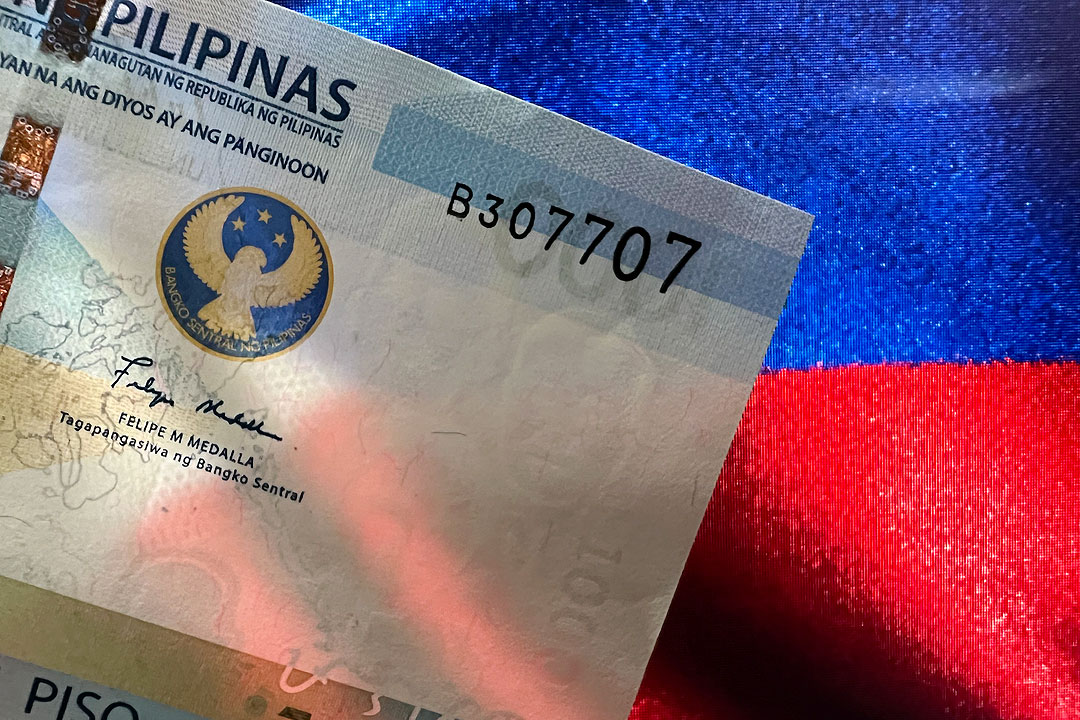
THE PESO’S performance against the dollar remains the weakest among other currencies in the region as the Philippines’ weak external position exposes it more to global headwinds, Singapore-based Oversea-Chinese Banking Corp. Ltd. (OCBC) said.
“PHP (Philippine peso) continues to underperform regional peers, with elevated oil prices exacerbating an already challenging external backdrop,” OCBC Group Research foreign exchange strategist Christopher Wong said in a report on Tuesday.
Safe-haven demand for the US dollar amid geopolitical risks have dragged the peso to new lows in the past few days, causing it to sink to the P62 level for the first time as August ended.
On Tuesday, it closed at a new record low of P62.625 versus the dollar. On Monday, it also hit a fresh all-time intraday trough of P62.775.
Year to date, the peso is now down by 6.12% from its end-2025 close.
Jonathan L. Ravelas, senior adviser at Reyes Tacandong & Co., also noted that the peso has been among the underperformers in Southeast Asia, even as other currencies in the region have also weakened against the greenback.
“While most Southeast Asian currencies have been pressured by broad US dollar strength, the peso has been among the weaker performers because the Philippines remains heavily dependent on imports of fuel, food, and capital goods, while maintaining a persistent trade deficit,” he said in a Viber message.
He said the peso’s latest slide has been “sharp and fast,” which could raise concerns about volatility that could affect the inflation outlook.
“Going forward, investors will be watching whether the peso stabilizes, whether inflation expectations remain anchored, and whether the country’s external accounts improve,” Mr. Ravelas said. “That’s ultimately what will determine if this is simply a currency adjustment or the start of a broader economic challenge.”
OCBC’s Mr. Wong noted that the Philippines’ trade deficit has ballooned, while its dollar reserves continued to dwindle after peaking in February.
In July, the country’s trade-in-goods deficit widened by 34.9% to $5.97 billion from $4.43 billion a year ago, widening the seven-month gap to $37.34 billion.
Meanwhile, its gross international reserves hit a record high of $113.264 billion at end-February. But as of August, reserves fell year on year for a sixth straight month by 2.13% to $104.813 billion, latest Bangko Sentral ng Pilipinas (BSP) data showed.
“The BSP’s recent communication also suggests that its priority remains limiting disorderly moves rather than defending any specific exchange-rate level,” Mr. Wong added. “This may leave PHP more exposed to market forces, particularly while oil remains elevated.”
BSP Governor Eli M. Remolona, Jr. has said that the central bank’s intervention in foreign exchange trading is limited to smoothening out sharp swings that could be inflationary, as defending the currency against a strong dollar would only deplete its reserves.
WAR’S END TO EASE PRESSURES
MUFG Bank, Ltd., a member of the Japanese financial giant Mitsubishi UFJ Financial Group, said a resolution to the Middle East war would help ease global oil prices, which may eventually boost the peso.
“Among other things, given how sensitive PHP is to changes in global oil prices, any possible resolution in the US-Iran conflict could result in some positioning adjustments and PHP strength given oil prices are already trading close to the US$100/bbl (per barrel) mark,” MUFG Global Markets Research Senior Currency Analyst Michael Wan said in a separate report on Tuesday.
“In addition from a fundamental perspective, we are forecasting the Philippines’ trade deficit to narrow, headline GDP (gross domestic product) growth to improve as the worst of the fiscal contraction fades, some better balance in supply and demand in the domestic rice market, a hawkish BSP and wider interest rate differentials against the US, coupled with some estimated undervaluation in PHP right now,” he added.
For OCBC’s Mr. Wong, however, the peso needs lower oil prices and a better external balance to recover sustainably against the dollar. — Katherine K. Chan