
This Financial Literacy Month, the Consumer Bankers Association (CBA) is excited to share the many ways our member institutions support the financial wellbeing of hardworking Americans across the country.
Whether it’s providing free resources to young people to build their financial preparedness, volunteering their time to help educate young families, or providing important monetary support for nonprofits to continue their financial literacy work, America’s leading retail banks go above and beyond to ensure communities are better prepared to tackle financial challenges at every stage in life.
Read below to learn more about how Regions Bank, PNC, and Synchrony Financial are setting young people, families, and communities up for financial success.
Regions Bank Supports Communities with New and Enhanced Student Financial Literacy Resources
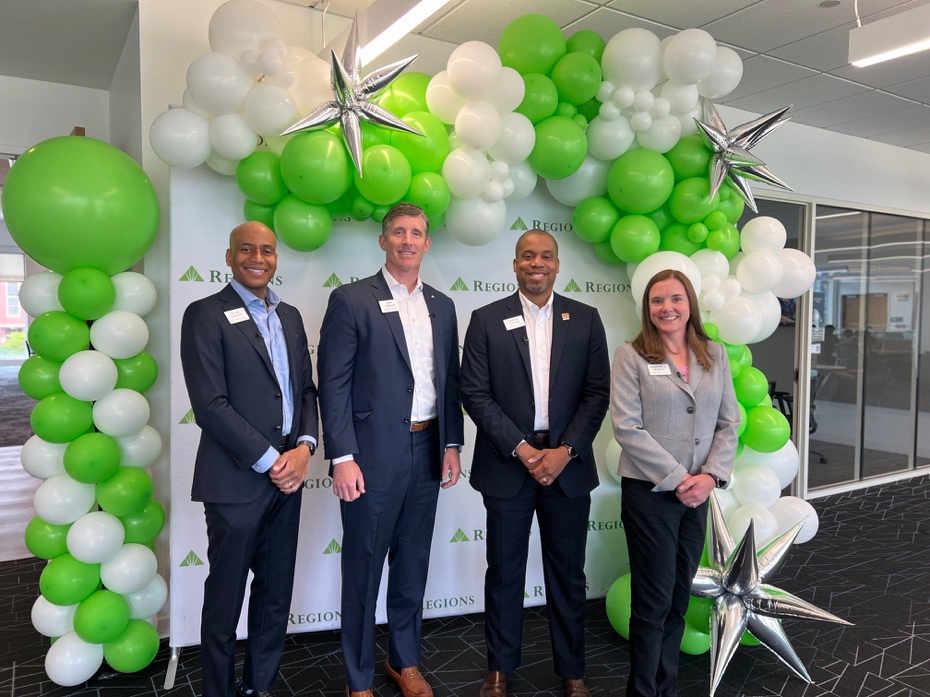
To kick off Financial Literacy Month this year, Regions Bank announced a series of no-cost resources designed to help students and young adults build a strong foundation for financial confidence.
Through its no-cost Regions Next Step® financial education program, Regions delivers financial education to schools, businesses, and nonprofits alike – and is enhancing this program to create more opportunities to share financial resources through additional outreach to young people.
- The expanded financial wellness resources include Greenprint On-the-Go, allowing anyone to take the Regions Greenprint® plan financial assessment on their mobile device, computer, or tablet. After completing the assessment, a Regions banker will connect to share insights, review financial planning strategies, and provide recommendations to achieve their financial goals.
- The bank is also providing the free Regions Next Step webinar, “Basic Budgeting for Students,” throughout the month to help high school and college students learn the importance of money management, credit worthiness, and safeguarding financial information. Regions also offers an enhanced library of self-paced, interactive courses covering student loans, preparing for graduation, identity protection, and more.
- In addition to these online resources, Regions held special free in-person “Financial Returns: Knowledge That Pays You Back” workshops at Alabama A&M University and Auburn University to help students develop money management and career readiness skills.
John Jordan, head of Retail for Regions Bank, points to the many money decisions young people need to make for the first time, which can feel overwhelming. “We are committed to helping students and young adults build financial confidence and creating extraordinary experiences for them,” he said. “We know that the earlier people start building healthy financial habits, the better prepared they are when the unexpected happens.”
To learn more about how Regions continues to support financial literacy education for students and young adults, click HERE.
PNC Employees Build Financial Confidence for Pre-K Families

For over three years, the PNC Center for Financial Education (CFE) has collaborated with community-based nonprofits to offer financial education to individuals, first-time homebuyers, and small businesses. Last year, they teamed up with PNC Grow Up Great early education centers to help deliver financial education to young families.
As a part of the program, PNC employee volunteers present the CFE’s “banking basics” curriculum to individuals who sign up through their local nonprofits, where they can learn about how to create a spending plan, build a savings account, and more.
In Central Pennsylvania, PNC employees Fred Landis and Gus Torres work with PNC Grow Up Great partner Community Progress Council, a nonprofit focused on helping people move toward economic self-sufficiency. They highlight the impact their work has on helping families build financial literacy skills:
- “You think you’re delivering content they already know, but they’ll come up and say, ‘Thank you so much, this is a huge help,’” says Landis, a banker and financial wellness consultant with PNC. “For me, what I take away is the tremendous amount of gratitude they have.”
- “The best thing they say is that they realize they can change their situation,” says Torres, a corporate & institutional banker with PNC. “They may be renting right now, but that doesn’t define whether they can buy a house in 6-8 months. We bring a level of seriousness and hold ourselves accountable. It just takes one person to believe in you and say, ‘You can make it.’”
PNC’s nonprofit partners also share how the program has helped build a strong foundation for families, allowing them to better weather unexpected financial challenges as they work toward their education, employment, and income goals.
To learn more about PNC’s financial literacy education work, click HERE. To learn more about PNC’s free Financial Education Webinars, click HERE.
Synchrony Invests in Educators to Support Financial Literacy Nationwide

As a part of Financial Literacy Month, Synchrony Financial announced a $2 million commitment to bring training, tools, and financial literacy labs to schools across the country.
The program – Empowering Financial Futures – is a part of Synchrony’s Education as an Equalizer initiative, which expands access to education, skills training, and financial literacy in communities across the country. In addition to this new program, Synchrony will also launch an employee-led Financial Literacy Service Corps to share financial literacy expertise outside the classroom.
The grants and in-kind donation pledge will commit $1 million to support teacher training, fulfill requests from educators for financial literacy resources, build Synchrony Financial Literacy Labs in 10 public high schools across the country, and more.
Synchrony’s initiative comes alongside a survey of educators which underscores the importance of financial education in classrooms and the urgent need to support these programs for the long-term success of students.
- In the survey, 80 percent of teachers cited financial education as “essential, extremely important, or very important” in their school curriculum compared to other competencies.
- However, two-thirds of educators reported struggling with student engagement and a lack of relevant content/lessons to each financial education effectively.
In order to bridge the gap for educator preparedness, Synchrony’s Financial Literacy Service Corps Program will provide a train-the-trainer model led by its employees on how to teach personal finance topics to students, community leaders, and beyond.
“By equipping K-12 public school teachers with the tools, resources and confidence to teach a personal finance course, we’re creating opportunities for students to gain knowledge that will help them achieve financial security, economic mobility, and opportunity throughout their lives,” says Denise Yap, President of the Synchrony Foundation.
Lawmakers also praised Synchrony’s work to support financial literacy for young people and their communities.
“I applaud Synchrony for their investment in financial education. As the cost of living continues to skyrocket in California, it is more important than ever that working families understand their personal finances and have the tools they need to build lasting financial independence,” says Rep. Young Kim (R-Calif.), Co-Chair of the Financial Literacy and Wealth Creation Caucus.
To learn more about Synchrony’s commitment to support financial literacy education, click HERE and HERE.
Source link