As Washington pulls back from climate leadership, the question is no longer whether we can afford to act — it’s whether we can afford not to, and how we will pay for what comes next.
The scale of the challenge is enormous. Recent analyses estimate that addressing climate change in the United States will require anywhere from $2 trillion in new investment over the next decade to more than $40 trillion by mid-century. Transmission infrastructure alone could require upwards of $2 trillion. These figures can feel abstract, even paralyzing. But they point to a simple reality: whether we act deliberately or reactively, the capital will be spent.
The real question is whether we will spend it wisely.
Because climate investment is not optional. It is already embedded in rising energy demand, aging infrastructure, extreme weather damage, and the need to modernize the grid. The only variable is whether we finance the transition in a way that reduces long-term costs — or one that amplifies them.
If federal policy becomes less reliable, can private markets step in?
The answer is yes — but not all capital is created equal.
When political winds shift, policy-dependent finance retreats. Cash-flow-driven finance endures. Climate finance doesn’t fail all at once — it fails where it depends on politics instead of cash flow.
That distinction is now the dividing line between climate investments that will move forward and those that will stall.
The most durable forms of climate finance share a common foundation: predictable, long-term revenue streams. Green bonds continue to attract capital because they are backed by municipal balance sheets, utility payments, or contracted obligations — not shifting political priorities. Energy Performance Contracts allow public buildings to finance upgrades through verified energy savings, creating a self-sustaining model that requires no ongoing subsidy. Renewable energy projects supported by long-term power purchase agreements generate steady income that can be securitized, attracting institutional investors seeking stability.
These structures do not rely on ideology. They rely on math.
Some capital will hold. Some will hesitate. And some will disappear the moment policy signals weaken.
Private equity, venture capital, and real estate investment trusts will continue to fund clean energy innovation where returns justify risk. Voluntary carbon markets and community-scale investments will persist as long as corporate commitments and consumer demand hold. But capital tied primarily to regulatory frameworks — ESG-linked loans, sustainability-linked bonds, and similar instruments — will weaken if those frameworks lose force.
Durability is only half the equation.
Market-driven finance is resilient, but it is not inherently equitable. Capital flows to predictable returns, not necessarily to communities with the greatest need. Durable finance answers the question of whether projects get built. Equity answers the question of who benefits when they do.
Without intentional design, the transition to a clean energy economy risks reinforcing existing disparities. Investments will concentrate in areas with higher creditworthiness, newer infrastructure, and fewer barriers to deployment, while communities with older housing, higher energy burdens, and fewer financial resources are left behind.
We have seen this before. When projects are evaluated solely on lowest upfront cost, the results are predictable. Capital flows to the easiest projects, not the most impactful ones.
Community-scale solar in low-income neighborhoods, building retrofits in older housing stock, and resilience investments in vulnerable areas are often overlooked — not because they lack value, but because that value is not fully captured in traditional financial metrics.
This is where state leadership becomes essential.
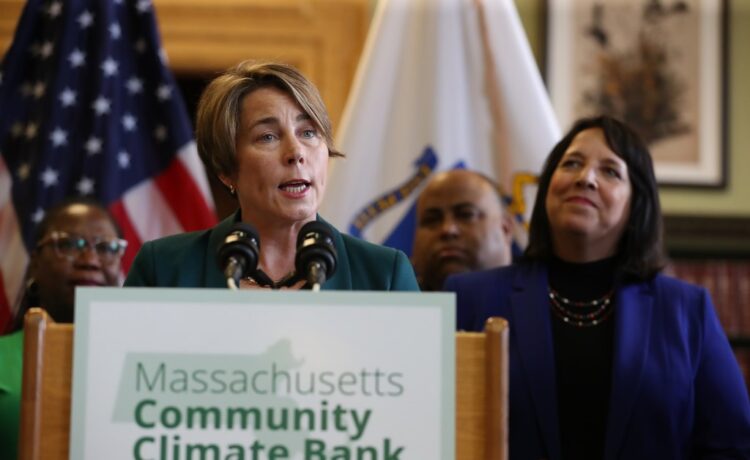
Massachusetts, under Governor Maura Healey, has positioned itself as a national leader in climate policy and environmental justice. But leadership in ambition must now be matched by leadership in financing.
That begins with prioritizing finance models grounded in real cash flows. Projects that generate long-term, contracted revenue — whether through energy savings, power sales, or utility payments — can attract private capital at scale. Building efficiency retrofits, distributed energy resources, and utility-scale clean energy projects all fall into this category.
It also means treating transmission as an investable asset class rather than a regulatory afterthought. The economics are compelling: federal analysis shows that every dollar invested in transmission can yield up to $1.80 in system savings.
States can expand the role of green banks and revolving loan funds, using limited public dollars to unlock significantly larger pools of private investment. The Connecticut Green Bank has demonstrated how this model can scale, leveraging relatively modest public investment into billions of dollars in clean energy financing.
But finance alone is not enough. Metrics matter.
When procurement systems prioritize lowest upfront cost, they systematically undervalue long-term benefits such as avoided fuel costs, grid reliability, public health improvements, and climate resilience. When those factors are incorporated into decision-making, different projects rise to the top — often those that deliver broader economic and social value.
Transparency is equally important. Public dashboards that track not just emissions reductions, but also bill savings, job creation, and community-level impacts can turn abstract climate goals into tangible outcomes. When residents see the returns, support becomes more durable and less dependent on political cycles.
The path forward is not about choosing between markets and policy. It is about aligning them.
Markets provide scale, efficiency, and durability. Policy provides direction, accountability, and equity. When they work together, they create systems that are both resilient and inclusive. When they diverge, progress stalls — or becomes uneven.
The transition to a clean energy economy will be financed one way or another. The real question is whether we build structures that attract durable, market-based capital while ensuring that the benefits are broadly shared — or remain dependent on policy frameworks that can shift with each election cycle.
We will pay for the energy system either way.
Ed Gaskin is Executive Director of Greater Grove Hall Main Streets and founder of Sunday Celebrations