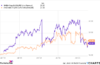

The State Street Financial Select Sector SPDR ETF (NYSEMKT:XLF) provides concentrated exposure to large-cap financial giants, while the Fidelity MSCI Financials Index ETF (NYSEMKT:FNCL) includes a wider array of mid- and small-cap companies.
These two financial sector ETFs are staple choices for investors seeking exposure to American banks, insurers, and capital markets. While they overlap significantly in their largest holdings, their underlying indexes create a meaningful difference in how much of the broader financial market they capture.
Snapshot (cost & size)
Beta measures price volatility relative to the S&P 500; beta is calculated from monthly returns over the available fund history (up to five years). The 1-yr return represents total return over the trailing 12 months. Dividend yield is the trailing-12-month distribution yield.
Both funds are highly cost-efficient, featuring an identical 0.08% expense ratio. The massive $52 billion gap in assets under management (AUM) reflects the XLF’s status as a primary vehicle for institutional traders, though the Fidelity fund is plenty liquid for individual investors.
Performance & risk comparison
What’s inside
XLF tracks the Financial Select Sector Index, holding just 76 financial stocks within the S&P 500. Its largest positions include JPMorgan Chase, Berkshire Hathaway, and Visa. The fund was launched in 1998 and has paid $0.81 per share in dividends over the trailing 12 months.
FNCL tracks the MSCI USA IMI Financials 25/50 Index, offering broader reach with roughly 400 holdings, including many mid- and small-cap firms. Its top three holdings match those of XLF, though at slightly smaller concentrations. This fund was launched in 2013 and has paid $1.26 per share in dividends over the trailing 12 months.
For more guidance on ETF investing, check out the full guide at this link.
Which looks like the better buy
XLF and FNCL offer diversified exposure to the financial services sector, and with matching expense ratios, similar risk profiles, and identical top three holdings, these funds are aligned in many ways that matter to investors.
The primary difference to consider is the gap in diversification. XLF only holds large-cap stocks that are listed in the S&P 500, while FNCL’s portfolio includes hundreds more stocks that span large-, mid-, and small-cap companies.