JILL SCHRAMM/MDN
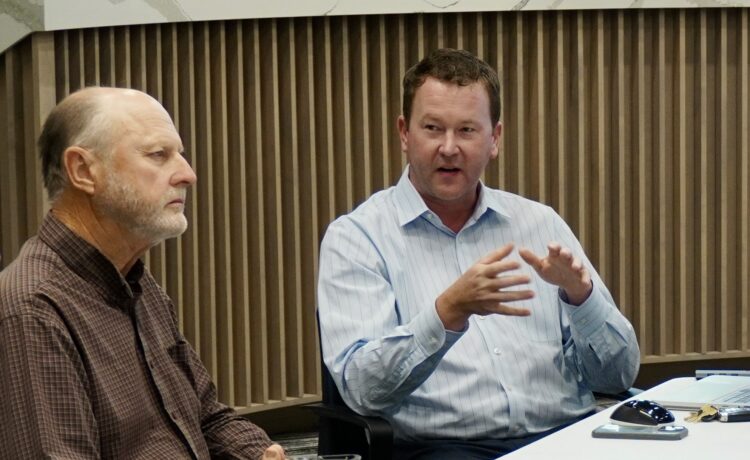
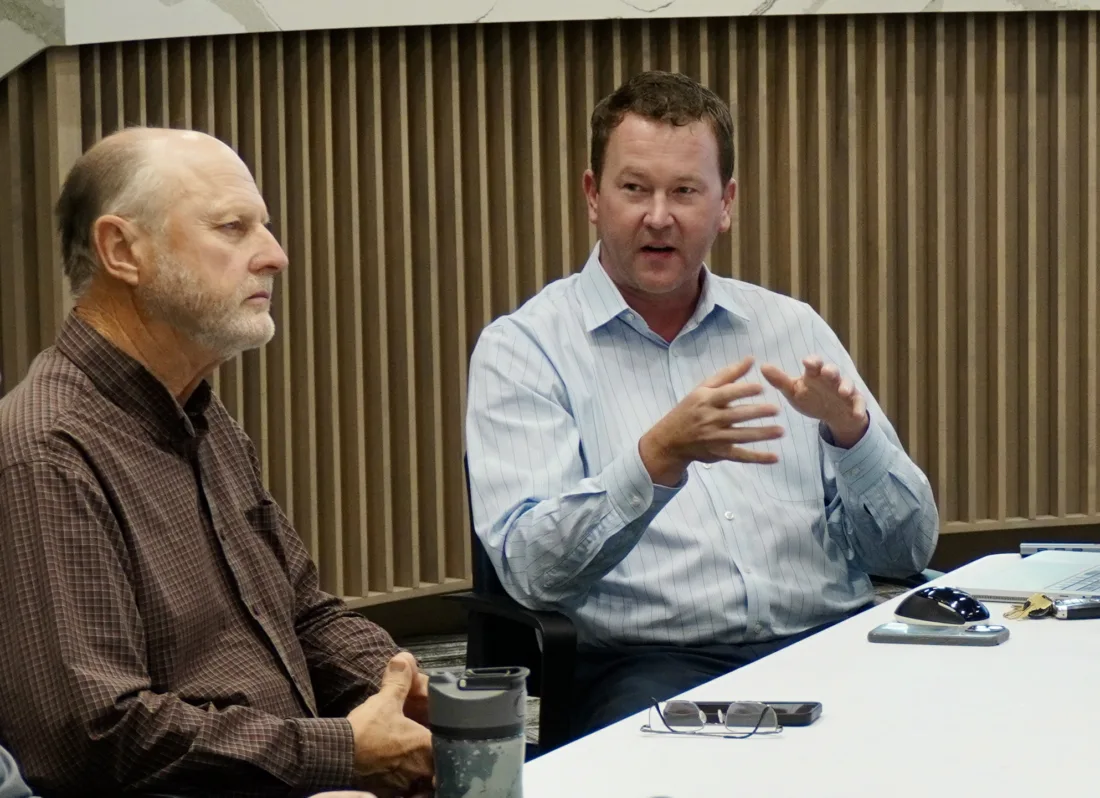
Ryan Ackerman, administrator for the Souris River Joint Board, right, speaks about the Souris Basin flood project as SRJB Chairman David Ashley listens at left during a project update Friday, Sept. 4.
JILL SCHRAMM/MDN
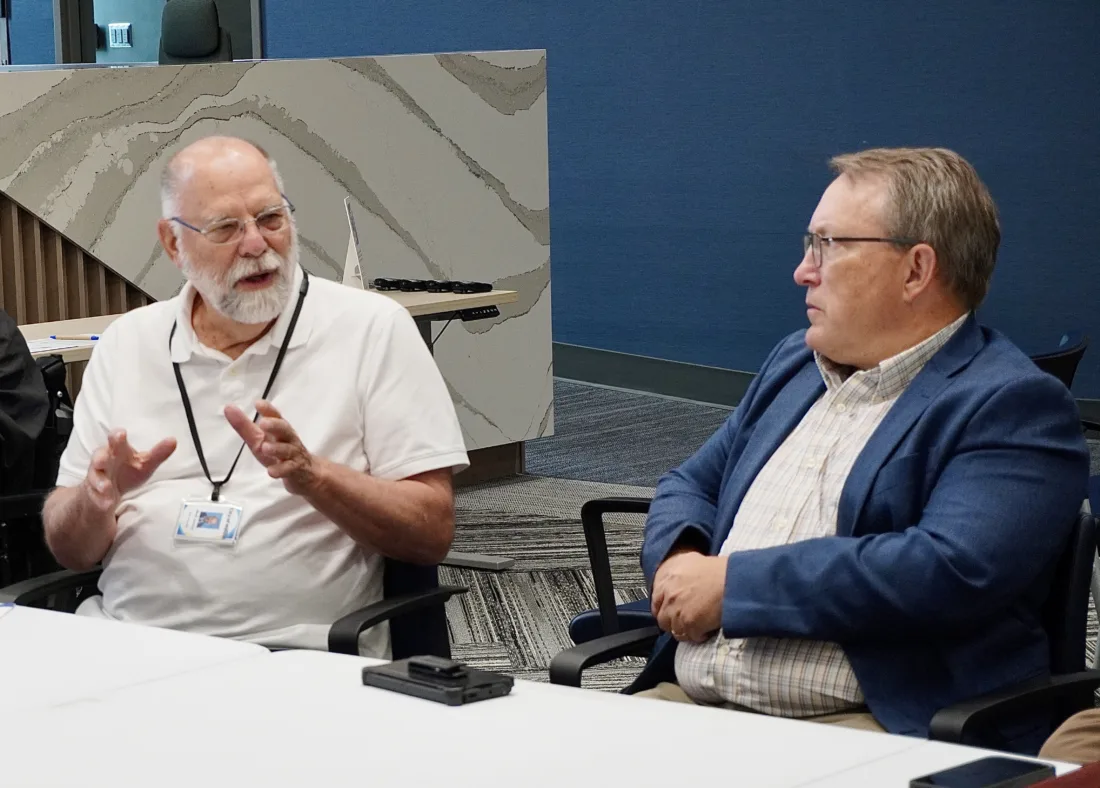
Minot Mayor Mark Jantzer, left, talks about flood protection as Assistant City Attorney Shane Goettle listens at right during a project update in Minot City Hall Friday, Sept. 4.
1 / 2
JILL SCHRAMM/MDN
Ryan Ackerman, administrator for the Souris River Joint Board, right, speaks about the Souris Basin flood project as SRJB Chairman David Ashley listens at left during a project update Friday, Sept. 4.
JILL SCHRAMM/MDN
Minot Mayor Mark Jantzer, left, talks about flood protection as Assistant City Attorney Shane Goettle listens at right during a project update in Minot City Hall Friday, Sept. 4.
1 / 2
A plan to complete the Mouse River Enhanced Flood Protection Plan in 16 to 17 years hinges on support from legislators when they reconvene next January.
The Souris River Joint Board outlined its need for $679 million from the state to complete the project during an informational meeting for city officials, legislators, candidates and the public on Friday, Sept. 4. More than a dozen people attended.
Ryan Ackerman, administrator for the Souris River Joint Board, said the board presented a 14-year plan to the 2025 Legislature that called for $110 million a year, but the plan was not adopted. The Legislature instead invested $81.1 million this biennium.
The new plan asks for $115 million over the next five bienniums and $104 million in a sixth biennium in 2037-39. Construction completion would lag somewhat behind the appropriation because money must be approved before bids are awarded.
Shane Goettle, the City of Minot’s assistant city attorney for legislative affairs, said the state would need to approve bonding to support the SRJB’s request, which would require finding a source of repayment for those bonds.
There’s been no appetite and no pressure for bonding to date because the Resources Trust Fund, fed by the oil extraction tax, has been flush, Goettle said. However, as oil well production naturally declines over time, the wells eventually go into stripper well status and the extraction tax is not collected.
That becomes significant for the two main draws on the Resources Trust Fund – the MREFPPl and the Red River Water Supply Project, he said.
“We’ll get our funds, but no other project in the state will get funded, and that’s going to be a real challenge,” Goettle said.
That’s driven the conversation toward financing the MREFPP and Red River Water Supply to free up the trust fund dollars for other projects, he said. Financing also may be appropriate because these two projects will benefit generations into the future, he added.
“It would be great if we could just get it all paid off for our grandchildren, but they’re also going to benefit from this, so it’s not entirely unfair to think about how we look at spreading it over decades,” Goettle said.
Moving away from the Resources Trust Fund also removes the negative optics around money sitting in the trust fund long after it’s appropriated, he said. The projects don’t draw on the appropriation upfront but receive reimbursement once work is done, which might not be until coming into the next biennium.
The state has committed to 65% of the cost of flood protection in the Souris River basin. The federal government also has provided $61.5 million toward the Maple Diversion phase of the project within Minot.
“We’re working with Senator (John) Hoeven to make sure that appropriation is locked in but also supplemented with additional appropriation,” Ackerman said.
The remaining cost is being covered by Minot’s city sales tax. The city has been using bonding to advance the project, which sales tax collections over time are scheduled to pay off.
The overall cost of the project has risen from about $1 billion when developed in 2014 to $1.8 billion today.
Ackerman spoke about huge inflationary increases that are driving the cost of the project up. Concrete for pump stations has risen about 200% over the past 30 months, he said. The $20 million pump station being built at Roosevelt Park costs about the same as the previously built Broadway pump station, despite having only 40% of the capacity.
Flood wall concrete has increased 40% in 30 months, compared to 10% for earthwork, making earthen levees more competitive from a cost standpoint, Ackerman said.
Despite that, SRJB Chairman David Ashley said, the board must consider socioeconomic costs and balance the use of flood walls with earthen levees throughout the project.
Ackerman said the board has rebid several phases of the project and attempted to structure bids to get more contractors interested and more competitive bids. It also used a construction manager on a bridge project in Renville County, which solicited more contractor interest and helped with cost, he said.
Friday’s meeting also included a lesson on flood control efforts historically in the Souris River basin and a recounting of the events leading up to and following the devastating 2011 flood that set the scope for the current flood project.