Analysis: The Minister for Finance is right that savers are getting ‘screwed over’, but it remains to be seen if the new initiative fixes this
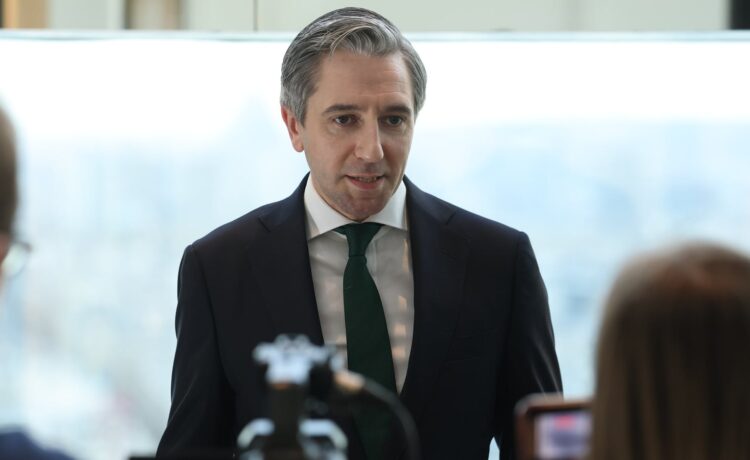
Irish households had €175 billion sitting in the bank at the end of May, earning an average of about 0.25%*, while prices rose 3.4% in the year to June. Prices are rising faster than the interest, so savings buy less each year. On Budget Day, 6 October, Minister for Finance Simon Harris will announce a new savings and investment account. The first accounts should open in 2027, and your money would go into funds that buy shares on the stock market. That is a different thing from money in the bank.
Harris says savers are getting “screwed over”, and that this is not for the wealthy who are doing fine, but for the garda married to the nurse. He is right about the problem. Whether this fixes it is a different question, and one already tested elsewhere.
What will be on offer?
Investing in Ireland is taxed heavily and the rules are awkward. You pay 33% on money you make from shares and 38% on many funds. There is also a rule called deemed disposal where you are taxed every eight years on what your fund has gained, whether you sell it or not. The Government’s own review of the funds sector recommended scrapping that rule back in 2024, but it is still there.
We need your consent to load this rte-player contentWe use rte-player to manage extra content that can set cookies on your device and collect data about your activity. Please review their details and accept them to load the content.Manage Preferences
From RTÉ Radio 1’s Today with David McCullagh, what will the Minister for Finance’s new savings strategy mean for you?
The new account is simpler with no tax going in or coming out. Instead, you pay one small charge a year, and only on the part above a tax-free amount. There is a separate limit on how much you can put in each year. The whole thing is modelled on Sweden.
Has it worked anywhere else?
Britain has had this kind of account since 1999, and there is little evidence it made people save more. When the limit rose in 2014, deposits into these accounts jumped from £57 billion to £83 billion, while the share of income households actually saved fell from 2.4% to 1.6%. People were moving money they already had.
In Canada, more than half of adults hold one of these accounts, which is wide reach. You can put in C$7,000 a year, though fewer than one in ten manages it, and among the highest earners it is closer to a third. The account is open to everyone. The benefit is not. A study also found that between a quarter and nearly half of every dollar in these accounts came out of savings families already held.
What does seem to work is making saving automatic.
Sweden is the model Ireland is copying, so it is the one to watch. It started in 2012 and close to four million Swedesl, from a population of ten million, now hold one so people did take it up. It did not reach everyone, though. Swedes who went to college were more than twice as likely to open one as those who left school early, 45% against 17%. That is not down to income. The gap stays the same between people earning the same wage. What decided who used it was schooling.
Sweden’s public spending watchdog found the accounts may have cost the State 42 billion crowns in tax it would otherwise have collected. More money went into them than the government had expected. Swedish economists have argued that it may not be much of a tax break at all. Buy shares directly and you are taxed on your gains, and a loss on one holding cuts the tax you owe on a gain elsewhere. The State therefore carries part of a bad year with you. Under this account the charge comes every year, whether the value rose or fell, so a bad year is yours alone.
What does seem to work is making saving automatic. Four large British trials signed staff up unless they said no, and far more of them saved as a result. In one trial, 53% of people put money away, but only one percent of those who had to sign up themselve did so.
We need your consent to load this rte-player contentWe use rte-player to manage extra content that can set cookies on your device and collect data about your activity. Please review their details and accept them to load the content.Manage Preferences
From RTÉ Radio 1’s Today with Claire Byrne, what’s the best way to make the most of your savings?
What our research says
Our own work may help explain why these accounts reach some people and not others. The first study used the World Bank’s Global Findex survey across 92 poorer countries. Better access to bank accounts does help. People save more and cope better when something goes wrong. What it does not do is stop them worrying about money. What keeps people focused on this month is not which account they can open, but whether they could handle a bill they did not expect.
The new account helps people who already have something to put in it, and our analysis of 1,505 Irish adults shows how many do not. Around one in five could not last a month without their main income. Only one in three of us will take any risk at all with our money. The new account is built on shares, so it asks the other two thirds to do something they have already said they will not do.
Schooling shapes it here too. We found women score lower than men on the money test, a pattern found elsewhere as well, and the gap sits in exactly the two ideas the new account depends on: compound interest and why spreading your money across many companies is safer than backing one.
Minister Harris said that as the account approaches, building financial literacy and confidence has never been more important. He is right about the literacy.
Thankfully the Government is already on this. In July it appointed Ireland’s first financial literacy ambassadors, one of them the CCPC’s director of financial education, and the national strategy names education on the new account as a priority. Minister Harris said that as the account approaches, building financial literacy and confidence has never been more important. He is right about the literacy.
Confidence is a different matter. We found women who score the same as men rate themselves just as highly, so this is not people underrating what they know. It is the knowledge that needs the work, and we have shown exactly where.
Caution comes into it as well, and that is not the same as low confidence. Ireland has been here before. In 1999 the State encouraged ordinary people into the stock market with the Eircom flotation. The shares rose briefly, then fell sharply, and thousands were badly burned. For many households that was their first and last go at investing. That caution is not misplaced. This is not a rainy-day fund, and shares can fall in the month your boiler goes.
Taken together, a new account you must go looking for will only reach people with both money to spare and the knowledge to use it. What about the rest?
We need your consent to load this rte-player contentWe use rte-player to manage extra content that can set cookies on your device and collect data about your activity. Please review their details and accept them to load the content.Manage Preferences
From RTÉ Radio 1’s Liveline, Sold: The Eircom Shares Saga – an Irish disaster story revisited
What to watch for on Budget Day
The idea is sound, but everything now depends on the detail.
- Can you get at the money? Some British accounts let you take money out and put it back in the same year. The Swedish account locks nothing in at all. Money you can reach the week the boiler goes is what frees a household to think past this month.
- Will there be a minimum term? Sweden has none, and its government’s own case for the account was that money left unlocked can serve as a buffer.
- Where will the limit sit? A limit only the wealthy can reach is a tax break for the wealthy. Britain allows £20,000 a year, and 61% of people earning over £150,000 fill it, against 15% of savers overall. Sweden sets no cap at all and pitches its tax-free amount so that three in four holders pay nothing.
- Will there be a cash option? Sweden and Britain both allow one. Without it, everything sits in shares and rides on the market.
- Will it count against a means tested payment? The Minister for Finance wants a product open to all. Say you are on Jobseeker’s Allowance, though, and you have money put by. Once it passes €20,000, your weekly payment is cut. Shares count the same as cash, so moving that money into the new account would not protect it. Canada solved this and money inside its investment account is invisible to the benefits system. The Government has not yet said if it will do the same here.
- One answer we already have. The State is not putting money in. Its contribution is on the tax side, and the scheme will not repeat the SSIA scheme, where a euro was added for every four saved. Ireland has done it the other way elsewhere, where the new pension enrols those eligible unless you opt out, and the State tops up what you contribute.
- One more thing worth watching. The banks are enthusiastic about this scheme, which is no surprise. Fund providers are usually paid a percentage of whatever you hold, every year, whether the fund rises or falls. What they charge will decide how much of any gain the saver keeps.
Ultimately, the design decides who the account reaches and we’ll find out who that is on 6 October.
*A note on deposit rates, checked 29 July 2026. The 0.25% above is an average across all household deposits, most of which sit in current and demand accounts paying nothing. Savers who go looking do better, though not by enough. Against prices rising 3.4% a year, AIB’s online notice account pays 0.75%, Bank of Ireland’s 31-day notice account 1% and PTSB’s 32-day notice account 1.25%. The best one-year fixed rate open to Irish savers is around 3.1 per cent, and DIRT takes 33% of any interest, leaving roughly 2.1 per cent. An Post’s five-year savings certificate pays 1.74% a year and is free of DIRT. On those numbers, even the best deposit account available is still losing ground to prices.
The two studies described here are co-authored with Prof Olive McCarthy and are currently under review. The Irish analysis draws on the 2023 CCPC Financial Literacy Survey, conducted by Ipsos Ireland on behalf of the Competition and Consumer Protection Commission using the OECD International Network on Financial Education standardised questionnaire. The data were accessed through the OECD.
Follow RTÉ Brainstorm on WhatsApp and Instagram for more stories and updates
The views expressed here are those of the author and do not represent or reflect the views of RTÉ